Some notes on Hiroshige’s work that can relate to composition study in photography.
Learning from Utagawa Hiroshige’s work, I found many interesting composition techniques that can relate to [my] photography. These are things that I feel interesting and connected to me, or at least I feel please to look at.
If you haven’t known, Utagawa Hiroshige was a master ukiyo-e (woodblock printing art that highlights the pleasure scenes in life, such as beautiful landscape, pleasure activities, festivities, female beauty, flowers and folk tales) artist in Japan during Edo era. He lived from 1797 to 1858, created about 8000 woodblock art prints demonstrated mostly landscape, everyday scenes, fleeting weather conditions and festivities. He was considered the second greatest ukiyo-e artist, after Hokusai. His work even influenced Impressionist and Post-Impressionist painters in Europe. “Fifty-Three Stations of the Tokaido” and “One Hundred Famous Views of Edo” are two most brilliant and lasting series of Hiroshige.
I’m drawn into Hiroshige work because of the poetic and mundane feels in his work. To me, Hiroshige’s work is not as neat and perfect as Hokusai’s work, but it’s more calm, peaceful, intimate and soothing, like real memories from his own experiences walking pass those scenes in his endless journey looking to observe life and people around him. Maybe because of the imperfection in his work, his composition to be exact, I can feel the realness of life in that, like he painted/sketched as what he saw, not perfectly align things to the most pleasing angle/position in the frame. Here’re some notes I got learning from his prints:
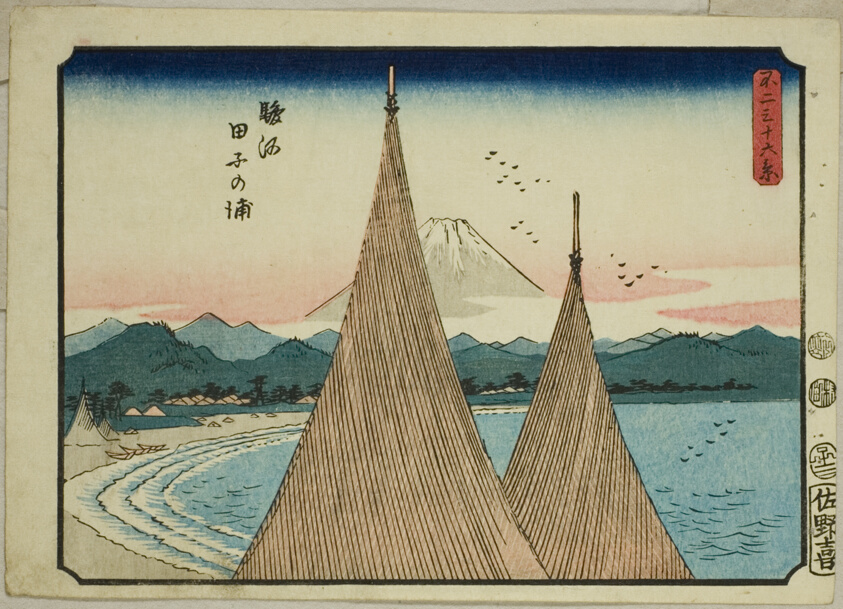
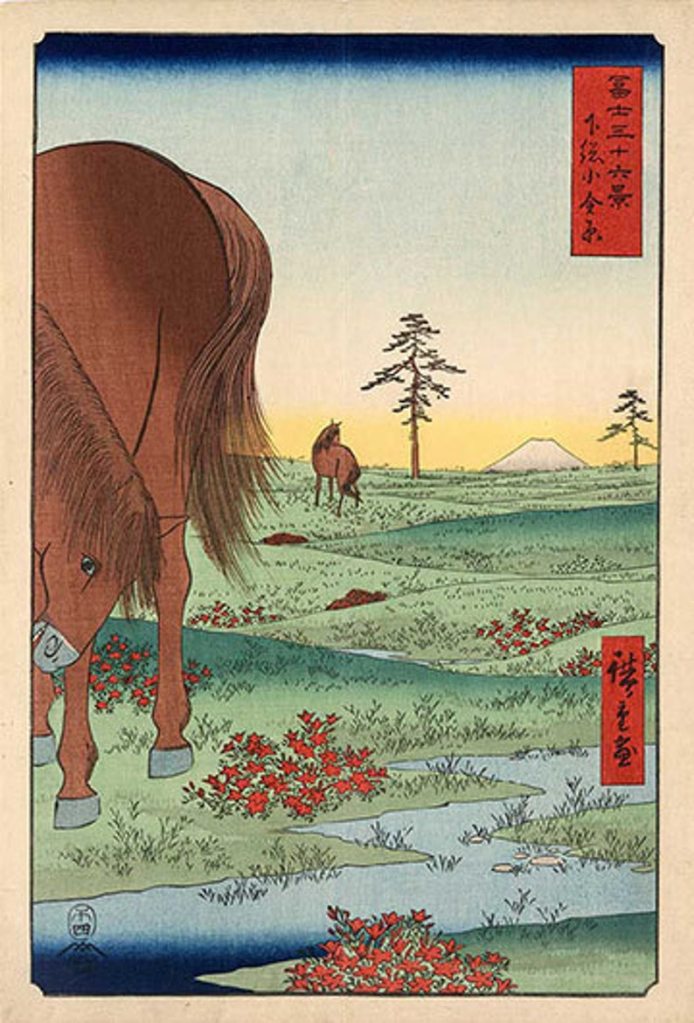
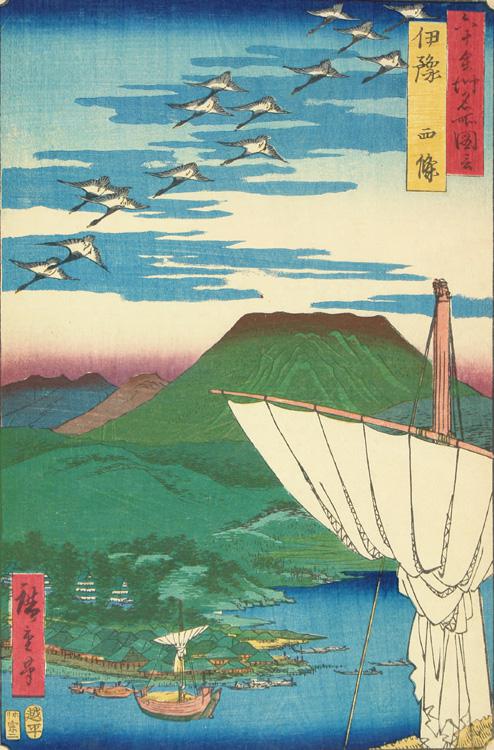
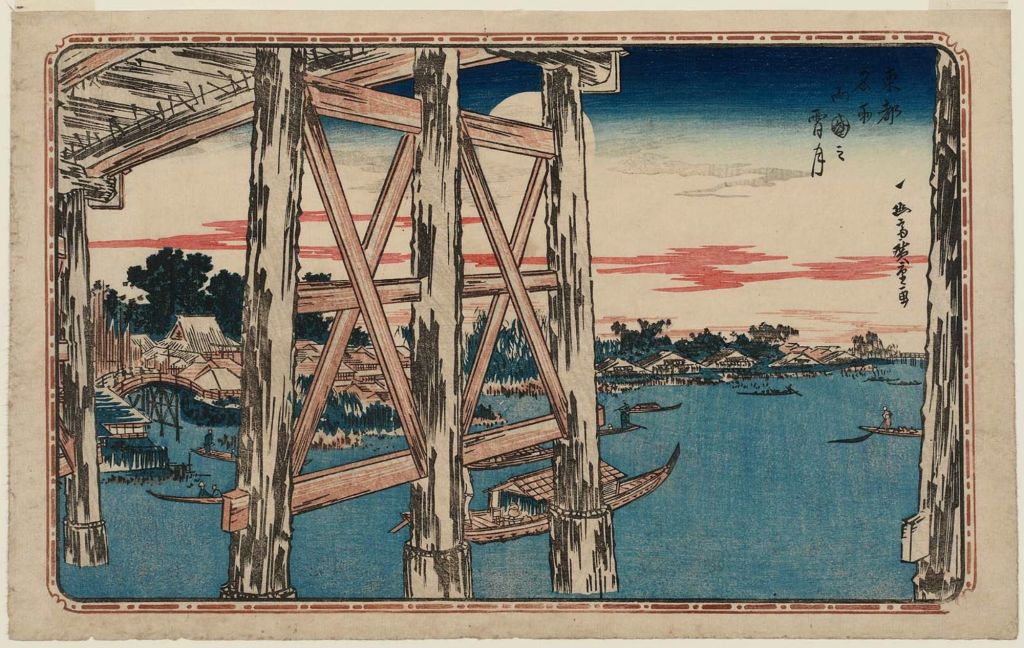
First, Hiroshige usually put something [very] big or dominant as foreground in the frame.
Tago Bay in Suruga Province (Suruga Tago-no-ura), from the series “Thirty-six Views of Mount Fuji (Fuji sanjurokkei)”From “One Hundred Famous Views of Edo”Kogane Plain in Shimosa Province (Shimosa Koganehara), from the series “Thirty-six Views of Mount Fuji”Koganei in Musashi Province (Musashi Koganei), from the series “Thirty-six Views of Mount Fuji”, 1858Plum Estate, KameidoUshimachi in the Takanawa District, from “One Hundred Famous Views of Edo”Cranes, Mikawa Island, from “One Hundred Famous Views of Edo”Nihonbashi Bridge and Edobashi Bridge (Nihonbashi Edobashi), from the series “One Hundred Famous Views of Edo”Saijo in Iyo Province, no. 57 from the series Pictures of Famous Places in “The Sixty-odd Provinces”Twilight Moon at the Ryogoku Bridge (Ryogoku no yoizuki), from the series “Famous Views of the Eastern Capital”
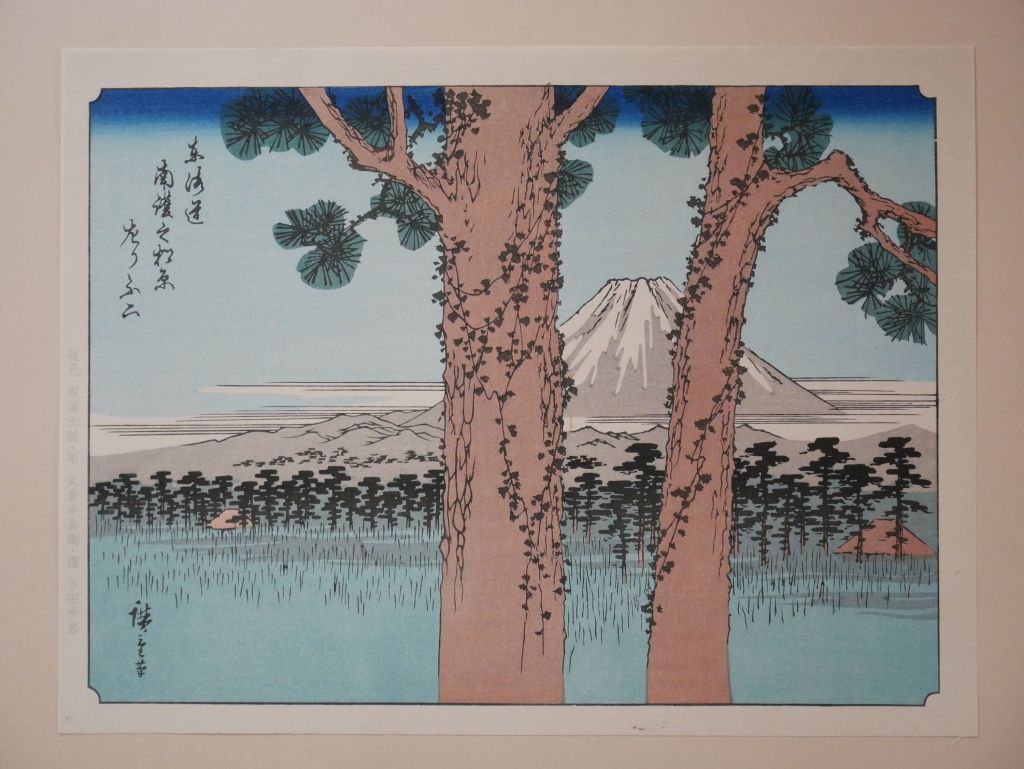
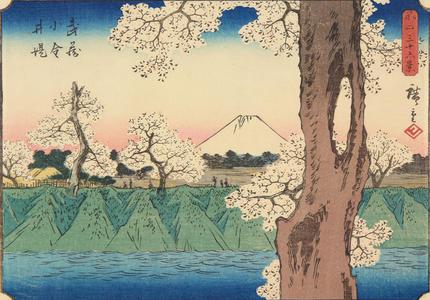
Especially he liked to use tree trunk for this purpose.
Takata Riding Grounds, No. 115 from “One Hundred Famous Views of Edo”The Embankment at Koganei in Musashi Province, no. 33 from the series “Thirty-six Views of Mt. Fuji”
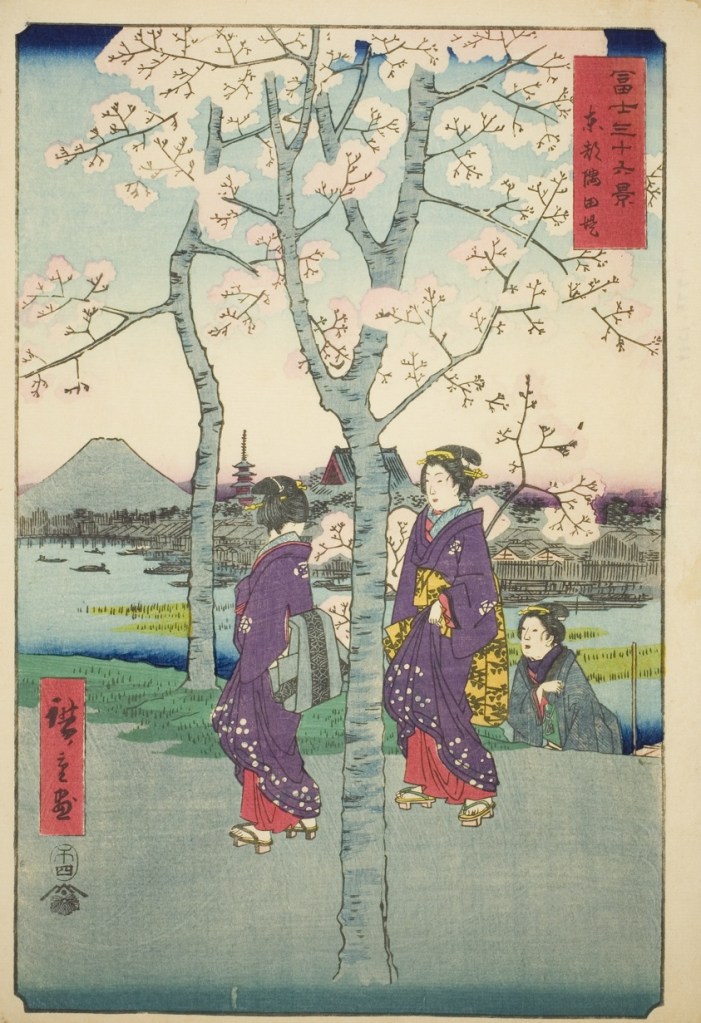
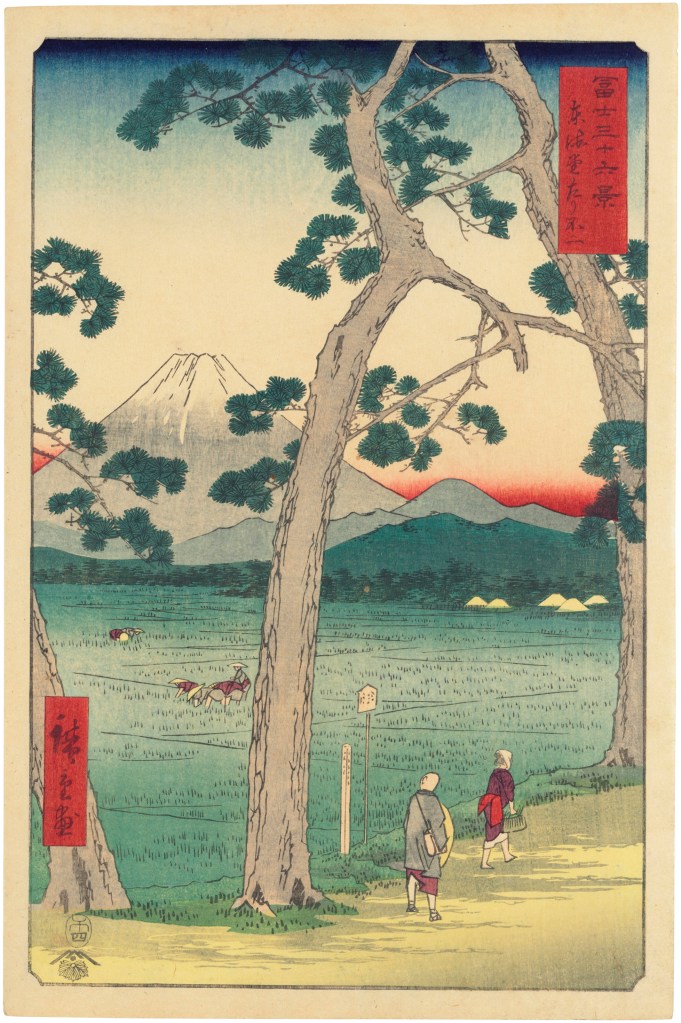
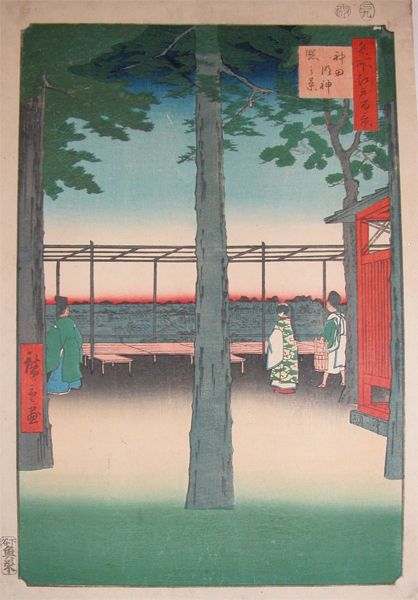
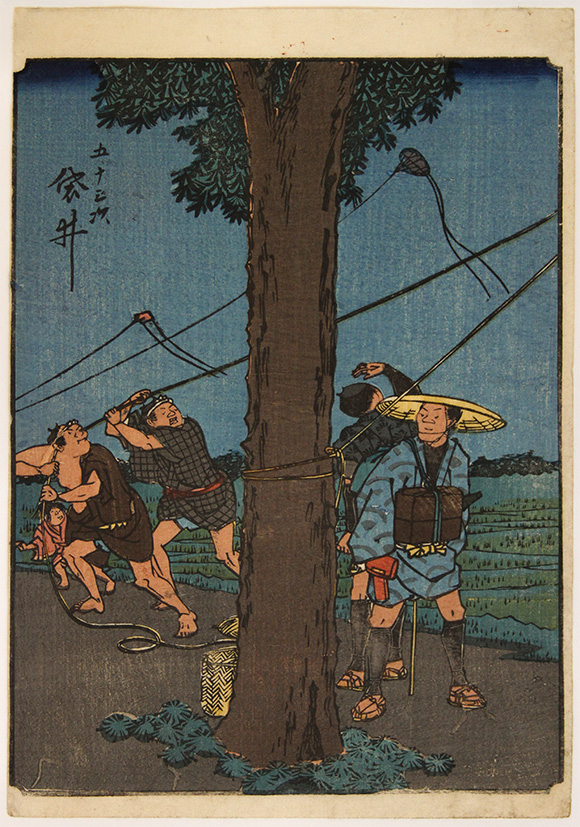
Secondly, he usually put a tree trunk in the middle of the frame unapologetic. As we usually heard that in photography or painting, we should not put a tree (or big subject) in the very middle of the frame unless it’s a symmetrical composition. But look how Hiroshige do the opposite so beautifully below.
The Sumida Embankment in the Eastern Capital (Toto Sumida-zutsumi), from the series “Thirty-six Views of Mount Fuji (Fuji sanjurokkei)”Fifty-three Stations of the Tokaido (Figure or Jinbutsu Tokaido) Station #50 Tsuchiyama, 1852. ChubanMount Fuji to the Left of the Tokaido, from the series “Thirty-Six Views of Mount Fuji”Dawn at Kanda Myôjin Shrine (Kanda Myôjin akebono no kei), from the series “One Hundred Famous Views of Edo”Fukuroi, No. 28 from series: “Fifty-Three Stations of Tokaido” 1852Akasaka, from series “One Hundred Famous Views of Edo”No 50, Tsukuda-jima Sumiyoshi no matsuri (Sumiyoshi Festival, Tsukuda Island) / Meisho Edo Hyakkei (One Hundred Views of Edo). This is not a tree trunk but same concept here.
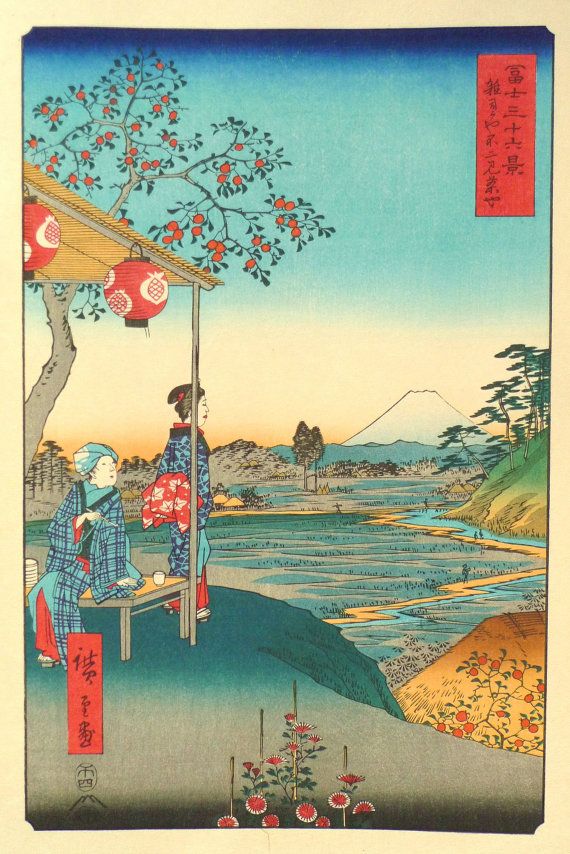
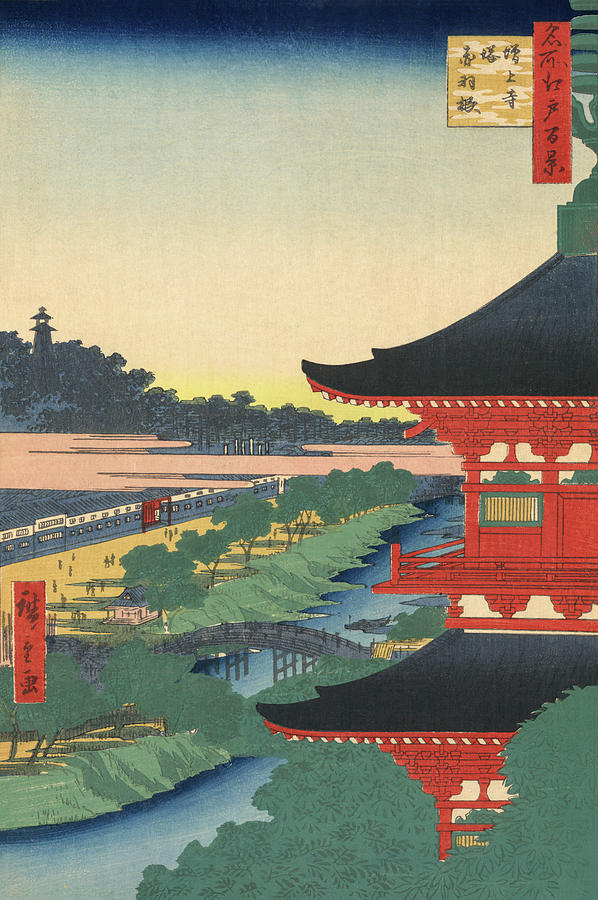
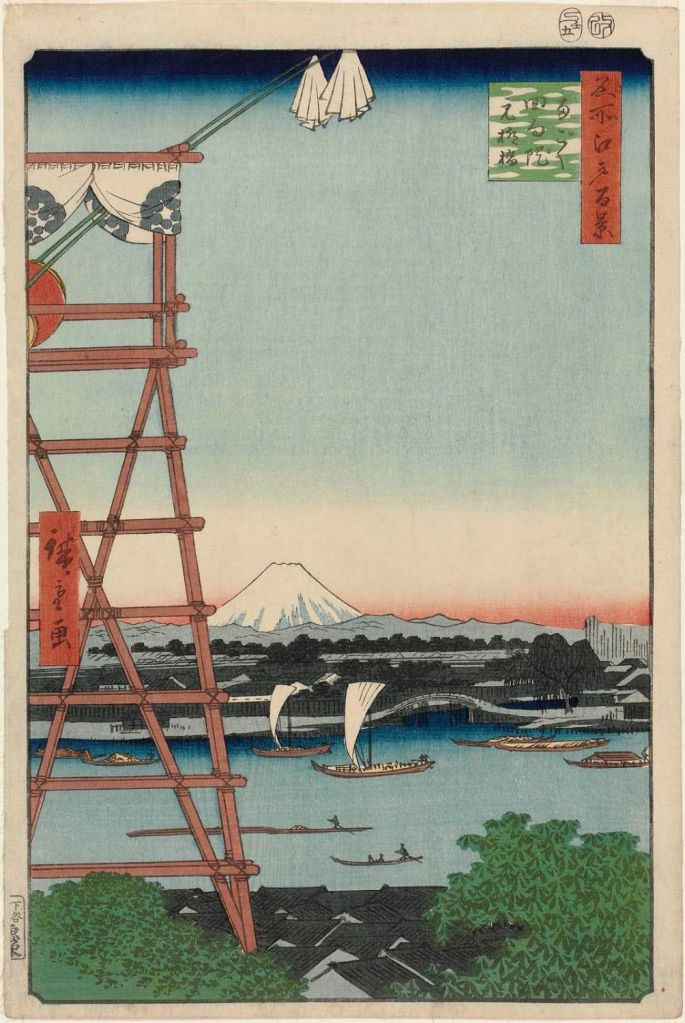
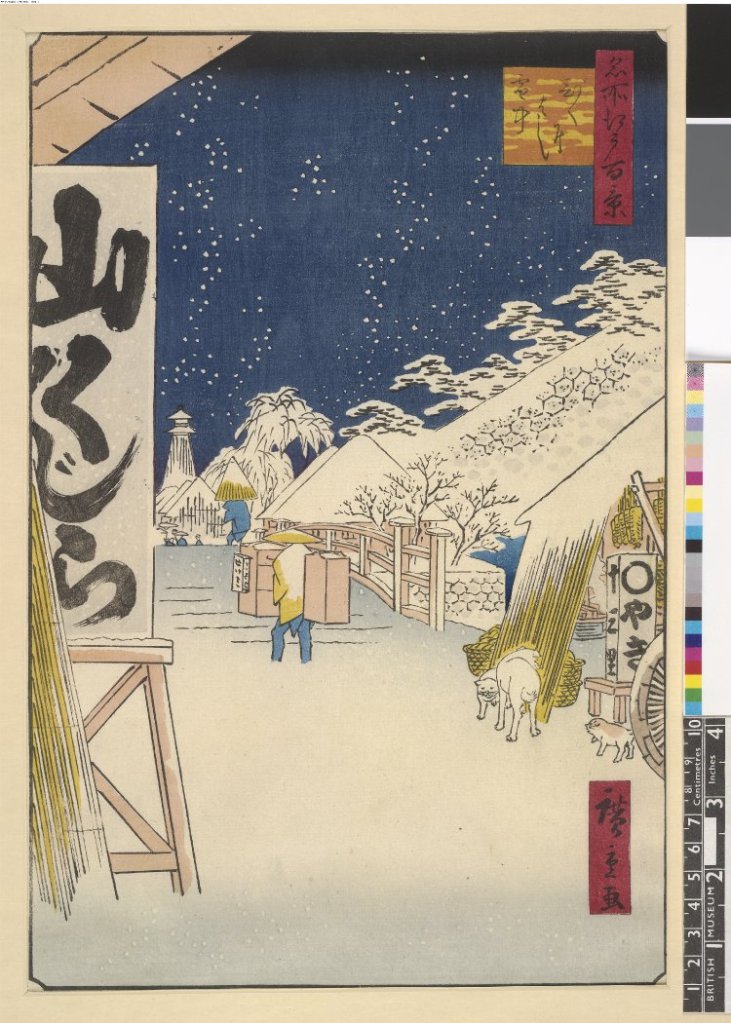
Then Hiroshige liked to put subjects at the edge of the frame to cut off the subjects but still enough for the viewers to imagine the shapes, scale or function of that subjects.
Fuji-view Teahouse at Zôshigaya (Zôshigaya Fujimi chaya), from the series “Thirty-six Views of Mount Fuji”Zôjôji Pagoda and Akabane (Zôjôji-tô Akabane), from the series “One Hundred Famous Views of Edo”Oki Province: Takuhi Shrine (Oki, Takuhi no yashiro), from the series “Famous Places in the Sixty-odd Provinces”Ryôgoku Ekôin and Moto-Yanagibashi Bridge (Ryôgoku Ekôin Moto-Yanagibashi), from the series “One Hundred Famous Views of Edo”Bikuni Bridge in Snow (Bikunibashi setchû), from the series “One Hundred Famous Views of Edo”
Next, and you probably know by now that Hiroshige’s work includes complex layers and subjects. There’re always foreground, middle ground and background. He barely did a minimal composition.
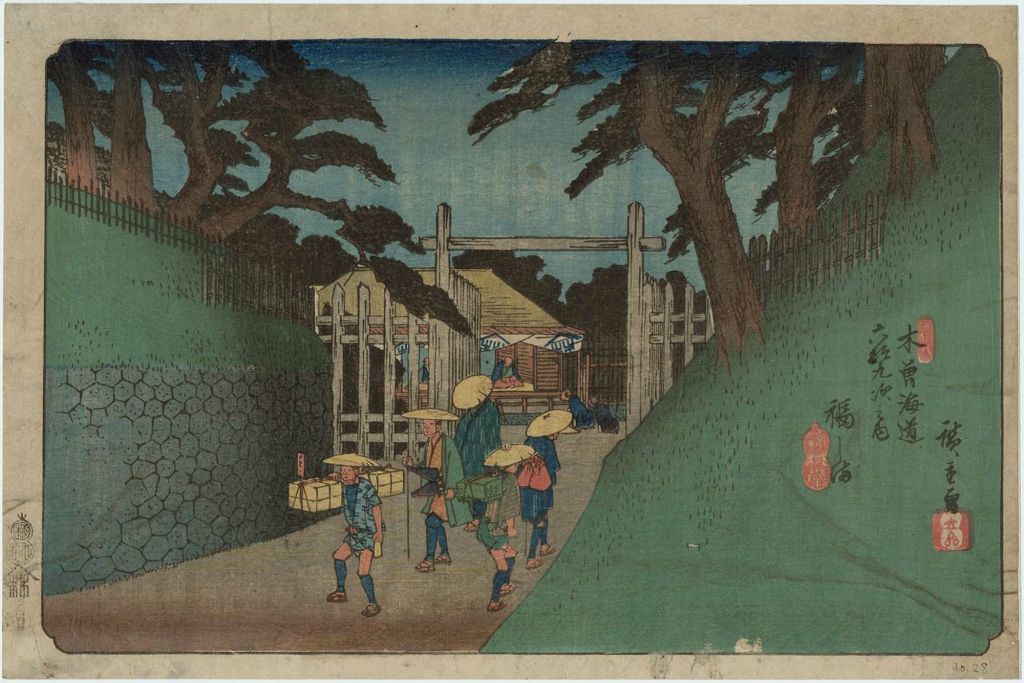
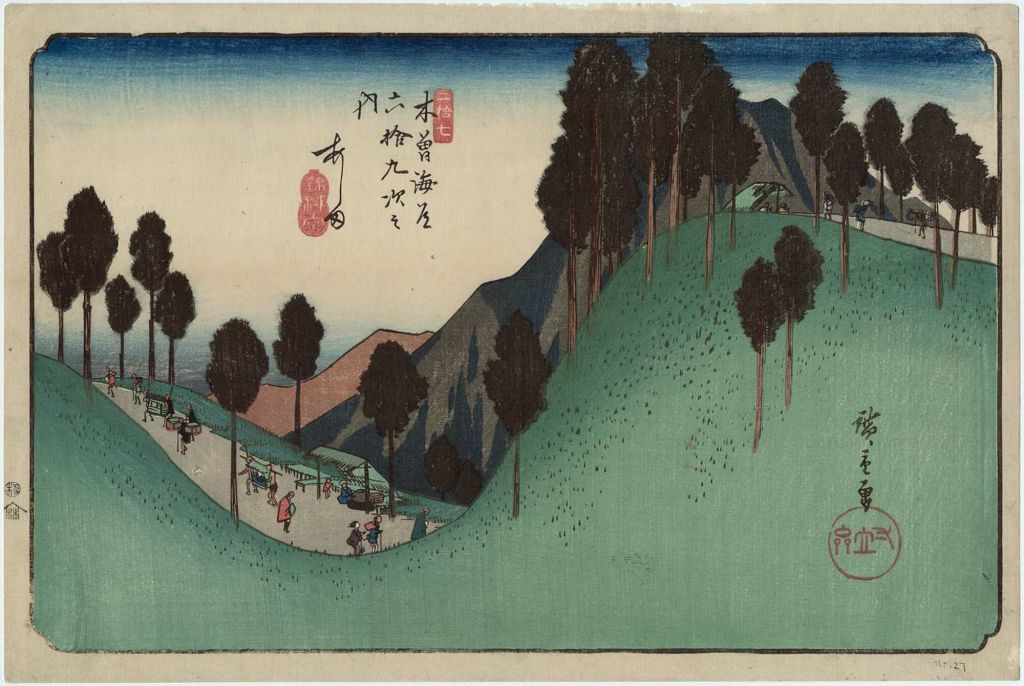
Point number five is the use of negative space. As you can see in the photos below, he didn’t hesitate to leave a big chunk of negative space in the frame.
No. 38, Fukushima, from the series “The Sixty-nine Stations of the Kisokaidô Road”No. 27, Ashida, from the series “The Sixty-nine Stations of the Kisokaidô Road”The Asakusa River, Miyato River, and Bank of the Great River, no. 68 from the series “One Hundred Famous Views of Edo”Sudden Shower over Shin-Ôhashi Bridge and Atake (Ôhashi Atake no yûdachi), from the series “One Hundred Famous Views of Edo”
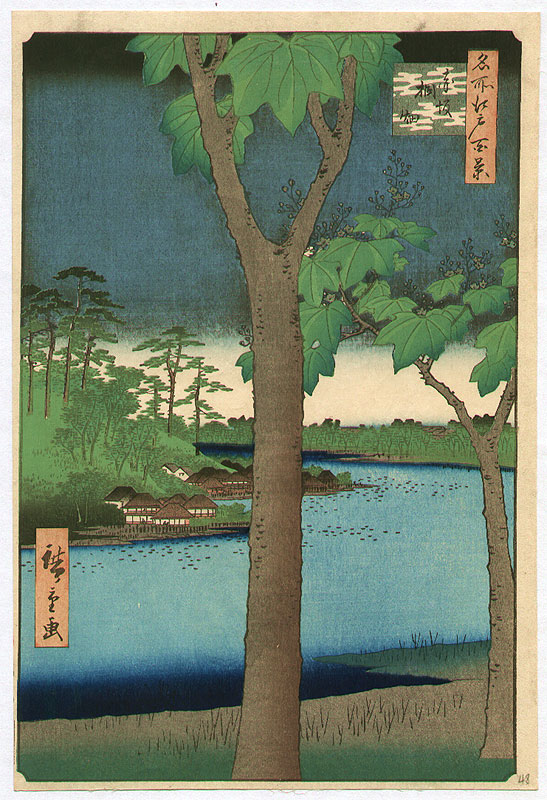
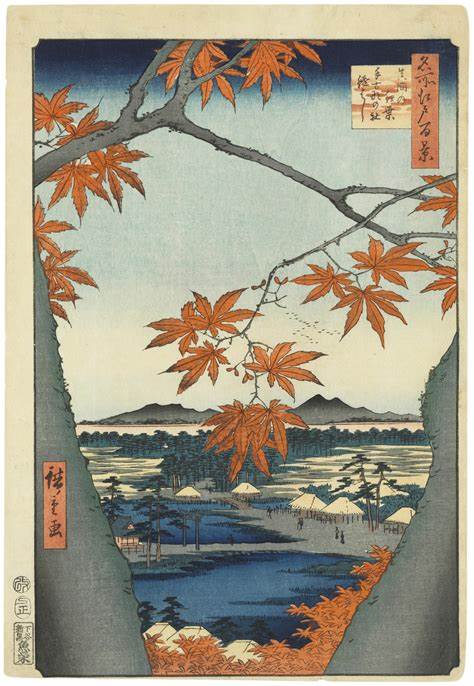
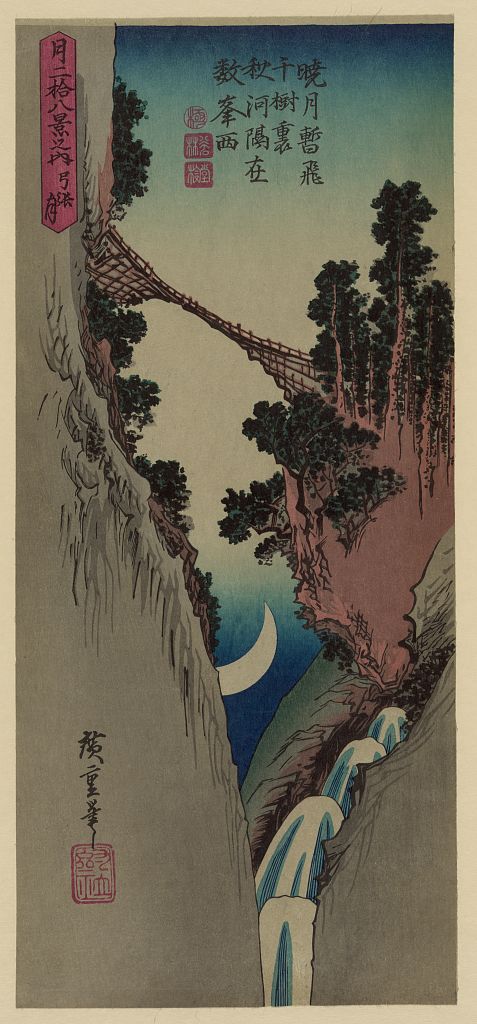
Point number six, the use of subframe. Some are quite obvious but some are more subtle.
Okabe: Utsu Mountain (Okabe, Utsu no yama), from the series “Fifty-three Stations of the Tôkaidô Road”No. 65, Takamiya, from the series “The Sixty-nine Stations of the Kisokaidô Road”Motoyama, Station 33 from the series Sixty-Nine Stations of the Kisokaidô, 1839Maple Trees at Mama, Tekona Shrine and Linked Bridge (Mama no momiji Tekona no yashiro Tsugihashi), from the series “One Hundred Famous Views of Edo”Bow-shaped Crecent Moon (Yumiharizuki), from the series “Twenty-eight Views of the Moon”
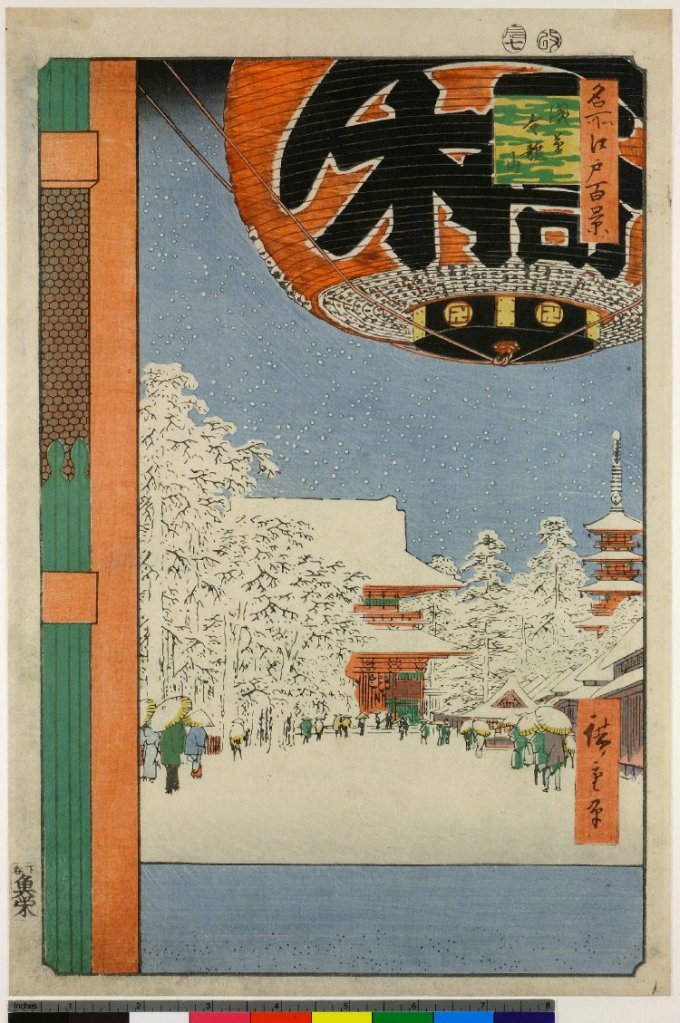
Bonus point: he also has some interesting composition that I can’t help but think of wide-angle lens in photography term. You will know what I mean in three photos below.
Kinryûzan Temple, Asakusa (Asakusa Kinryûzan), from the series “One Hundred Famous Views of Edo”Haneda Ferry and Benten Shrine (Haneda no watashi Benten no yashiro), no. 72 from the series “One Hundred Views of Famous Places in Edo”Bikuni Bridge in Snow (Bikunibashi setchû), from the series “One Hundred Famous Views of Edo”
And here’re some other amazing prints from Hiroshige that I personally love. Since you’re already here and get to know Hiroshige, enjoy these brilliant work!
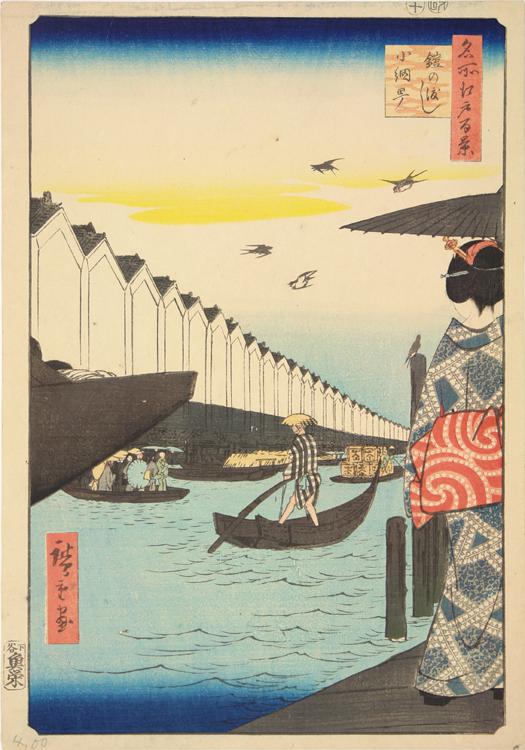
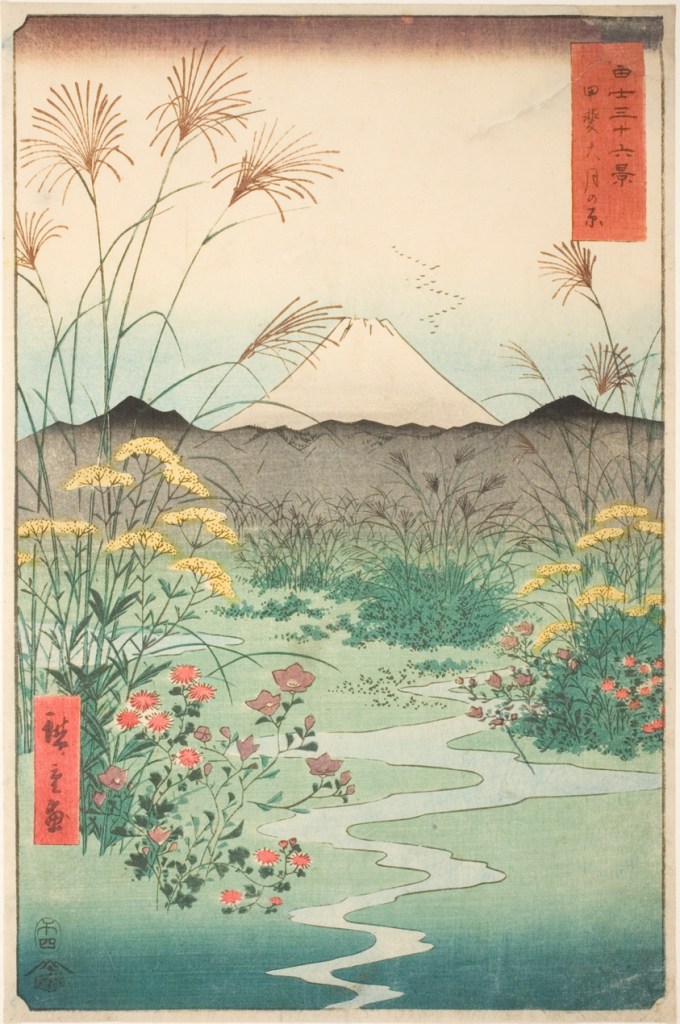
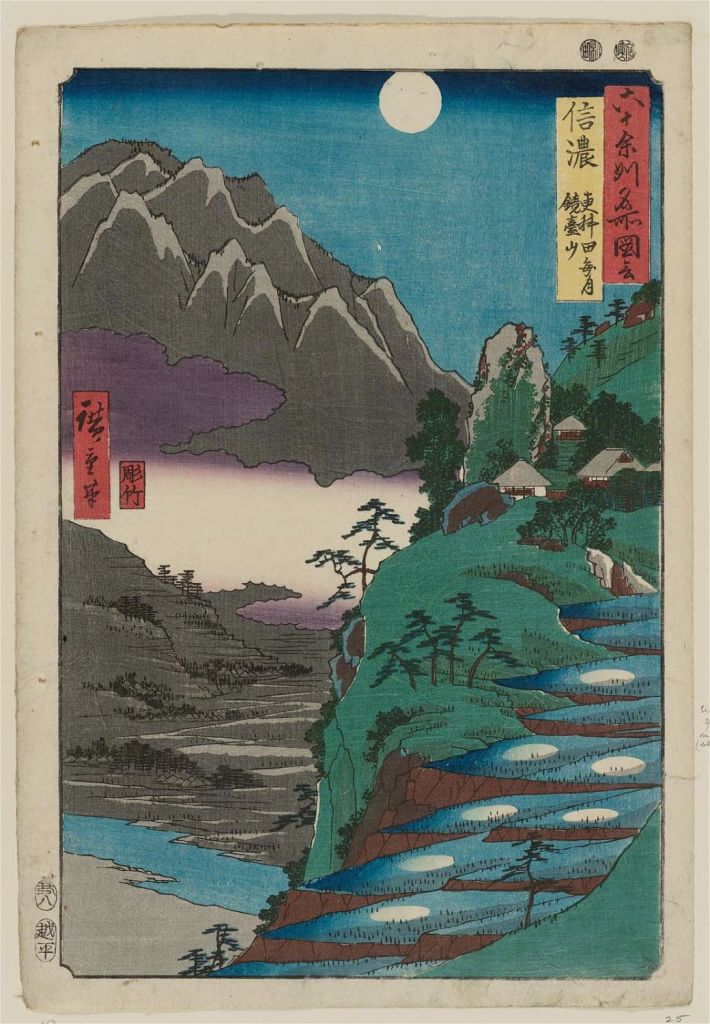
Fireworks at Ryôgoku (Ryôgoku hanabi), from the series “One Hundred Famous Views of Edo”The Yoroi Ferry at Koami-Cho (Meisho Edo hyakkei, Yoroi no Watashi Koami-Cho), from “One Hundred Famous Views of Edo”Otsuki Plain in Kai Province (Kai Otsuki no hara), from the series “Thirty-six Views of Mount Fuji”Hatsune Riding Grounds, Bakuro-chô (Bakuro-chô Hatsune no Baba), from the series “One Hundred Famous Views of Edo”Mirror Stand Mountain and the Moon in the Rice Fields at Sarashina in Shinano Province (Shinano sarashina tagoto no tsuki kyodaizan), from the series “Pictures of Famous Places in the Sixty-odd Provinces”













 film sequence