Yosemite in the summer on Pentax 6×7 medium format film camera
It’s been a while since my last post. I’m glad that I’m back on time for the summer. I was a big Lana Del Rey’s fan years ago. In her songs, I got the impression that summer is the most beautiful season of the year. All the summer vibes in her music are so goldenly youthful, vivid and full of lust for love. From her “Young and beautiful” lyrics, a perfect summer scene stuck in my head and I will forever looking for a summer moment in mid July, when the heat turns overwhelmed along with the humidity and the fruits are so ripe with all the juice about to burst out of their soft skin just before they turn rotten in the heat of summer. I just love how lively and vigorous but also nostalgic summer is in her mind, it’s the best suit for young and wild hearts that are full of love in the relentless summer heat.
My photos are quite different than what I posted here before, I don’t know why my “style” [if I had one] has changed but I’m glad with how it looks now. It’s a coincident when I wrote the intro for this post and realized how Lana Del Rey’s summer vibe was so similar with what I got here.
Here’s the slideshow for quick look at the series.
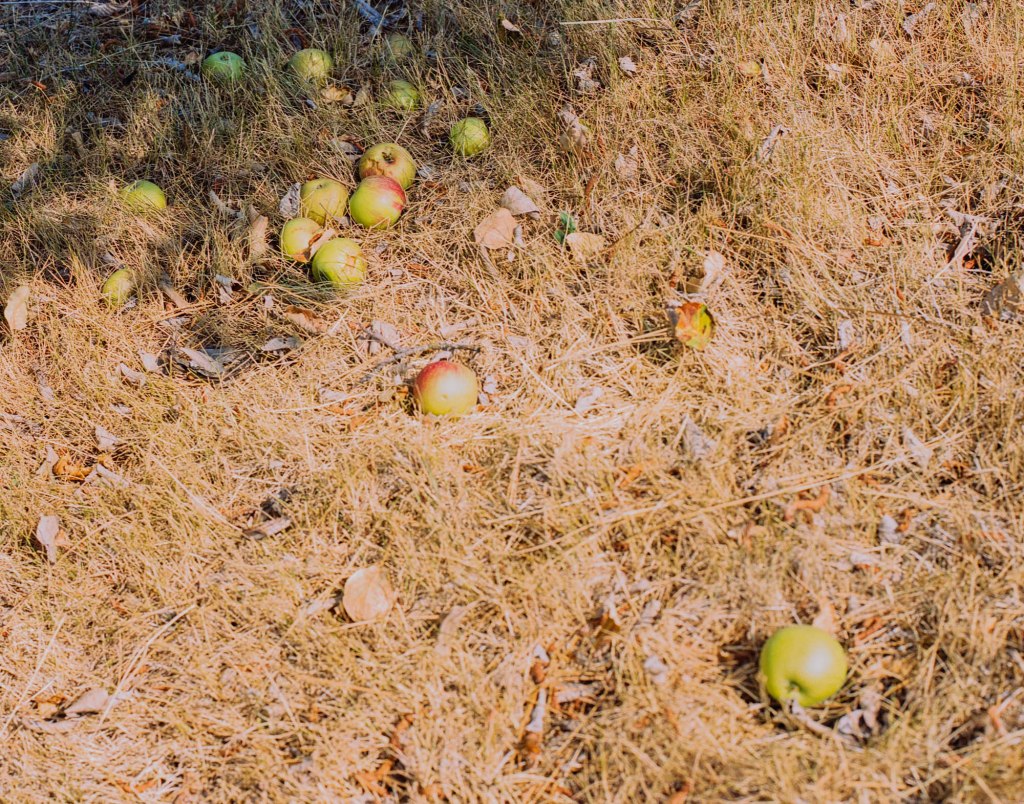
I like to begin the set with the photo of apples fell on the ground beneath an apple tree. The composition is not my best but I like how the apples lead our eyes from the bottom right of the frame to the top left. I like that the apple in the bottom right is out of focus giving a sense of depth in the photo.
apples on the ground
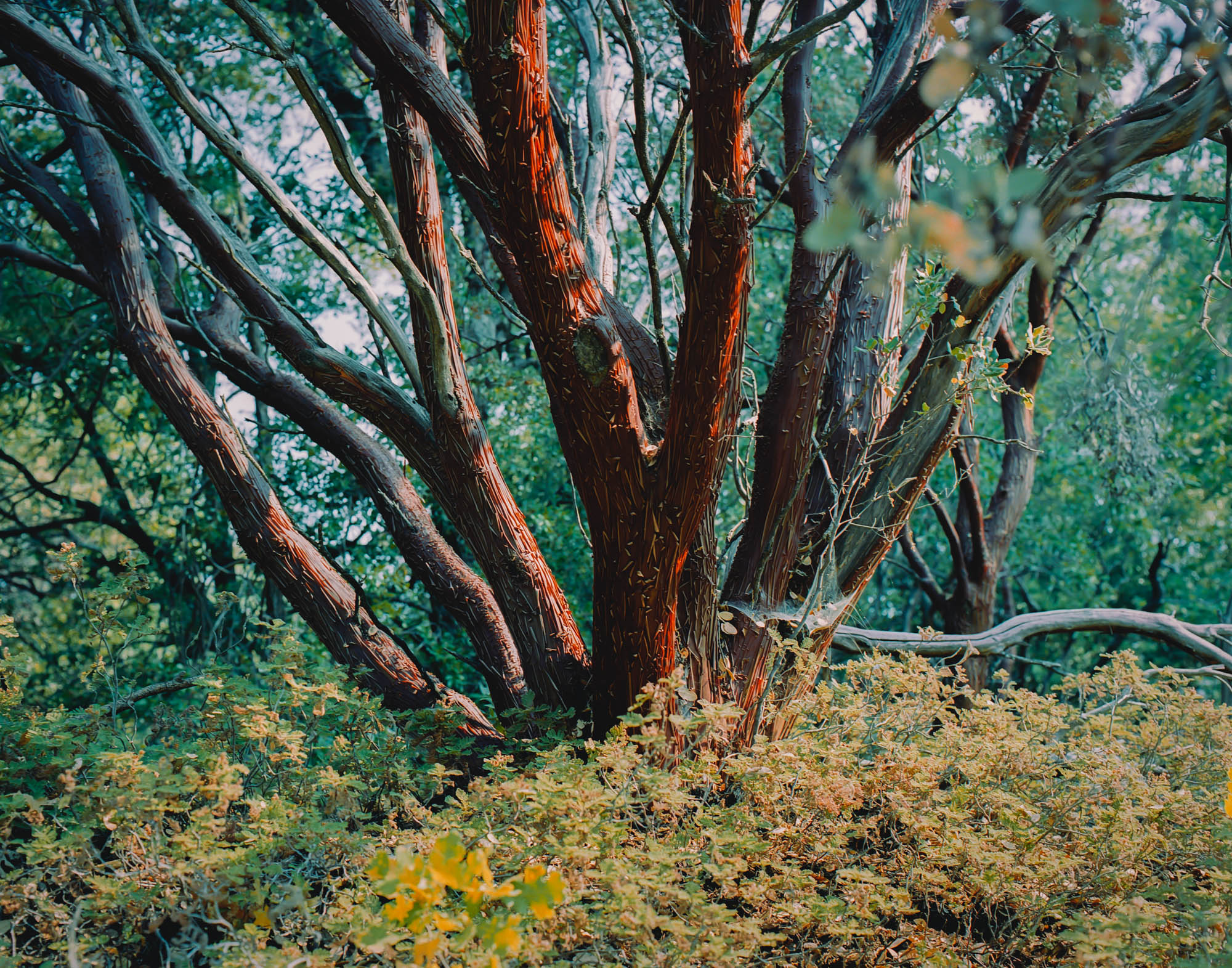
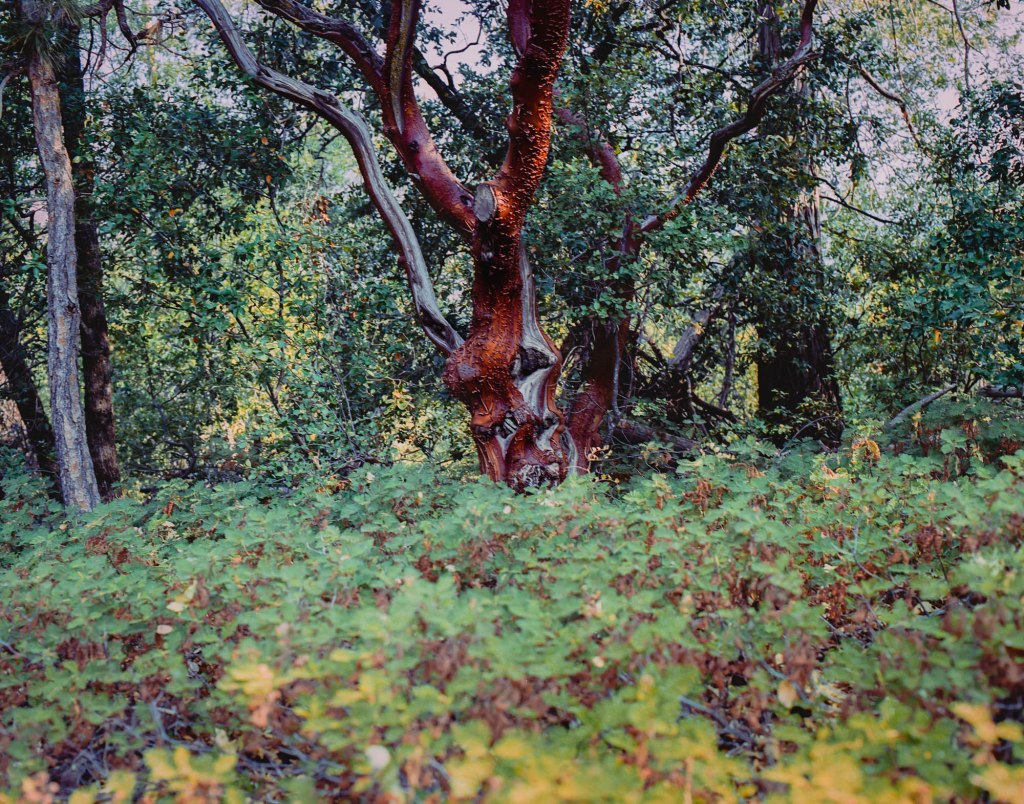
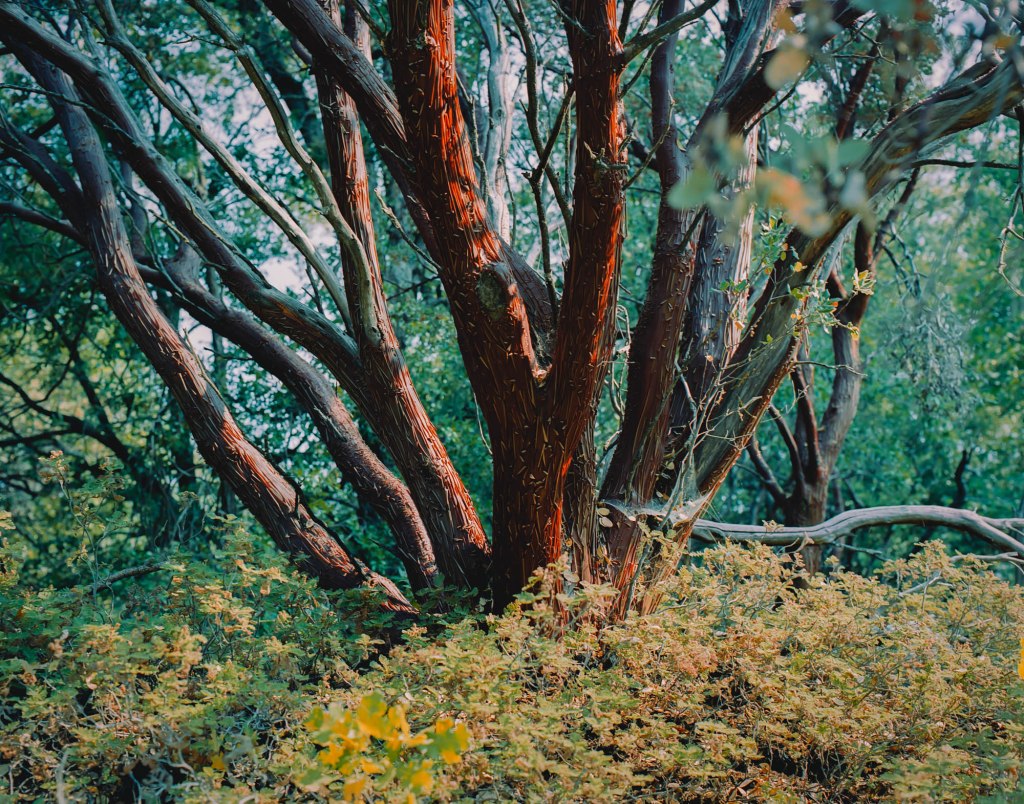
The next three photos are from an afternoon walking around my airbnb house. I was fascinated with the reddish tree trunks that look so vivid in the sun light. I like how the red and green contrast each other in these photos.
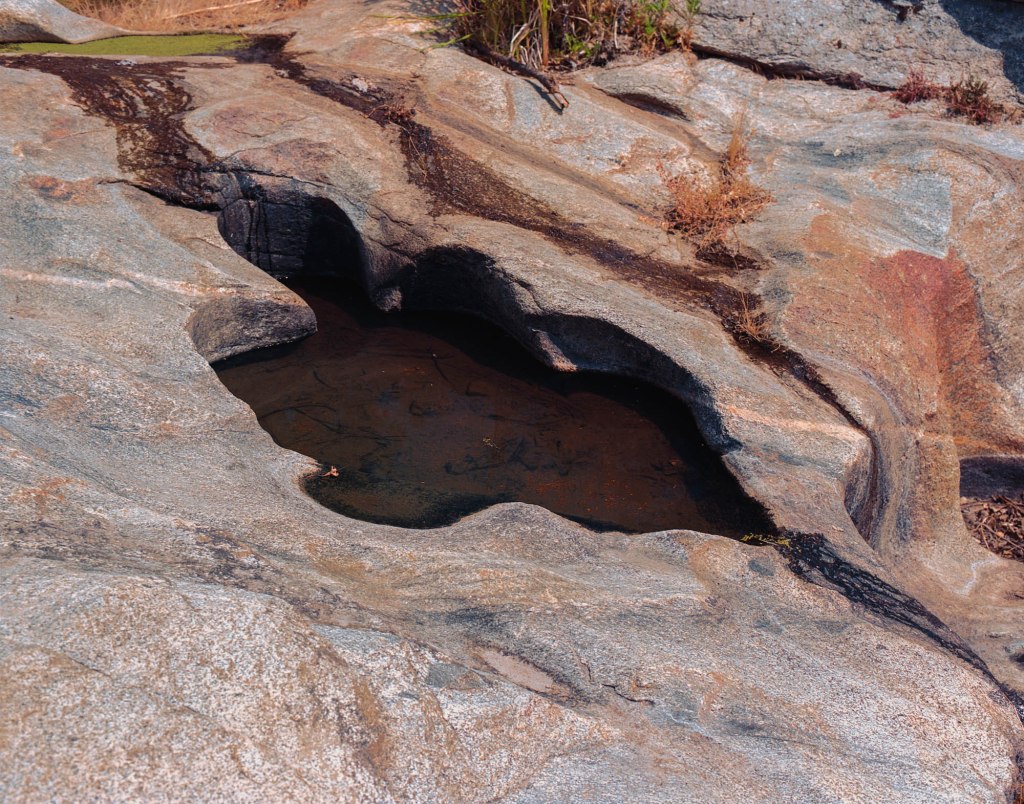
Next, I walked to a small waterfall near my airbnb house in the following morning to scout the waterfall and enjoy my time alone with my camera. The waterfall was nice but there weren’t a lot of water sine it’s summertime so I stepped on rocks that supposed to be under water to look around and go upper the stream.
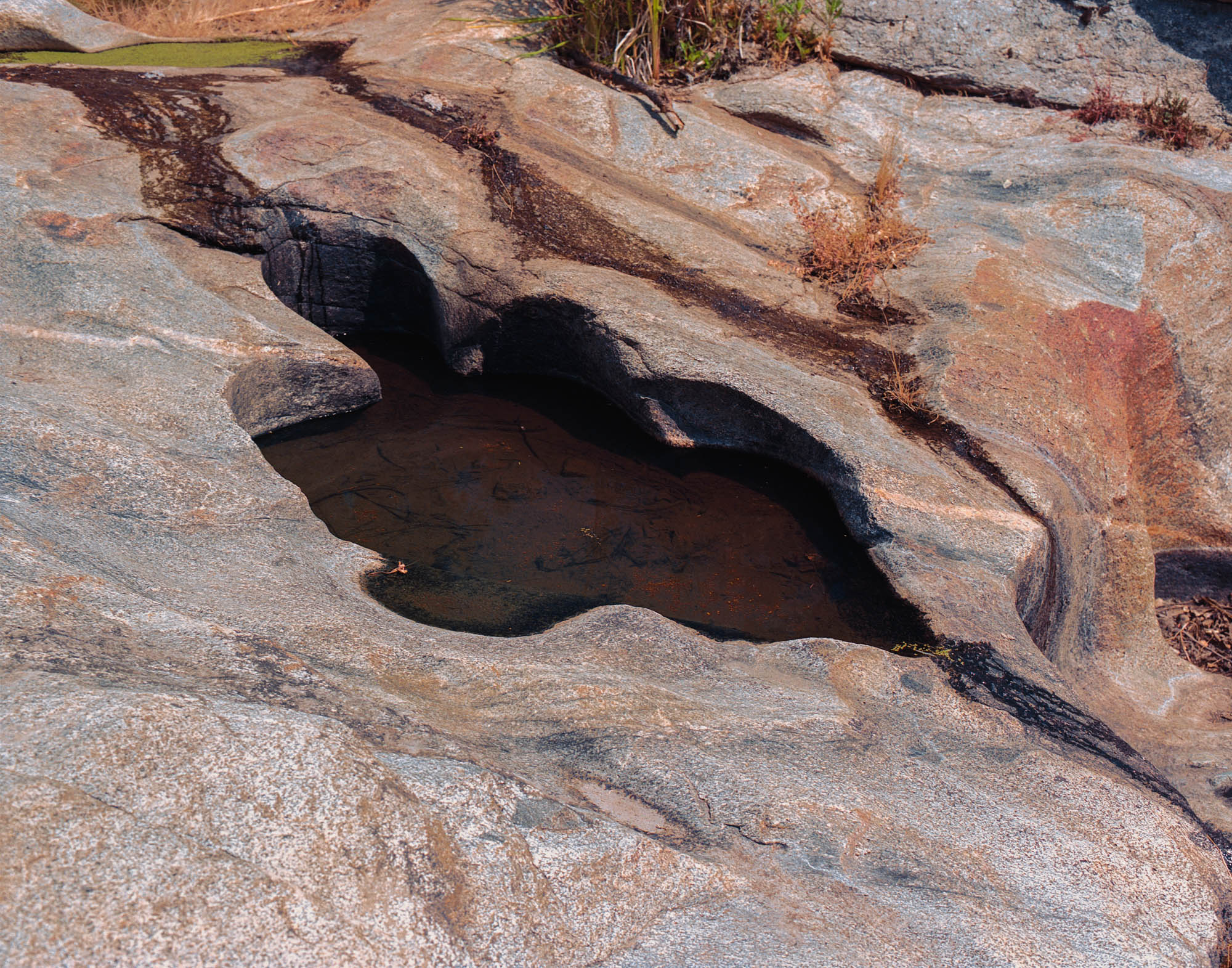
How the water carved the rock into those interesting shapes
A scene from the upper stream. I like how green the bank was with many kin of grass and plant. Such a cute little eco system.
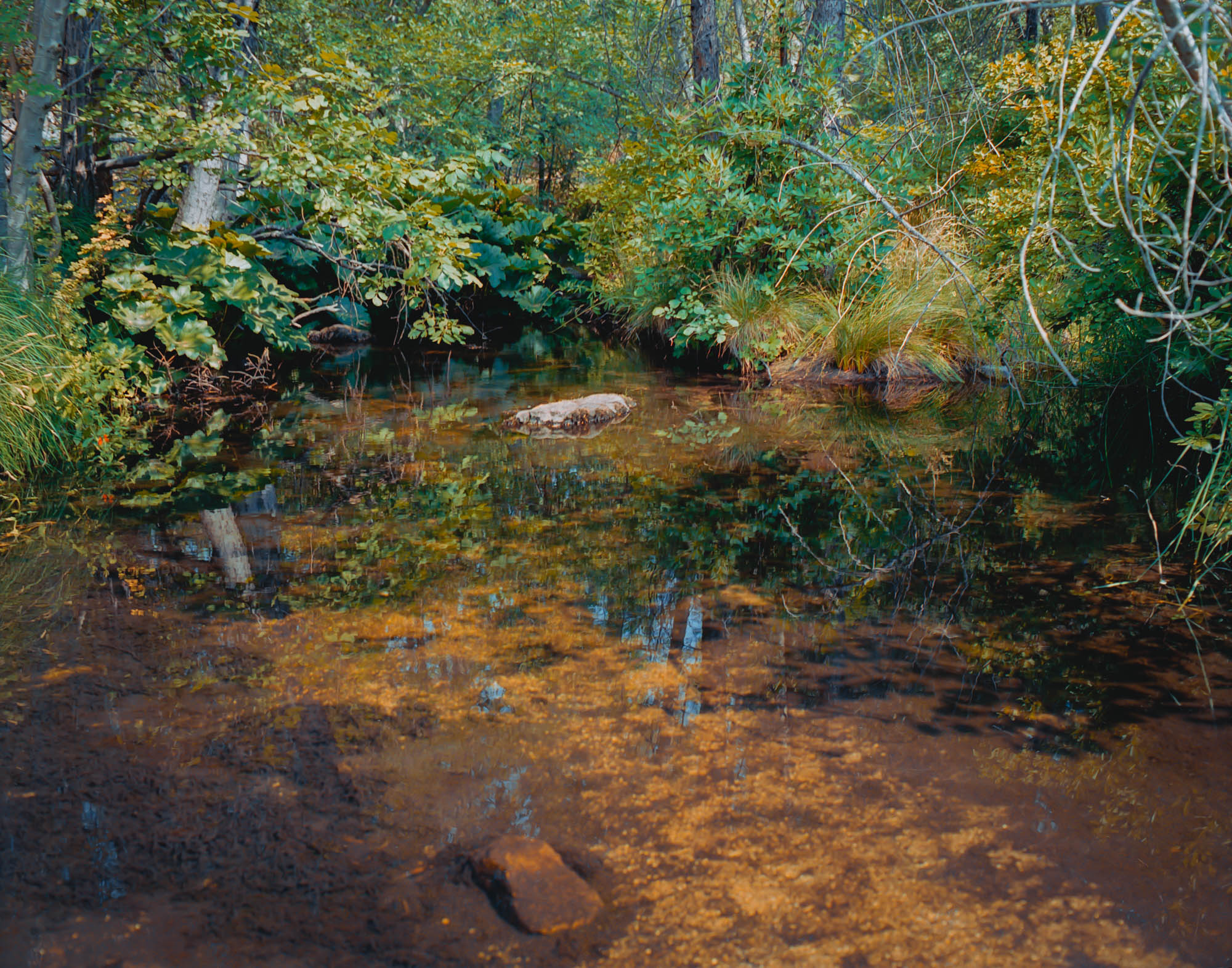
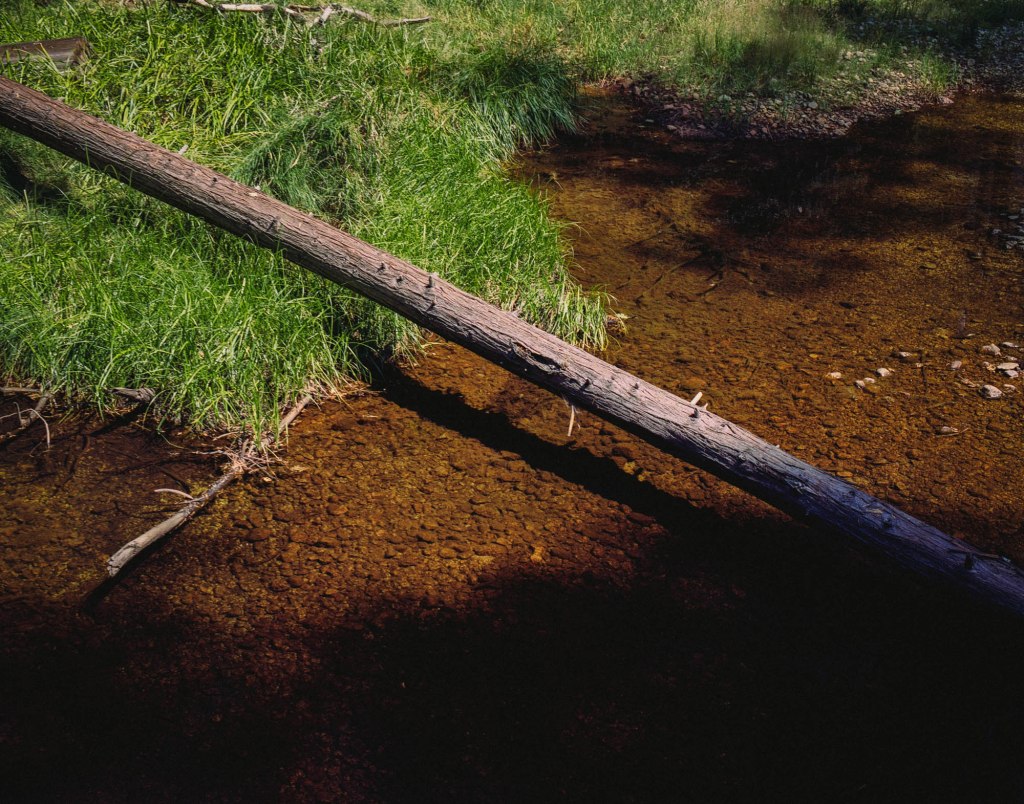
My favorite from the batch. I used the polarizer filter to cut out most of the reflection in the water. I love this photo because there’re so many things to look at, I like the fact that there’re many kind of plant around the stream and they brings so many shades of greens and yellow into the photos. I also love the texture beneath the water giving the nice pattern of purple and brown/yellow. I can remember the heat and moist atmosphere of the summer noon looking at this, and I love how peaceful and satisfied I felt when I was alone in this stream. I wish I tried with different variations of the polarizer filter to play with the reflection because I think there’re so much more in this scene that I can get out of.
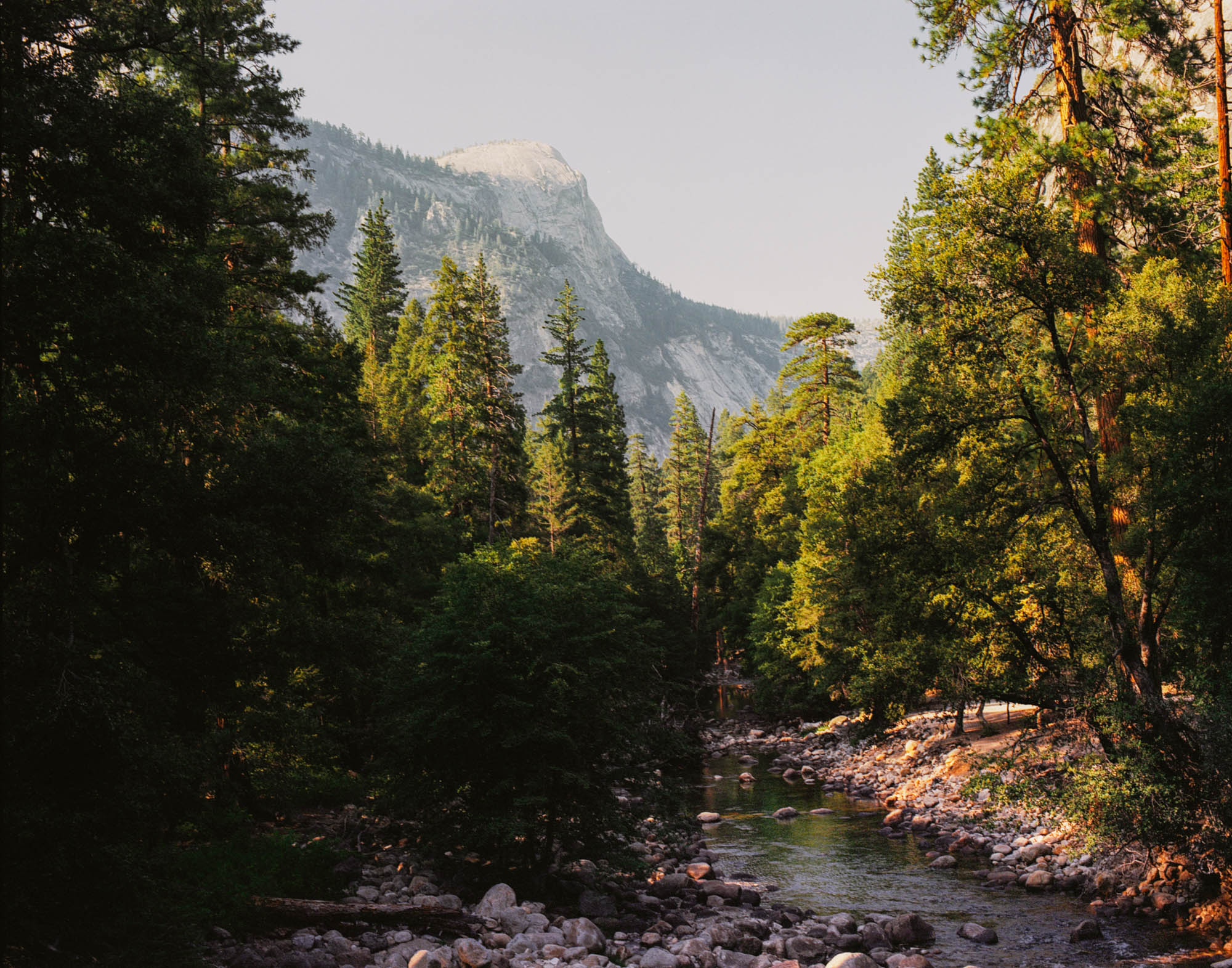
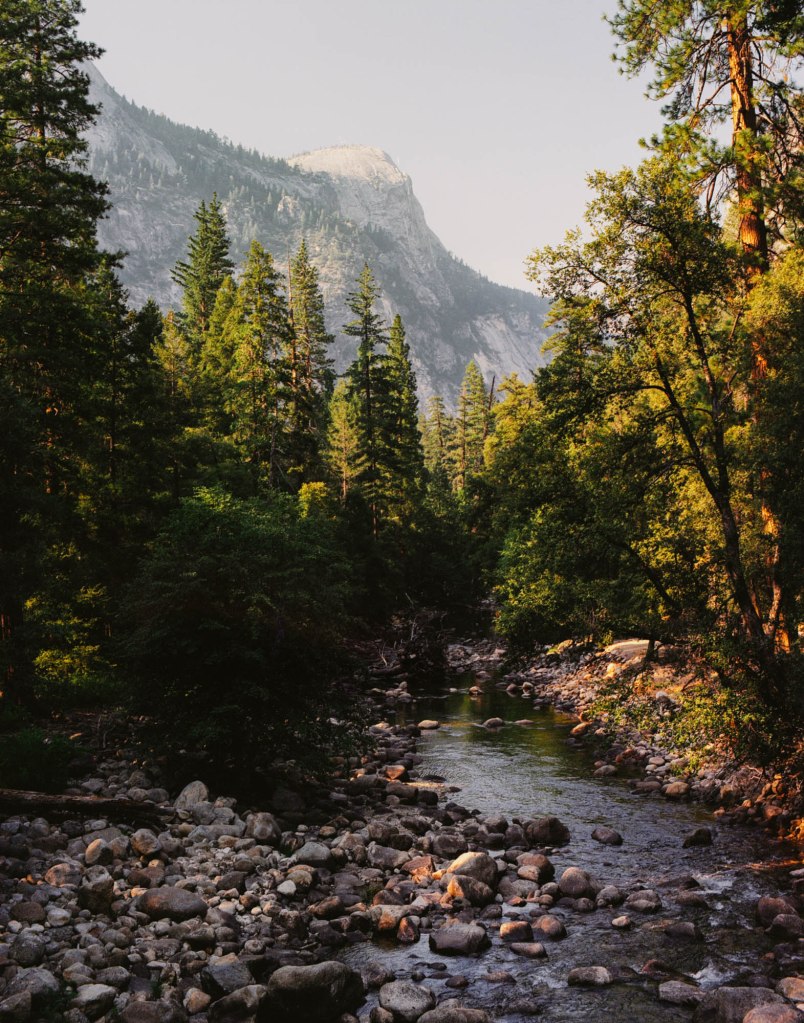
On my second day in Yosemite, I went inside the National Park and visited some famous views. The first stop was Tunnel View. The view was beautiful but I wish the sky were clearer rather than misty and hazy as in the photos.
Tunnel View
A scene under the bridge
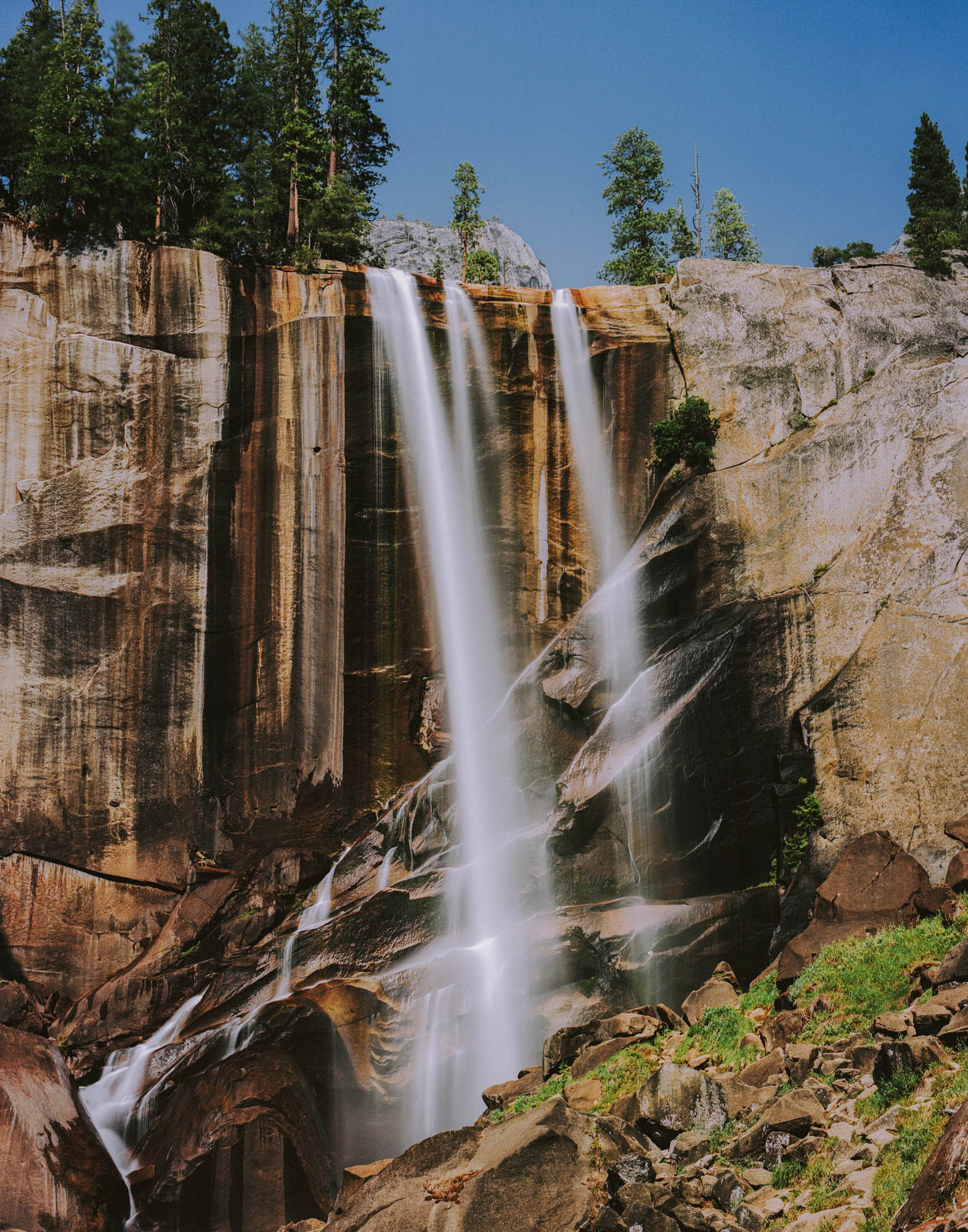
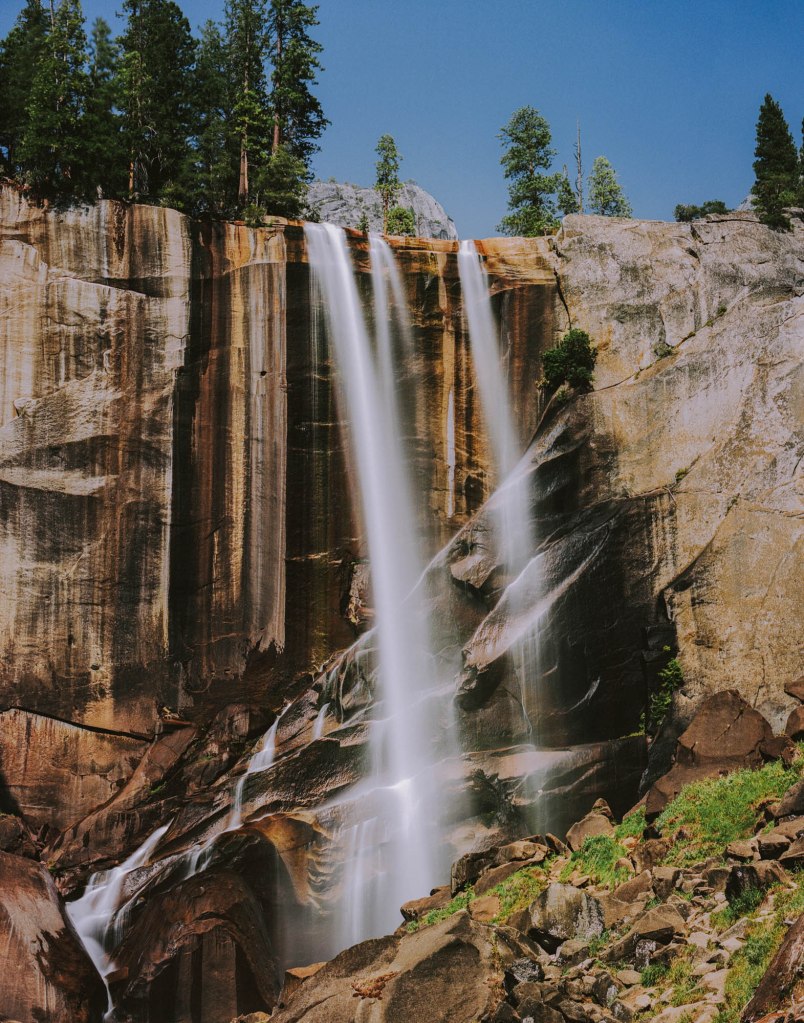
A view on the Vernal Fall hike
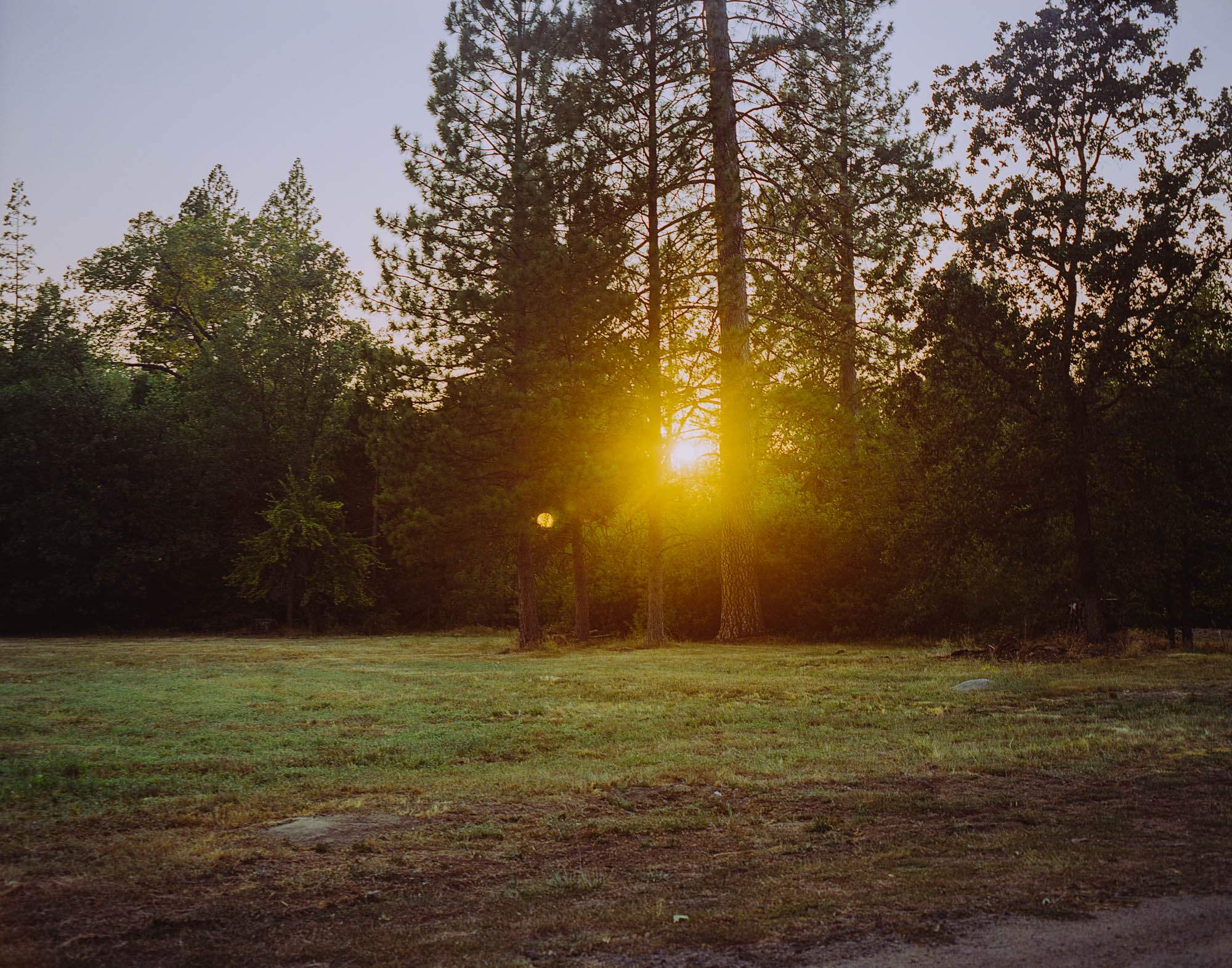
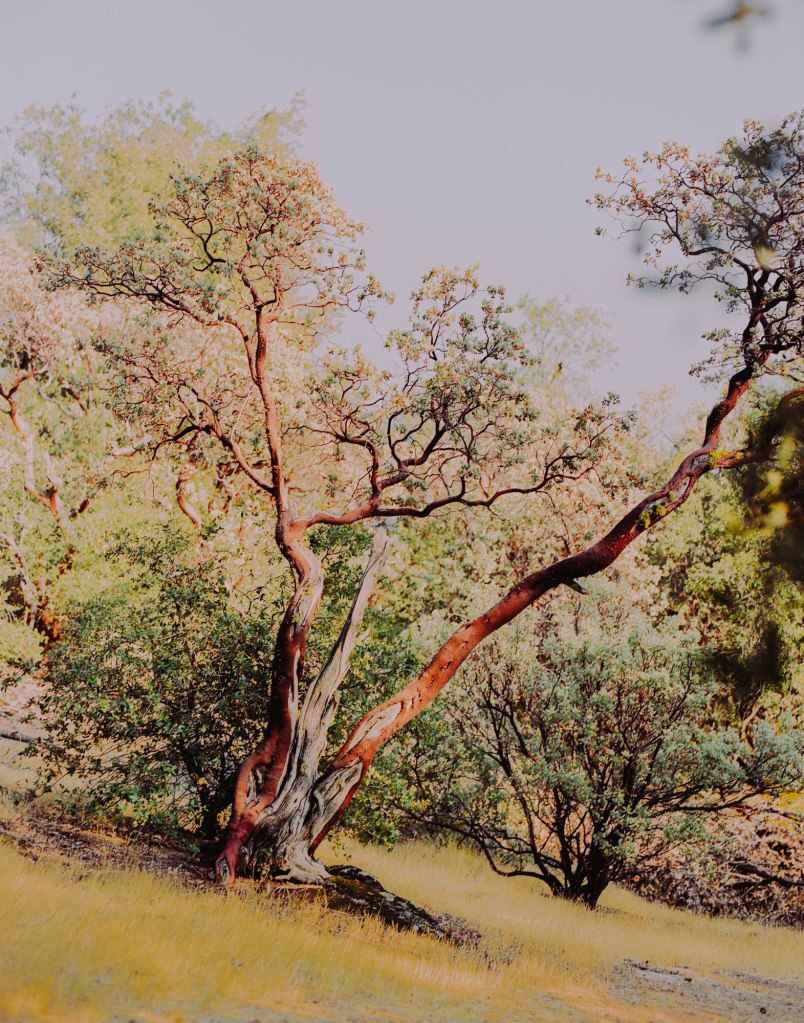
In the afternoon, I walked around the house again for some more discover. Here’re some photos that I like from the walk. I love the tree below because of its interesting gesture. I thought I need a wider lens to capture the whole tree but this frame still balance to me so I’m quite happy with it.
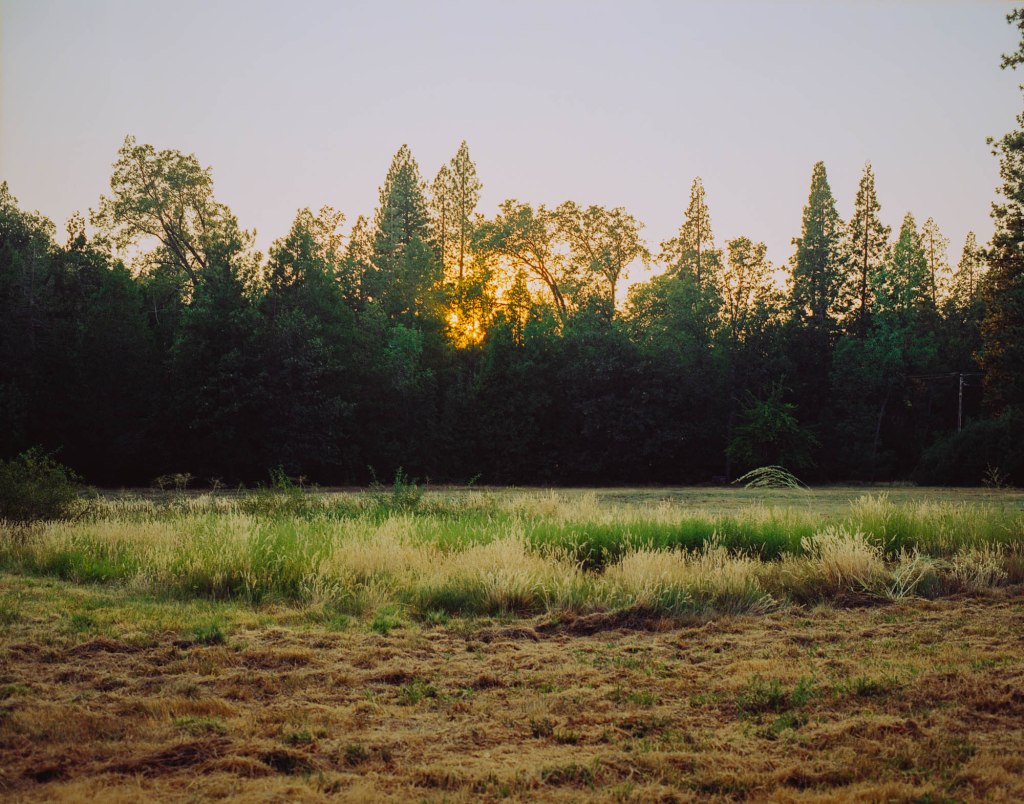
Sunset through the trees
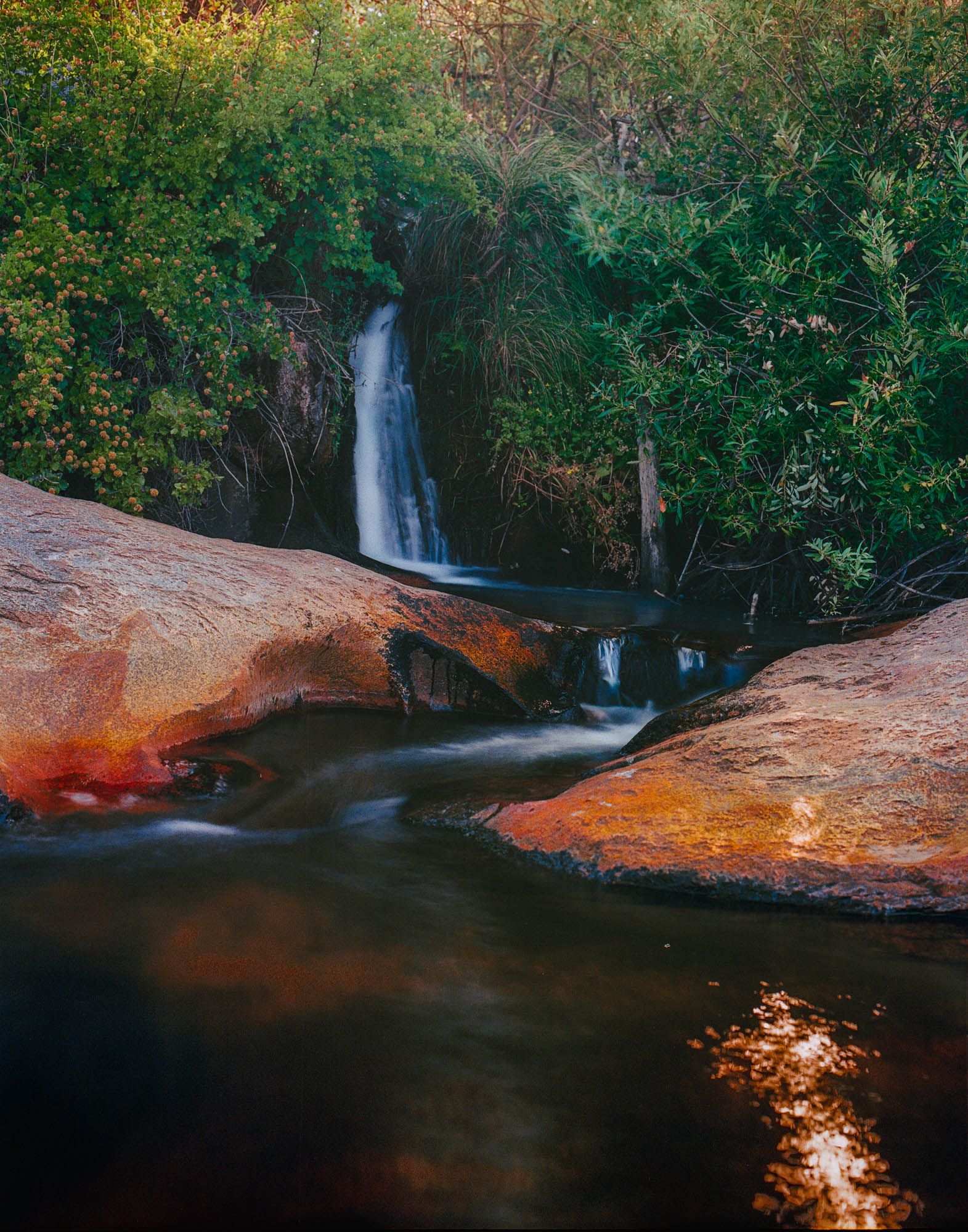
On the following day to Glacier Point I brought my digital camera instead of the Pentax 6×7, I end up didn’t take much photos because of the hazy sky but I still got some photos that I might like. But in the end, I just love the feeling of shooting film. Lastly, I walked to the near by waterfall in the last morning in Yosemite to make some long exposures. Here’re the results.
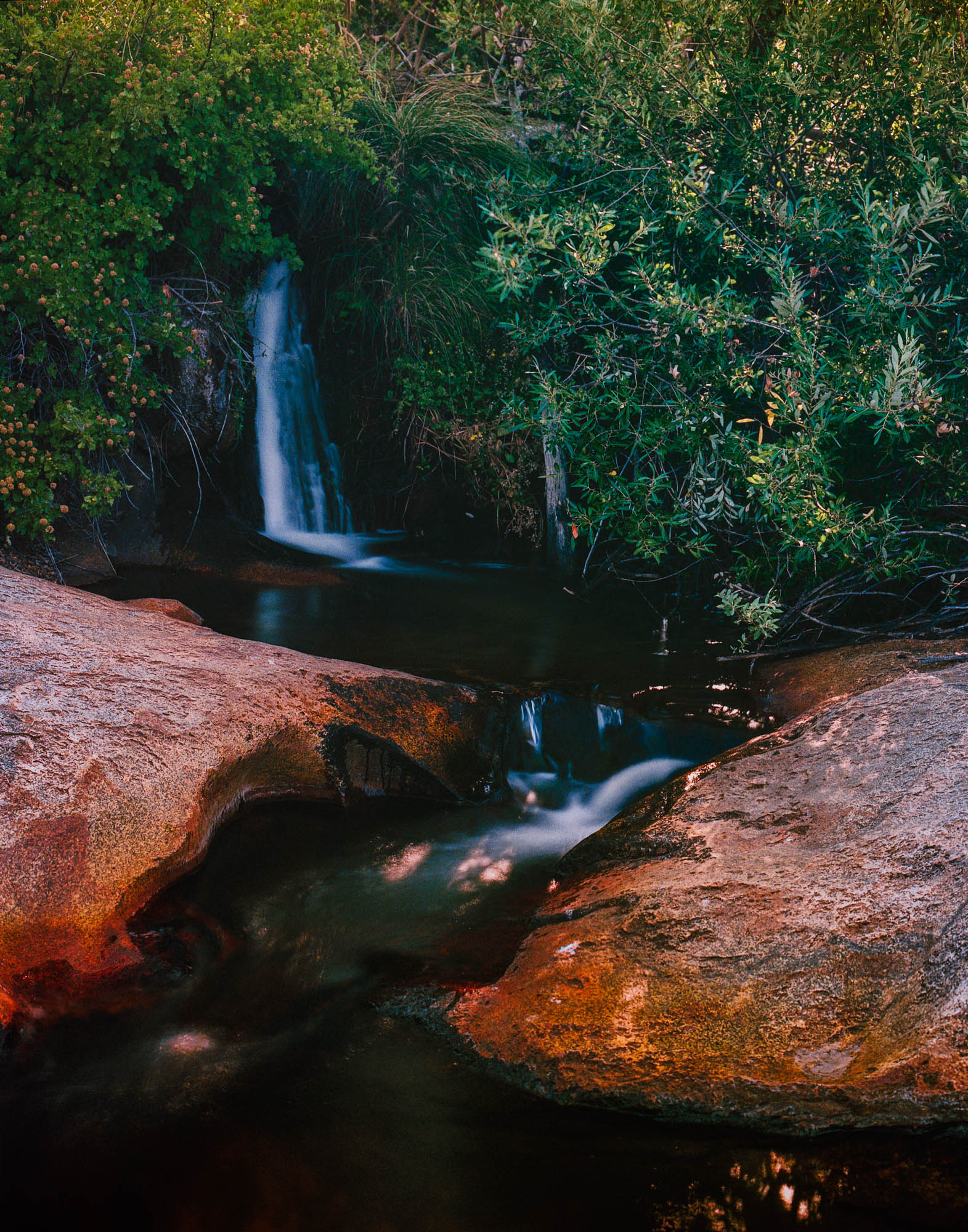
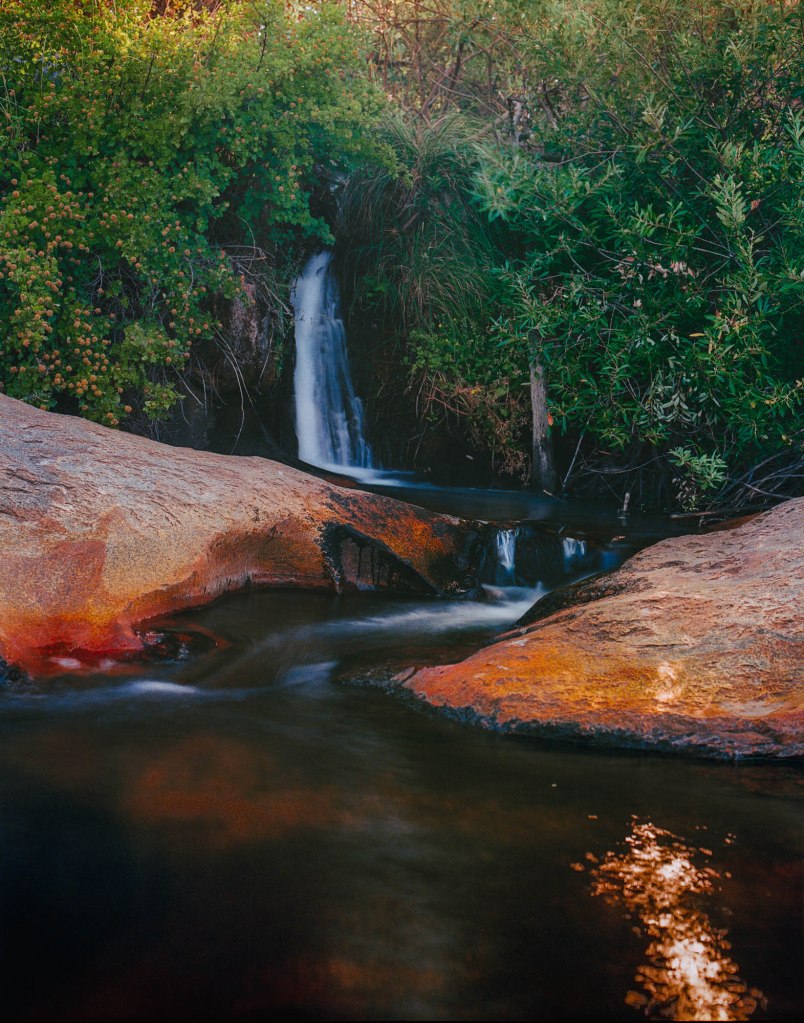
I took these photos backlit so the waterfall is quite dark, but I like how the waterfall is nicely placed against the dark background. I like the second shot better because the rocks at the bottom feel much stronger and dominant. The orange of the rocks contrast nicely with the greens in the photos. I also like there’re some patches of sunlight peak through the branches and appear on the stream. However in the first photo, I like the sunlight’s reflection on the water at the bottom right and the sunlight hitting the leaves at the very top left of the photo, I think they add more dynamic to the photo. But over all I like the contrast in the second one better.
After these shots, I fell into a pond while trying to get over a rock to compose my next shot. My Pentax get wet and stopped working. Although it means I have to send the camera to repairman now but I don’t feel regret or upset at all, that’s my choice, and to me all will be worth it if I got some photos that I’m proud of. So, cheers for a vivid beautiful summer.
Panoramic photos weren’t interesting to me from the beginning but since Nick Carver shows how wonderful panoramic photos can be, and other Youtubers’ talked about the Xpan and panoramic photos, I slowly get curious of this format. After awhile, I think I enjoy looking at panoramic photos because of the wide scenes and so much elements we can include in one frame. The feeling of looking at a photo from left to right slowly to appreciate the details and how the elements interact with each other in the shot is very enjoyable to me. So I tried panoramic photos for the first time, with my Pentax 6×7.
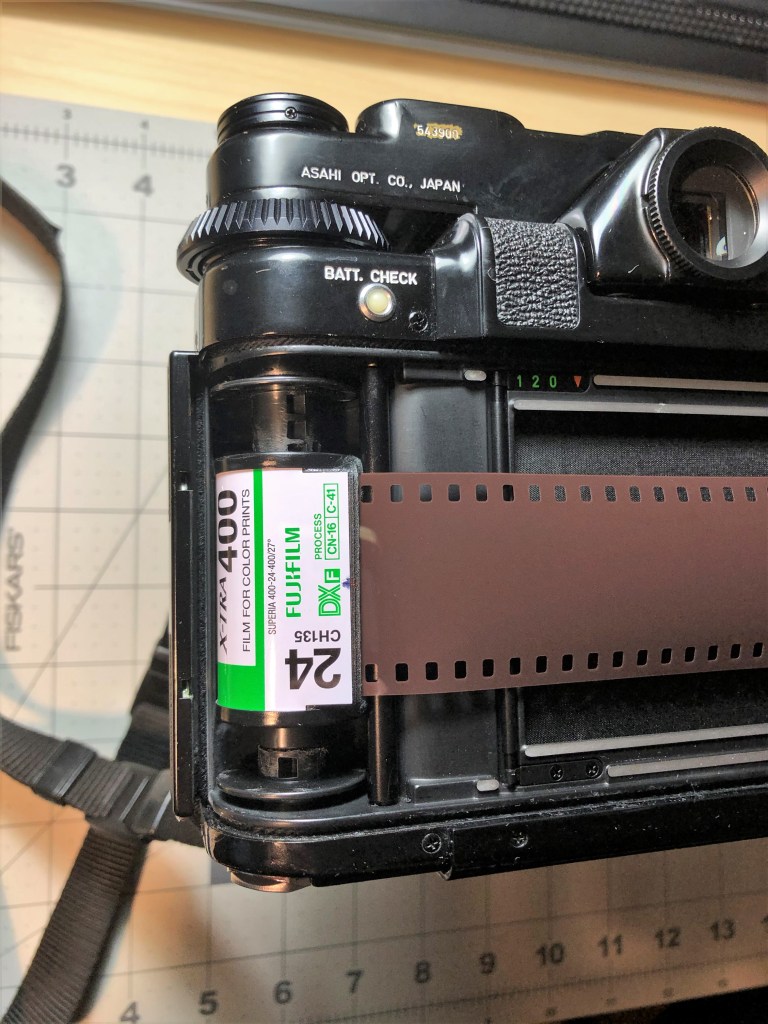
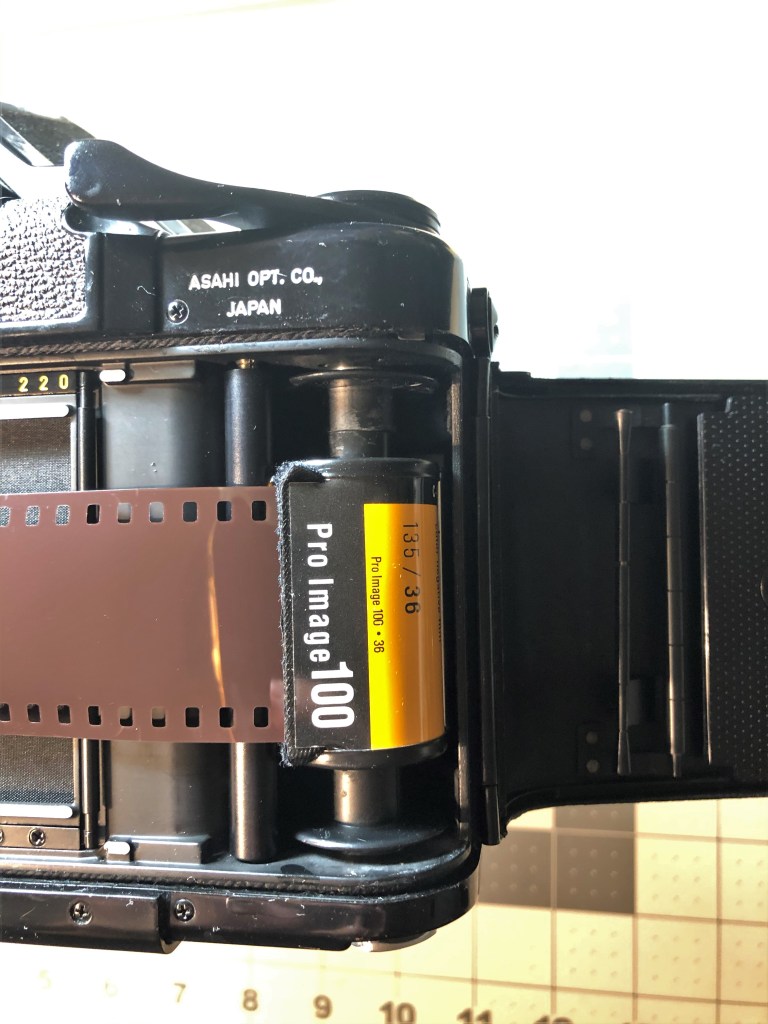
In other methods I saw on Youtube, most people use the adapter for the 35mm film canister and load the film into the camera with an extension paper at the beginning of the film roll so they don’t waste the film while winding the camera for the first shot. The down side of this method is you have to unload the film in the dark when you finish the roll, because you cannot rewind the film back into the canister when you finish so you have to go into a dark room or put your camera in a dark bag to take the film out of the film back and rewind it into the canister. This will limit your shooting experience in the field, if you can’t have a access to a dark room or dark bag, you cannot take the film out and load the new roll in. So I came up with this method, including 2 film canisters/cassettes, one is your brand new canister and one to take the film in, this one acts like the pick up spoon in normal scenario, but it can protect your film from the light.
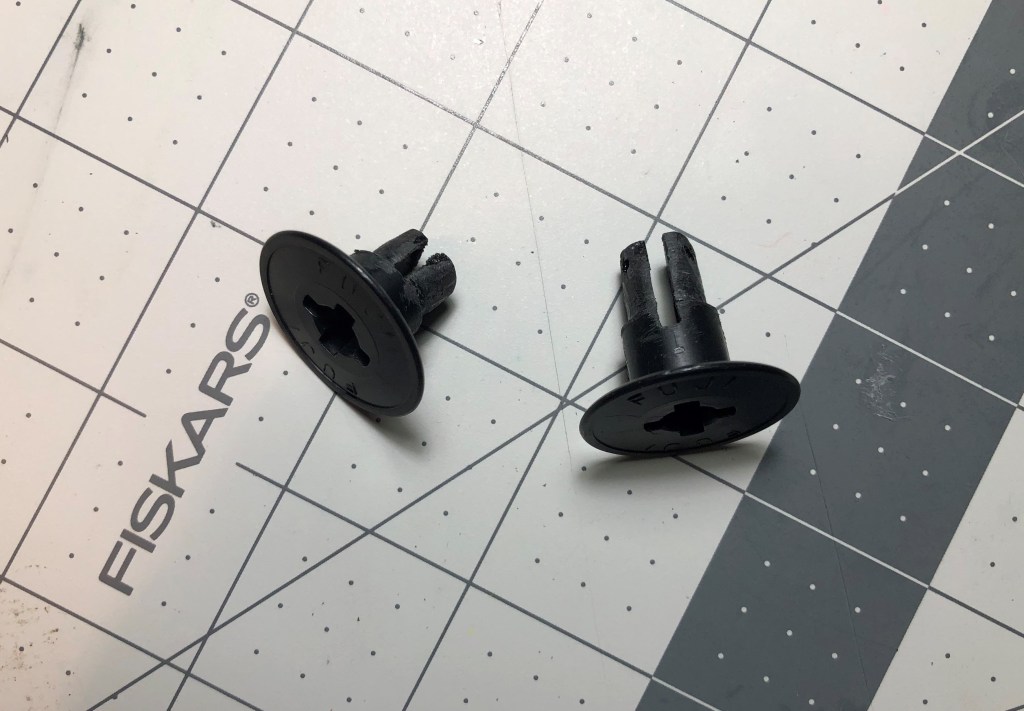
First, I made 2 pairs of 35mm film cannister adapters from old empty 120 film spoons. You can buy them dirt cheap online but on the day I wasn’t be patient enough to wait for the delivery so I made my own. It’s not beautiful at all but it works well. If you do it yourself like I did, one thing you should make sure is checking the length of the adapters carefully, so when you put it on the 35mm film canister, it will have the same height as a regular 120 film spoon. If it’s too high, it won’t fit in your film back, if it’s too short, it won’t stay straight and neat in your film back, this may cause damage to your film back.
One pair of adapter
Left to right: regular 120 film spoon, 35mm empty cannister and 35mm new film cannister. Make sure they have the same height.
So, how to prepare your pick up canister? We’re going to step 2.
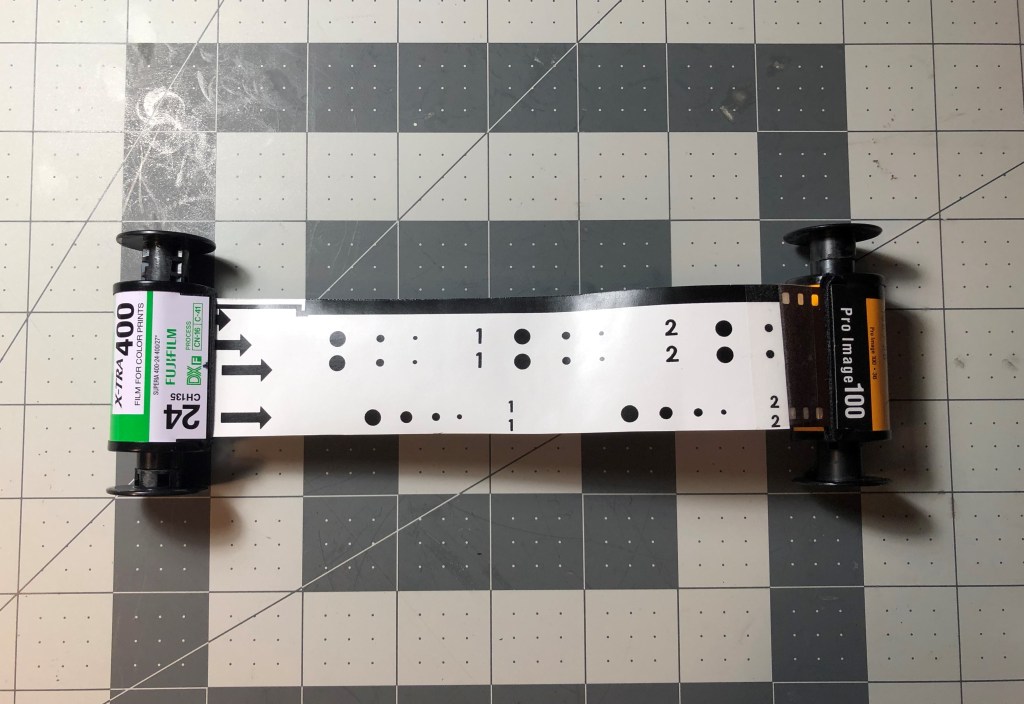
Step 2: Made the pick up canister/cassette from a old empty film canister/cassette, which still has a short amount of film left so you can tape a piece of paper on the actual film left. This piece of paper I cut from a backing paper of a 120 film roll, measured the wide is 35mm (same as the wide of the actual 35mm film) and the length is 18 cm. I taped one end of the paper strip to the film left on the old cannister and then taped the film lead from the new film roll to the other side of the paper strip, as photos below (step 2b).
Step 2a: Tape the paper strip to the piece of film left inside the empty cassette
Step 2b: Then tape the other side of the paper to the film lead from the new film roll
Step 3: Transfer the film from the original cassette into the empty cassette in the dark bag. So now you have 2 cassettes connected, and the film will be transferred from the new cassette into the empty cassette. Of course the transfer process is done in the dark bag. Why you must transfer the film from new cassette to the empty one? Because the point of this method is to let you unload the film in day light. So when you finish the roll and wind all the film to its original cassette, you open the camera back to take the film out, the backing paper strip that you taped earlier will be there at the end of the roll, and you don’t loose any last photo.
All the film was winded to the empty cassette, as you can see the white tape at the very end of the film roll is on the original cassette’s side.
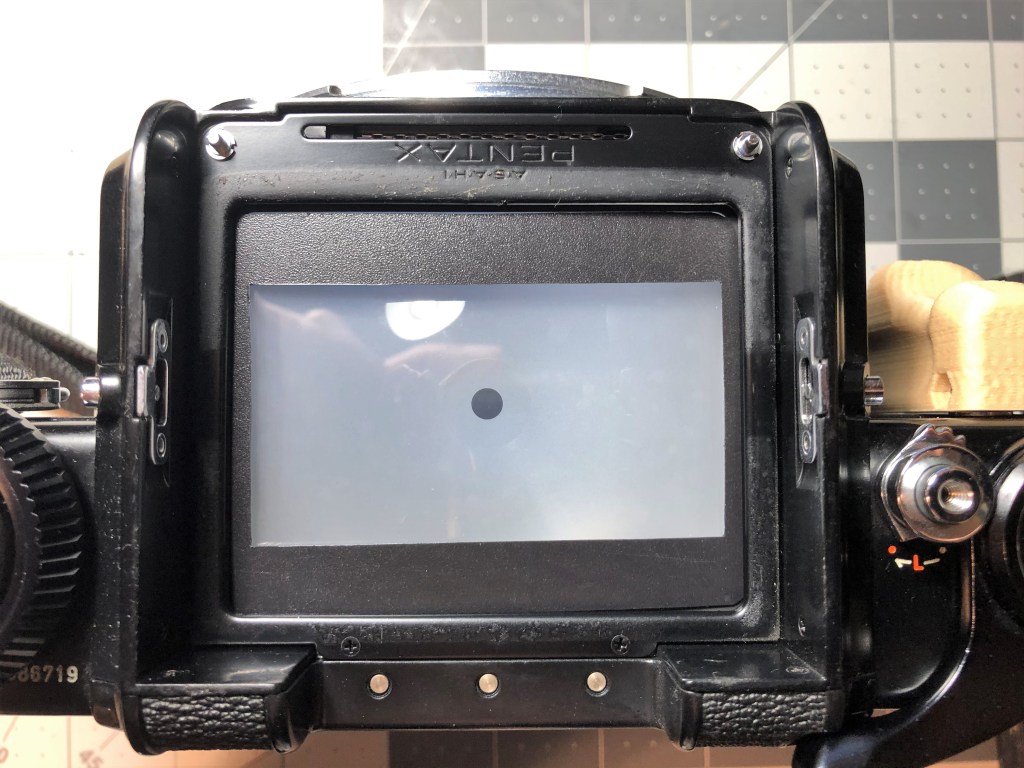
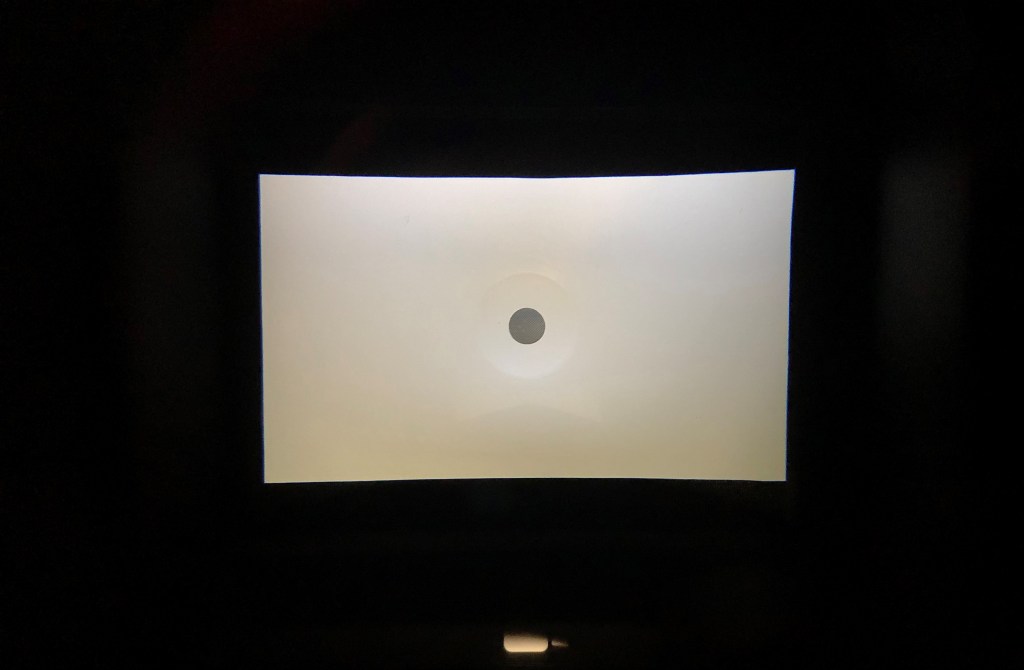
Step 4: Cut out a rectangle in a piece of black paper, the dimension of the rectangle is 35x70mm. (This includes the area of the sprocket holes, if you don’t want to include the sprocket holes, cut out the rectangle 25x70mm). Then put this piece of paper on top of your ground glass. This is a guideline for your composition.
A cut out 35x70mm paper for composing in the viewfinder
How you will see the aspect ratio looking through the viewfinder
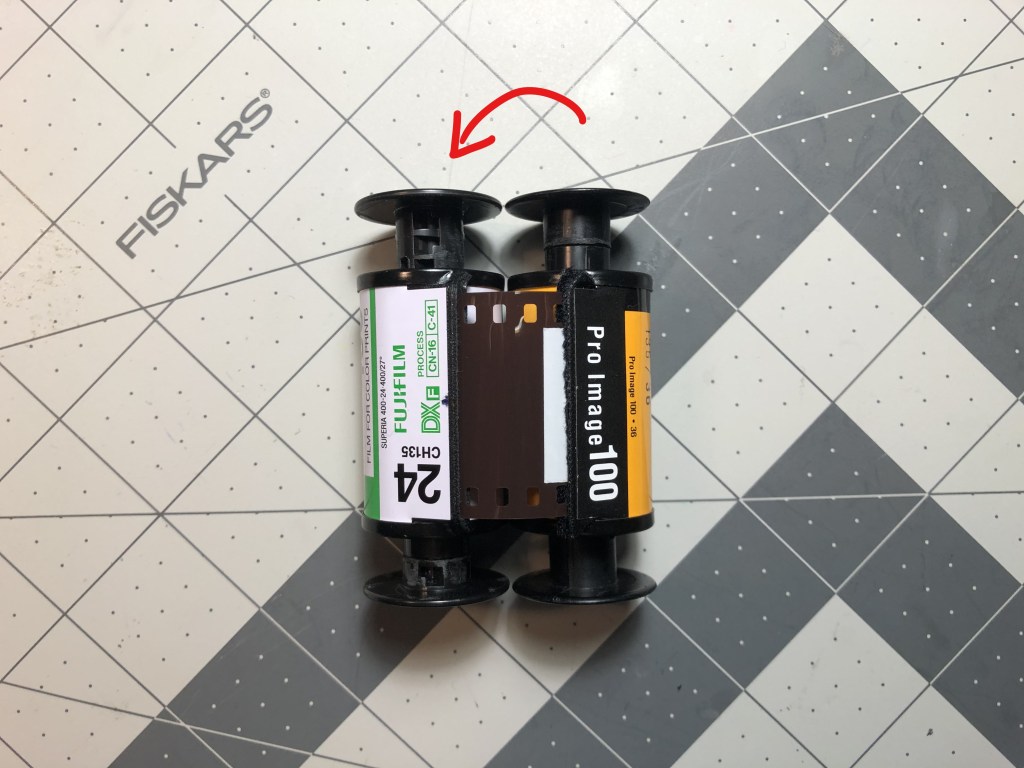
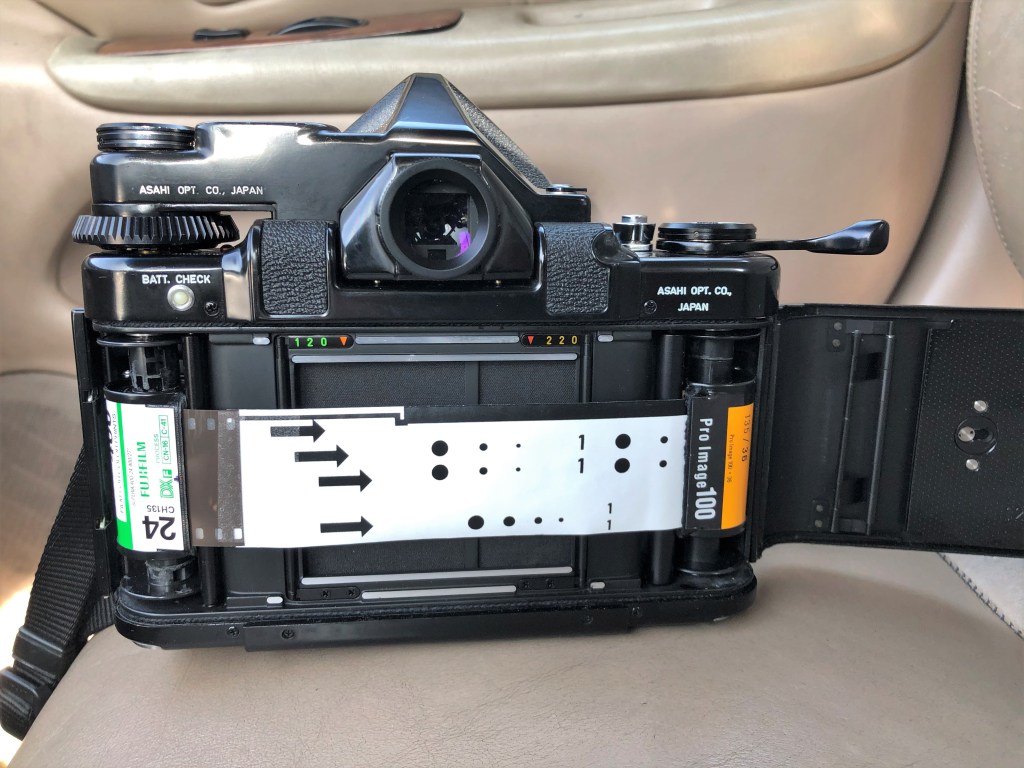
Step 5: Load the film into the camera. Remember to put the old film cassette (which now contains the film inside) on the left side and the pick up cassette (which is the original cassette) on the right side. So now when you take the photos and advance the film, you are actually wind the film back to its original cassette.
Film contained cassette on left side
Pick up cassette on the right side
Film will be transferred from the old cassette to the original one
Step 6: Finish the roll and unload the film. After you finish the roll, you can open the back and remove the cassettes out of the camera safely. You will see that the film in winded into the original cassette and the part exposes to the light when you open up the camera is the paper strip you taped in. You can just remove the film lead from the paper strip and reuse the old film cassette and the paper strip again.
Open the back to unload film when you finish the roll
So now you have it, a method to take panoramic shots on your Pentax 6×7 without requiring going to dark room to unload your film. All you need to do is preparing your film upfront as a set of film cassette and pick up cassette, and you can have more freedom shooting in the field. I was able to get 15 shot out of the 36 exposes roll but I was messing with the loading part, I think if you can load the film more careful than me, you can get 18 out of the roll. I will update the exact number of the shots you can get when I finish the second roll.
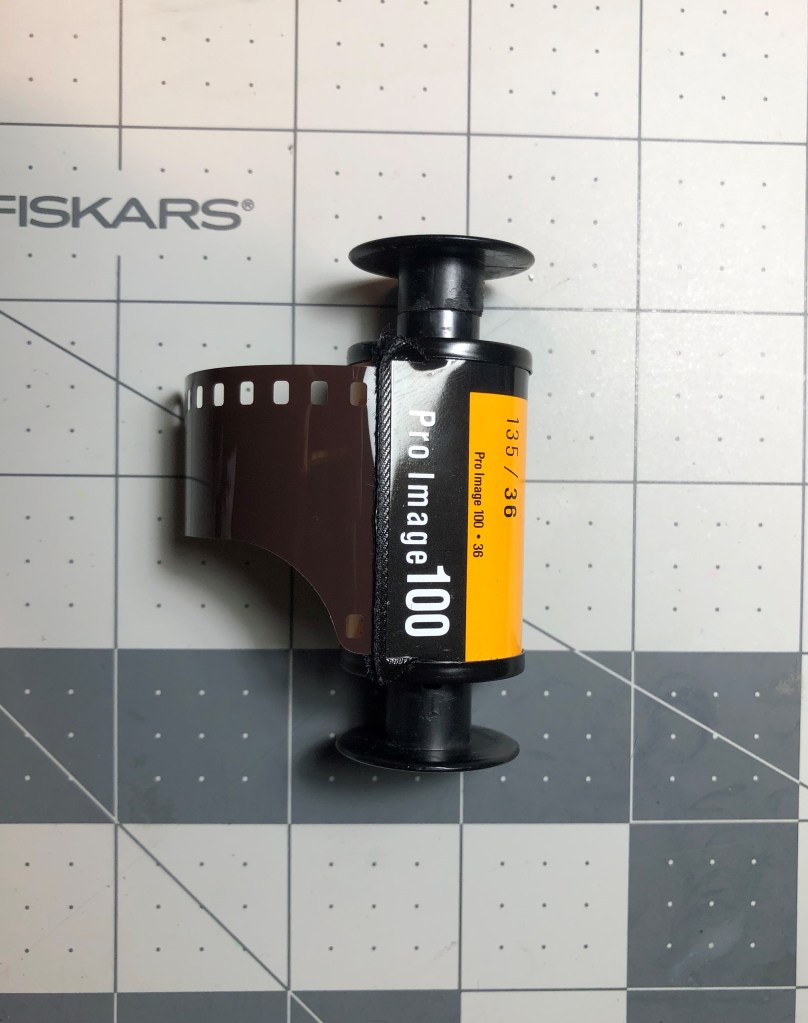
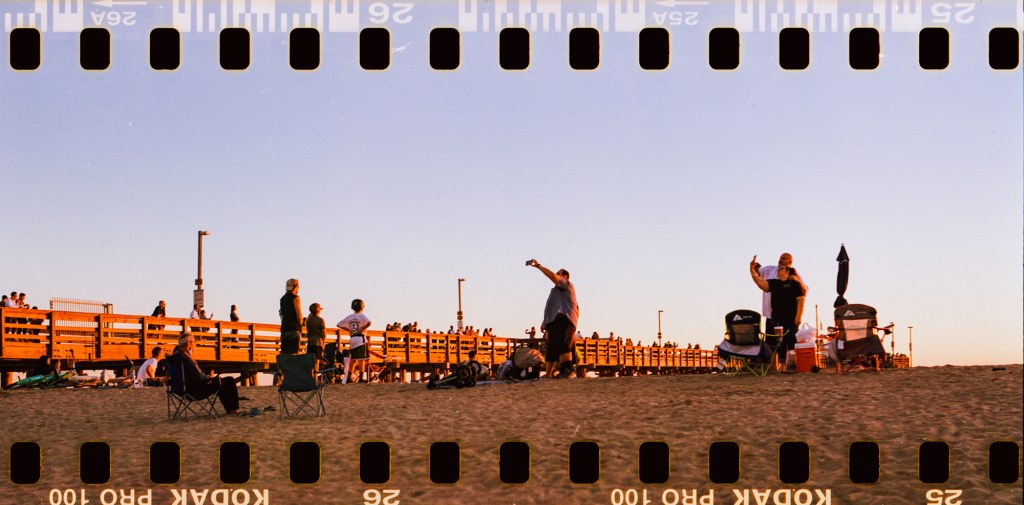
Here’re some photos I made with this first try. Taken with Kodak ProImage 100.
I love the photo of the man on the bike, it’s too bad that it’s underexposed but when I took the shot I knew this would work well on panoramic aspect ratio. You can also see that the ones with no sprocket holes are the ones I couldn’t get the horizon line straight 🙂
My favorites from the roll is this pair of photos, taking of the car in front of the house. I took the photo on the right side first and walked couple steps more to realize that the tail of the car and the scene was quite interesting and could make a good photo, so I took the second one. I think these 2 look very nice together because the continuation of the object, which is the car make the photos stand well next to each other. And I also like the idea of “the beginning is the end” cycle in the left photo, it’s not that literally but the photo starts with the head of the black car and ends with the tail of the silver car, like the end and the beginning come after each other. Or maybe I like series “Dark” a little too much 🙂
I love the last photo also. The frame feels a bit too much and messy but I like the overall feelings and colors of it.
Thank you for making it to the end. Hope you like these experimental photo ideas. Cheers!
Here we are for the continue part of my Mammoth Lakes road trip.
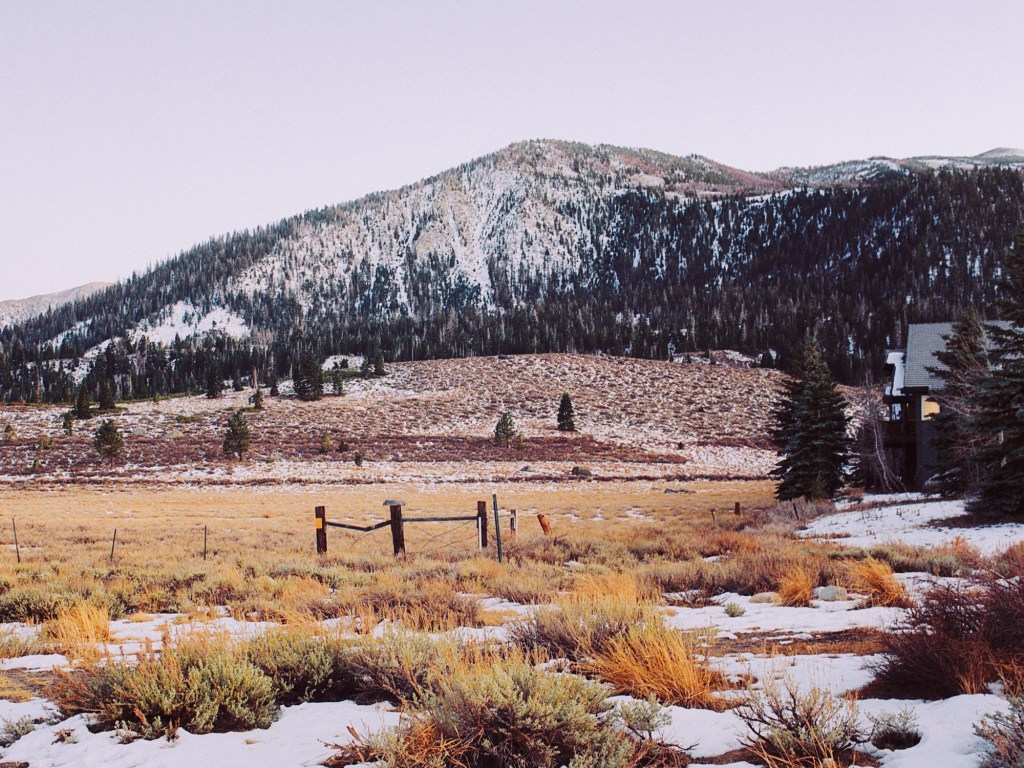
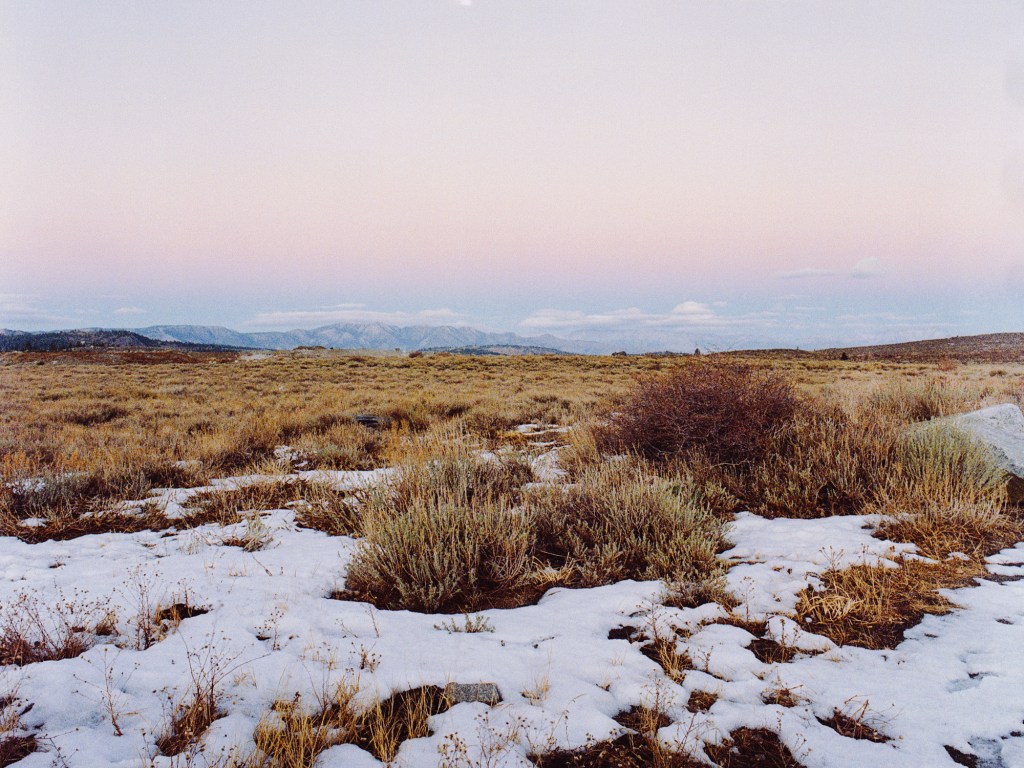
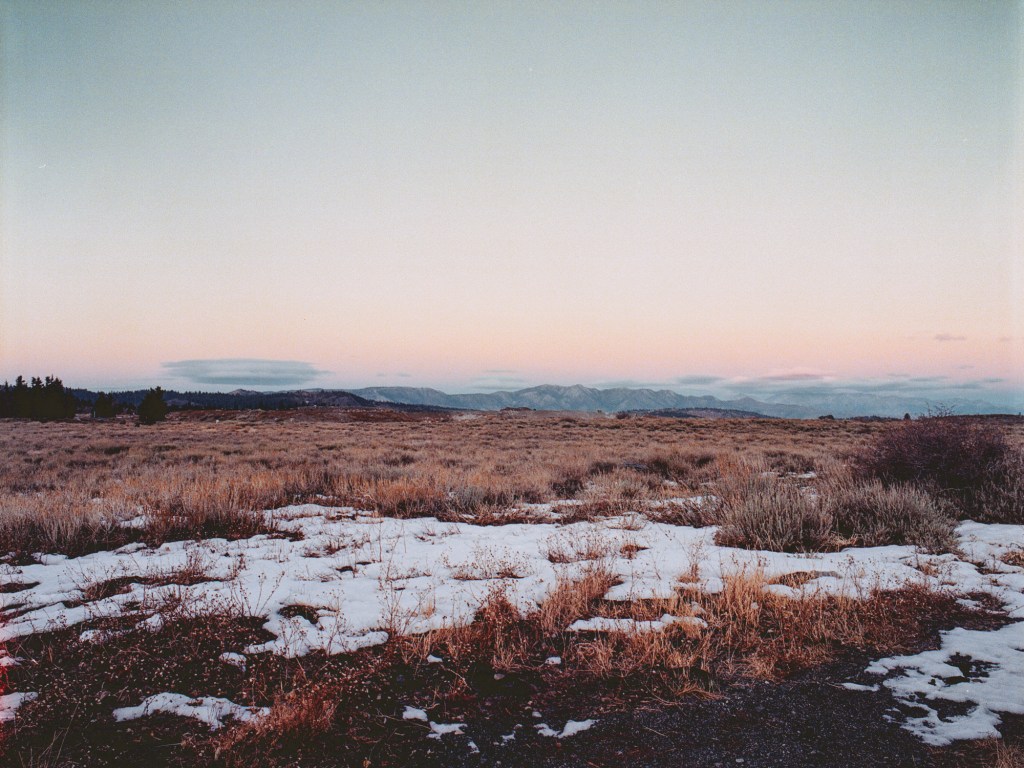
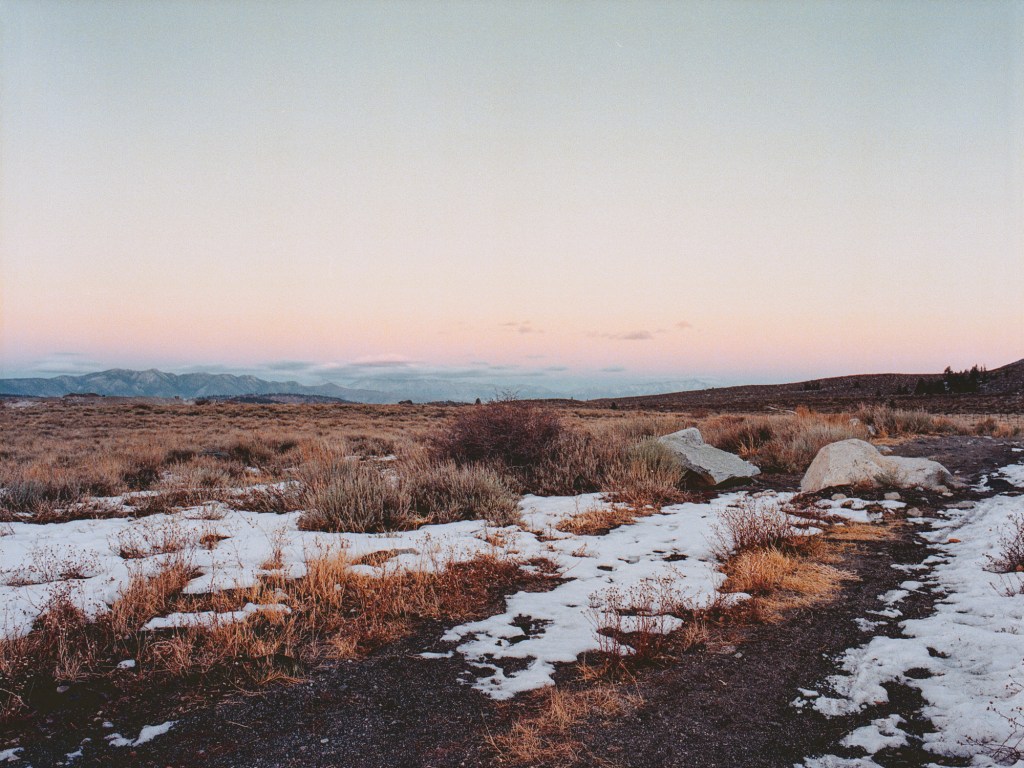
After the first day of going to Gull lake (which is I took a roll there but no photo came out that I want to post here 🙂 ) and another frozen lake that I forgot the name, we came back to the lodge because we weren’t sure to be out when the sun went down. So after getting back to the lodge, I walked out to take some sunset (or blue hour, for more precise) photos at the Meadow and stopped frequently on my way to take some nice house scenes. Here’re the photos that I like the most from the trip.
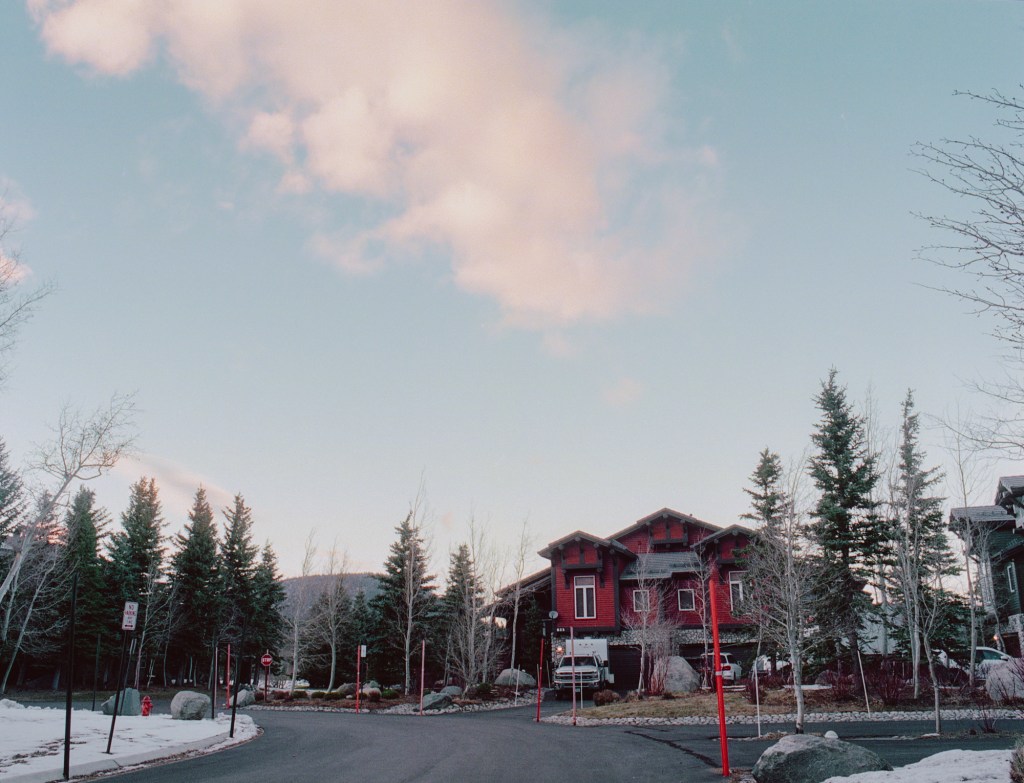
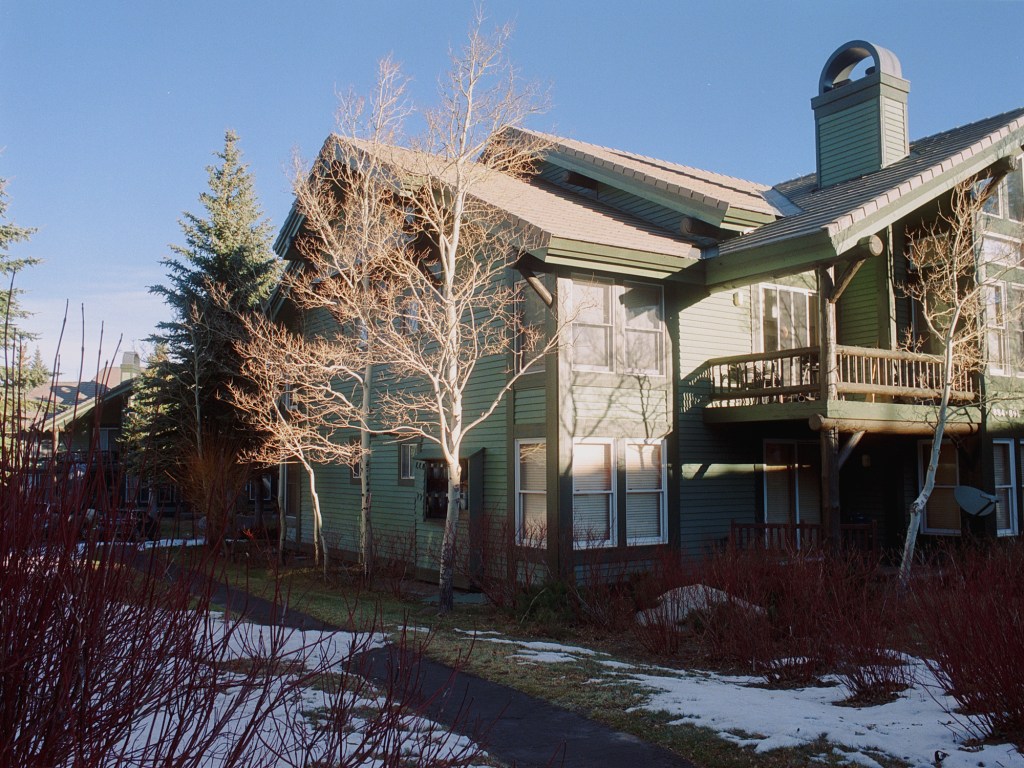
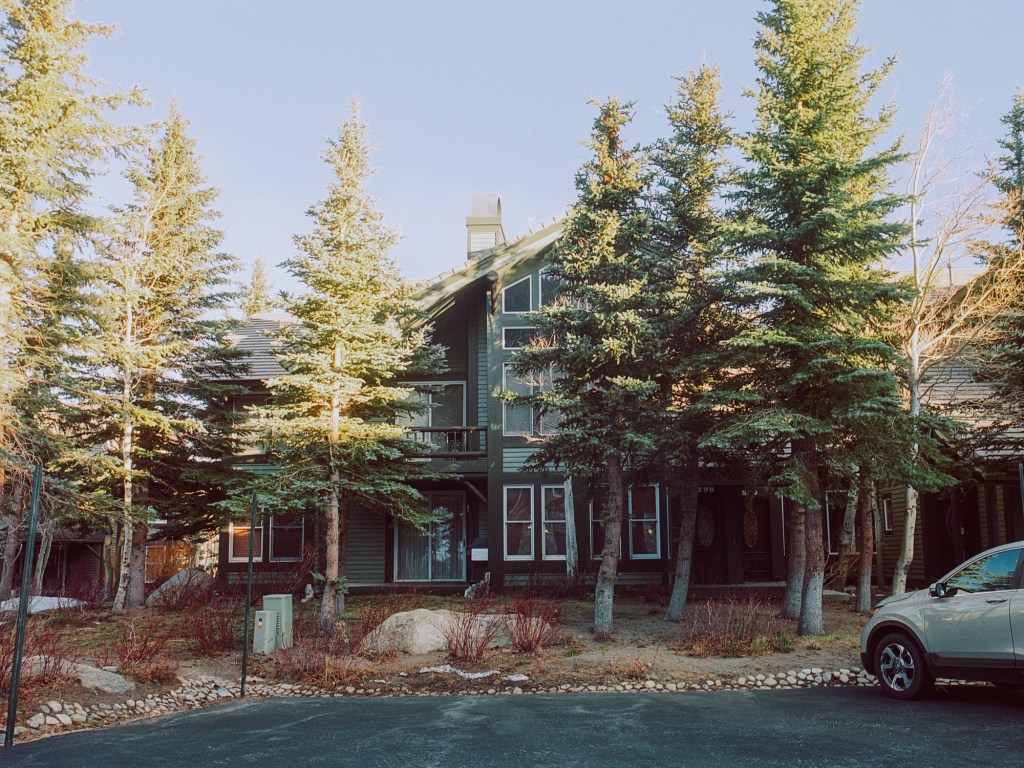
The first one is photo of one street in the lodging area, I captured it because it gives the general feel and architecture of the area, along with the massy mountain behind. The second one I took because the nice red house is quite interesting and the cloud above has a very nice shape and color. It’s a bit hard to take everything into the frame but I quite happy with the result, the only thing I don’t like is the bright red pole in the foreground that overlaps the house.
The photo on the right is when I went back the the lodge and the sky was dark. I saw the light from the light bulbs from the house was quite interesting and the tree in the front also had a nice shape and texture so I set up the shot for a long expose photo. I like how it came out but still think the composition is a bit off. I think if I had stepped back a bit and moved to the right couple inches, the composition would be much better, because the roof of the house wouldn’t ended right at the frame lines. Another lesson for watching your composition carefully before taking the shot.
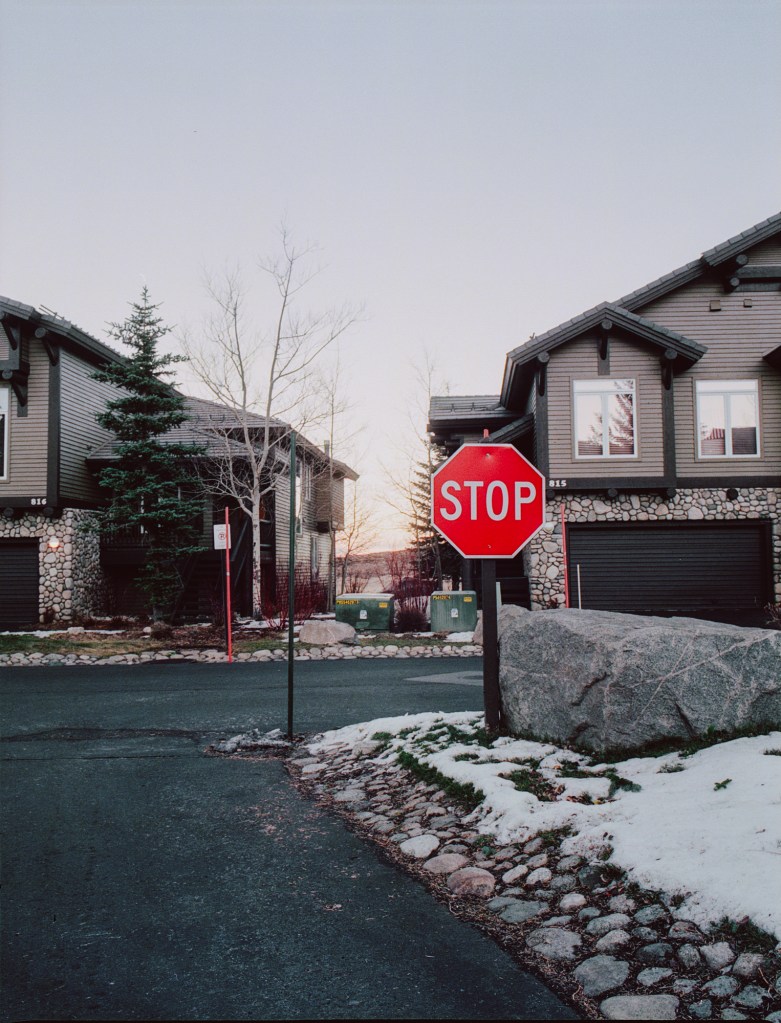
I like this very much. This is the first photo I took when I walked out for the sunset. The sun pretty much hided behind those mountain already but there’s still a bit orange glow at the horizon. I think the colors here work together very nice, the red is pop but not taking away the cold calm vibe in the photo. The reflection in the glass window also looks so dreamy and poetic. I also like the composition and the complex of the scene. To me, everything works together very well in this photo.
This photo of the “Private Property” sign I took on the way back to the lodge. It belongs to the Snowcreek Golf Course. I think the photo represents very well the calmness and coldness of a winter sunset in a meadow surrounded by mountains.
The photo above here is the first one I took on the Meadow. Took with Portra 800. The sun was behind a peak of mountain but the field still have plenty of light and the glow at the horizon was so beautiful. After took this shot, I managed to take the photo on the left, of a part of the house and the mountain behind it. I think the photo is not bad but still something is off about it. The reason I didn’t include the whole house because I wanted the photo to be suggestive, not just show the objects straight out. I also like the little fence[?] in the middle of the frame, it adds a very nice touch to the field. One thing I think I could do better for this photo is exposing for the house to get more details out of that, and hopefully don’t blow out the highlights. In general I still like it but it’s not good enough to be showed as my best work.
On the right side are photos I took when the sky is almost dark and there’s not much light on the grass field to expose. I took these in the much longer shutter speed than the previous photo above. You can see how much the difference is compared to the earlier photo taken 10-15 minutes apart. This merged photo describes the vast scene of the meadow in blue hour. I really enjoy this photo.
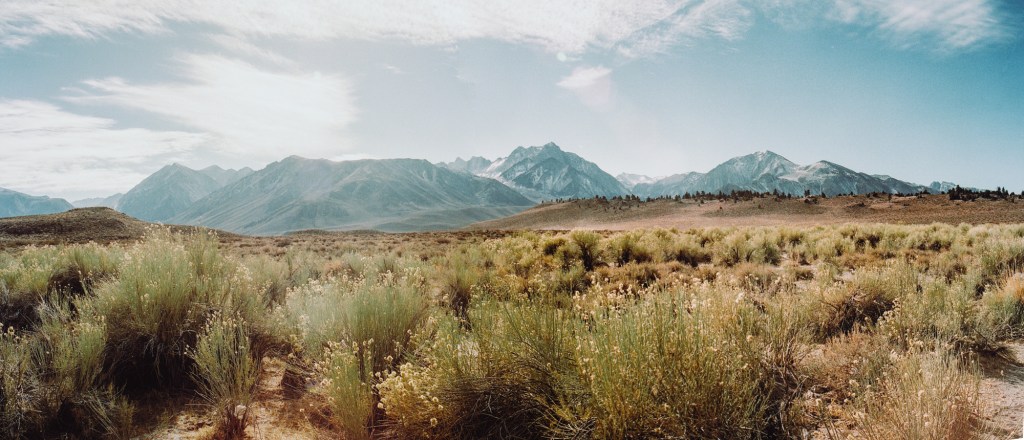
The photo below is another panorama merge from 2 photos. This is the scene at Rock Tub Hot Springs. The tub itself is quite small and funny in the middle of the vast land. When I got there, the sun was high up and the sunlight was extremely harsh. I took a couple photos but nothing come out as I like, so here just a photo for you to have an idea how the landscape looks like. All the daytime photos were taken with Fuji Pro400H.
Final photos from the trip are some I took on my last hike to the place I forgot the name again, but that’s a long hike that passes couple lakes on the way. We could just have enough time to hike to the first lake and then had to come back but it’s quite a nice hike with beautiful view. The light was softer and warmer as it’s afternoon and we really enjoyed the hike.
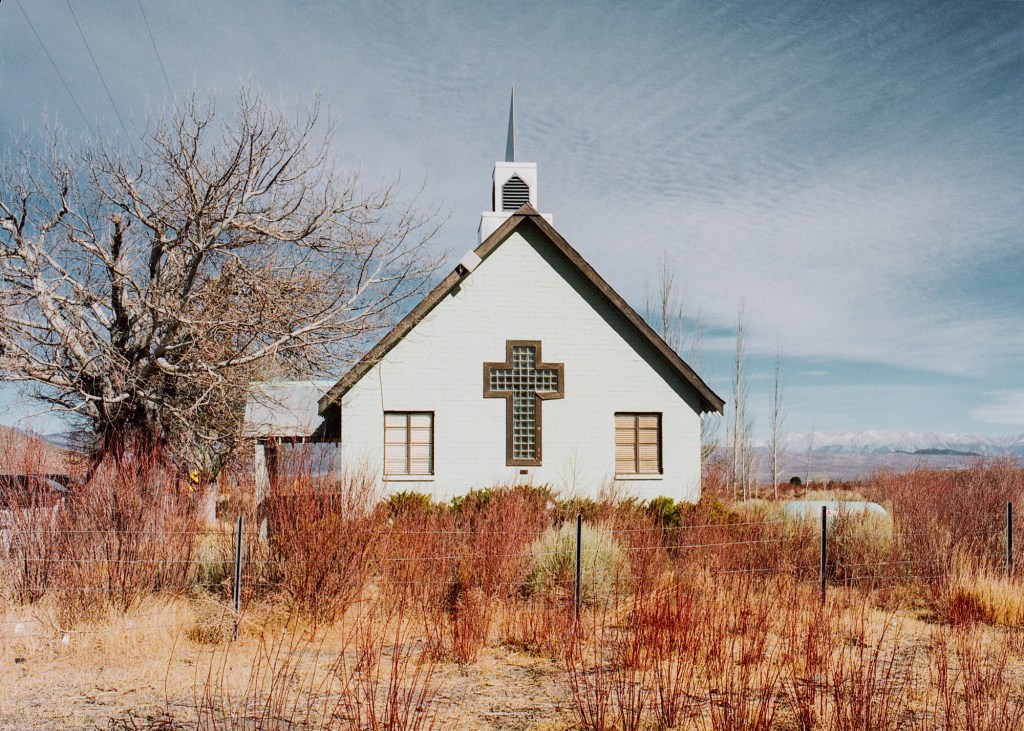
The photos above are of the Green Church near the hot springs. When I first saw it on the way to the hot springs, I was fascinated by it. A small green church in the middle of no where, who can resist that? So on the way back from the hot springs, I stopped by and took these photos. Of course with the harsh light condition, I could get the photos as good as I want. I really hope I can come back and take photos of this church in a better light. The last one is the composition that I like the most. I don’t really know why but I like the fact that a part of the building is included with the backdoor stairs and the white fence with the gate. You can also see the grass in the field behind and the mountain at the horizon. There’s many elements in this photo to look at.
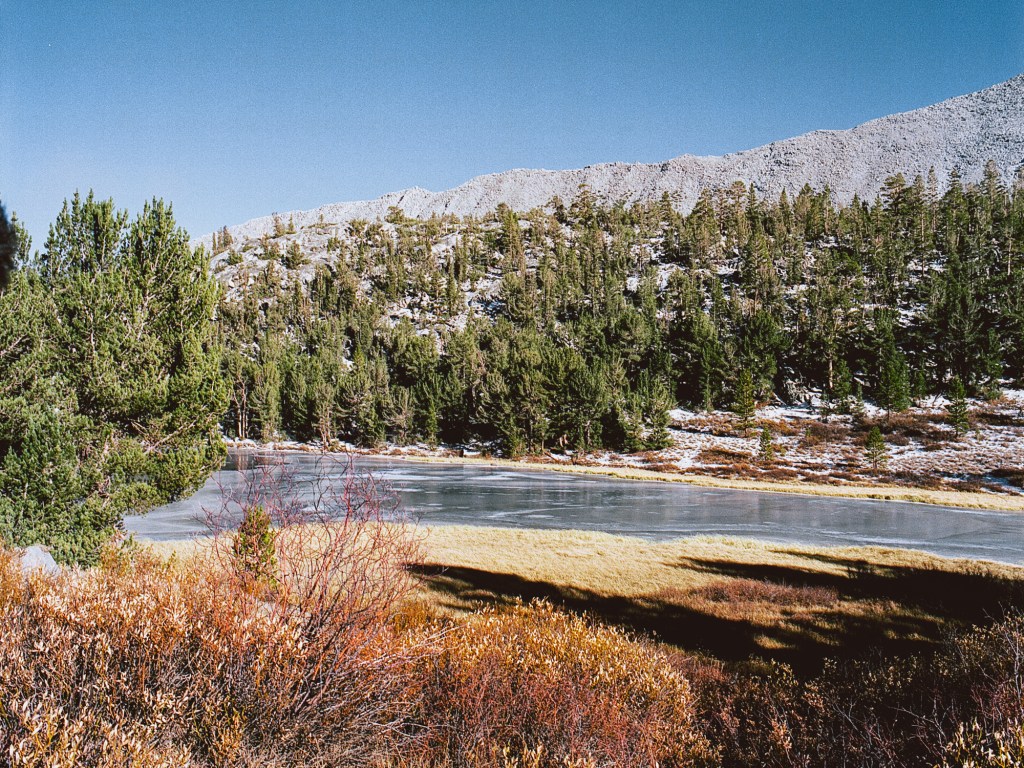
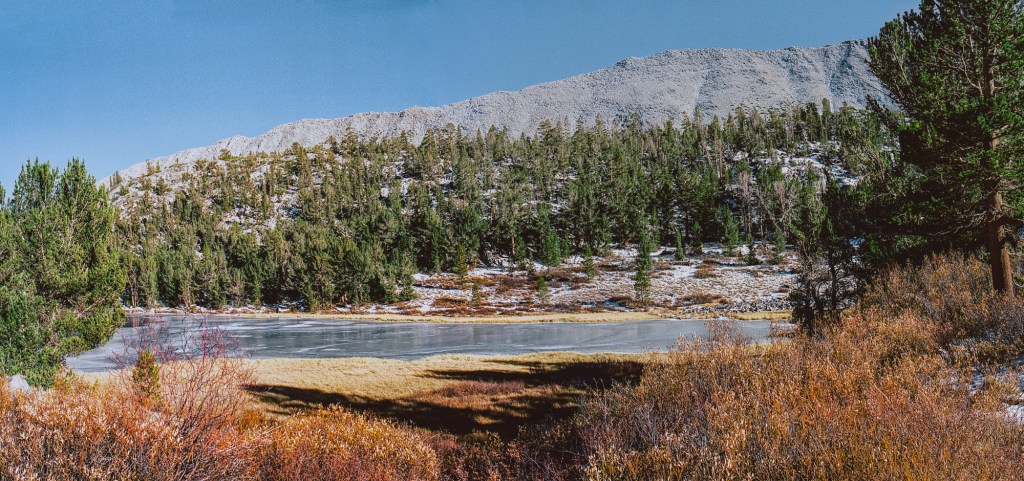
As you can see, the 2 photos on the left were merge to make the panorama below. Just so you know the view of the frozen lake that I got to see after the hike. I wish I could come down closer to the lake to have more close up photos but we’re really low on time so this is all I could get. I don’t think the composition is that good but it’s nice to see the whole view. I like the yellow grass field by the lake and the color of the sky reflect on the frozen surface.
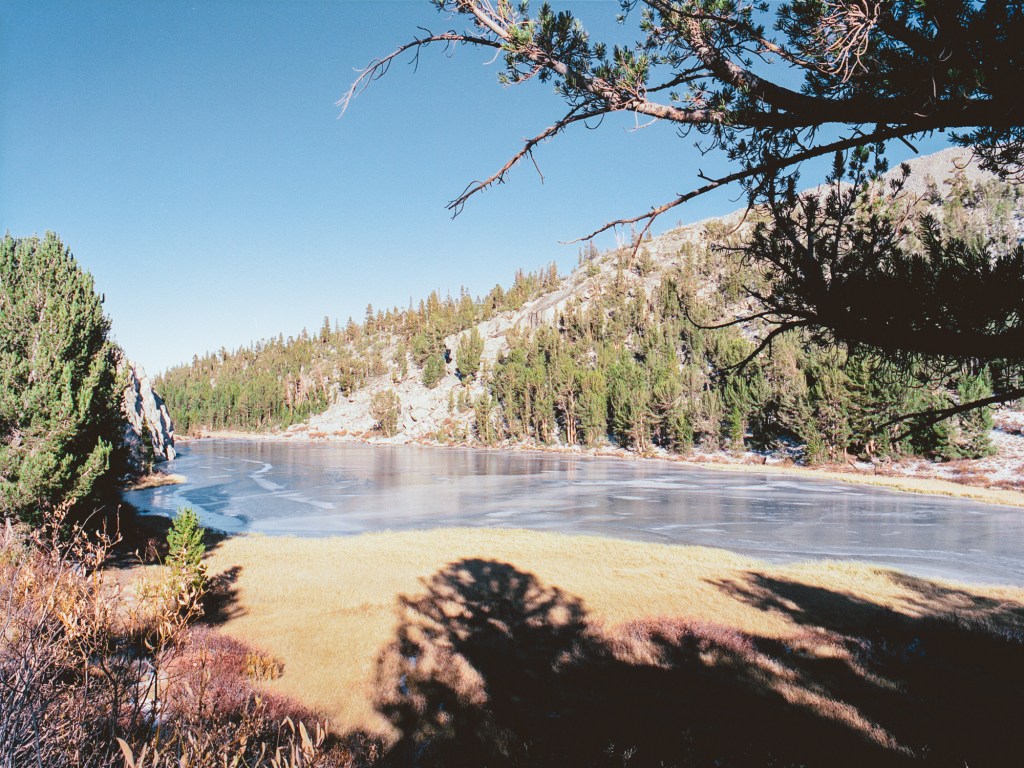
The last 2 photos are other composition that I took of the lake from a closer spot. I like the final one because the branches at top right foreground and the shadow at the bottom combines to give a direction to the eyes to look at the lake surface. I definitely blow out the highlight in this photo but I like that you can see the cliff behind the left side tree that you cannot see in previous photos.
That’s a wrap for this Mammoth Lakes trip. Thank you for making it all the way here. Hope you like the photos. Cheers!
It’s 2 months late after the trip to publish this post but I worked quite hard on the photos so I hope you enjoy it. I went to Mammoth Lakes in the middle of last November. The trip was nice and lovely, the weather was beautiful. This trip gave me some favorite shots that I’m quite happy with. In this trip, I tried something new with my photography: first, I practice merge 2 photos together to make a panorama scene; secondly, I used my new wide angle lens for the Bronica, the PE 50mm/2.8, for the first time. Having a wide angle lens gives you much more ability to shoot landscape or just more scenes in general, in the end, I shot all the photos here with the 50mm lens. Since I have a good amount of photos to share here so I make it 2 parts because I don’t want to overload my page or make you wait forever for the photos to load.
Since it’s 2 months already so I apologize for forgetting the names of some locations that I took photos of. When I went to Mammoth Lakes, the weather was very nice, not very cold, there’s thin layer of snow on the ground but I did not see any snowfall. The fall leaves were long gone and the snow was just appeared. The sky was very clear and bright in the morning and afternoon, at noon, the sky was so blue and the sunlight was very harsh, made it so hard to take photos at this time.
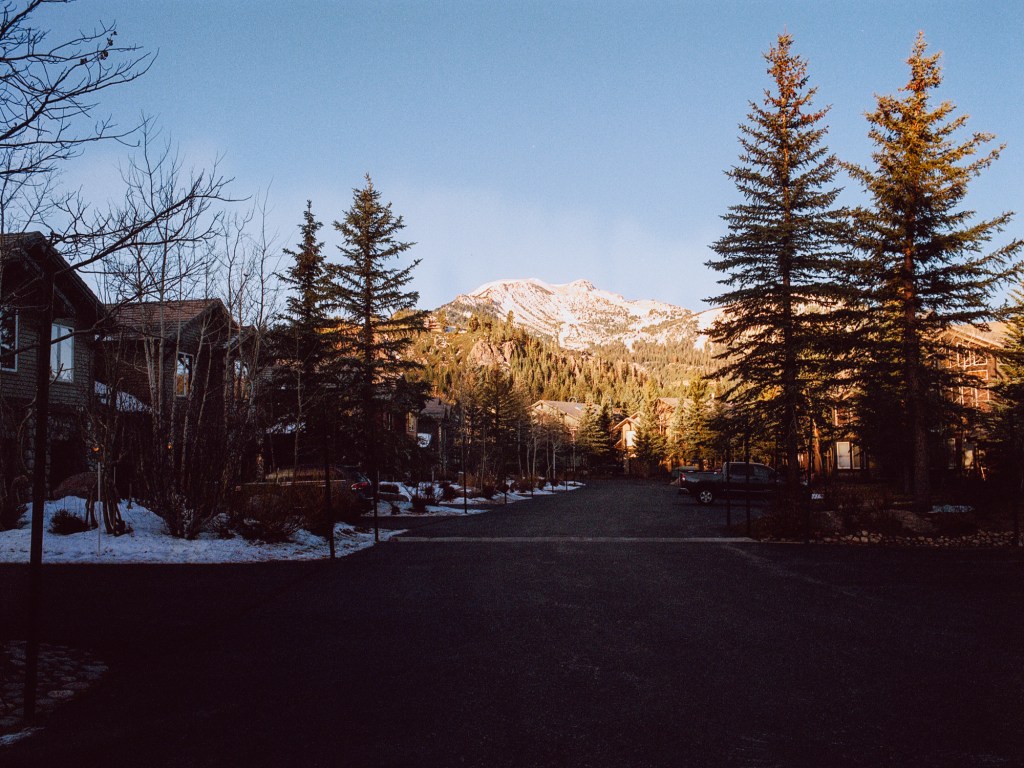
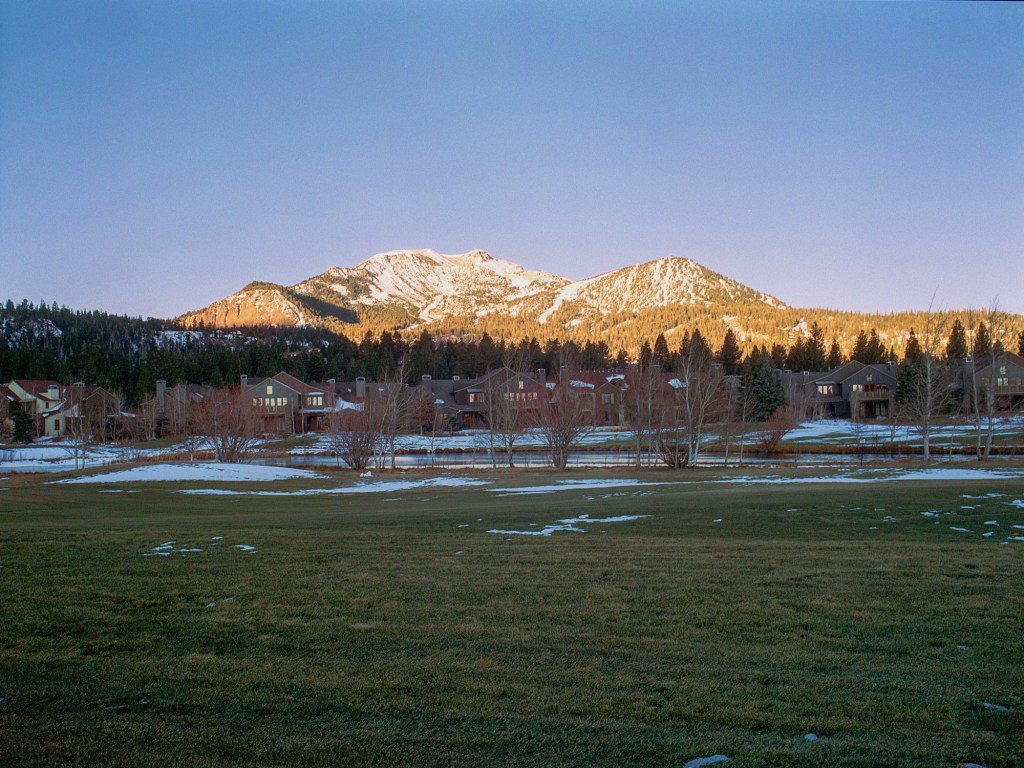
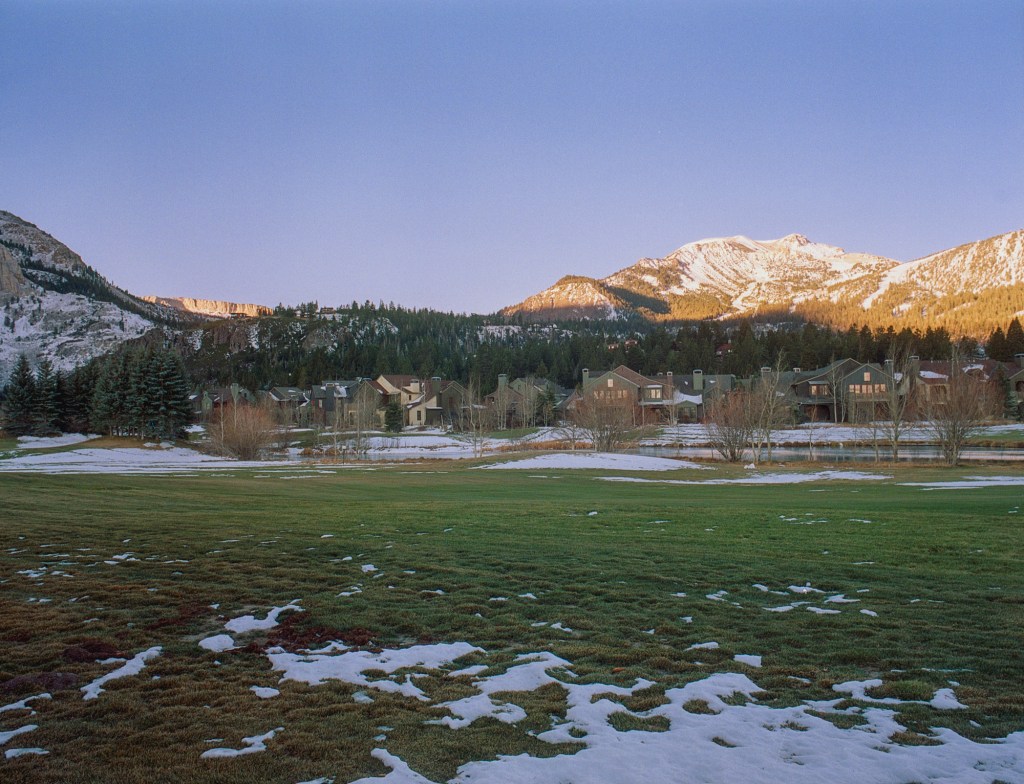
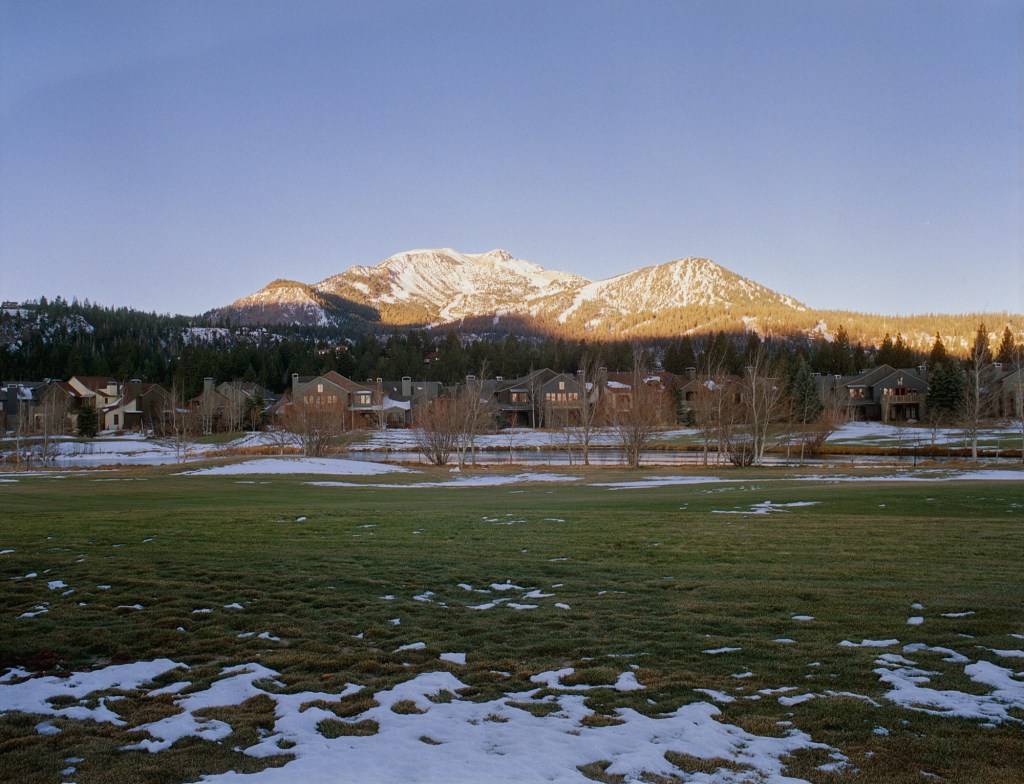
First off, let take a look at the area my friends and I stayed during our trip. It’s a lodging [compound?] called Snowcreek, it’s located by the Kerry’s Meadow and next to the Snowcreek Golf Course. These photos here I took with Bronica 645 system and Portra 800.
The first photo is the road at sunrise. This is a very high contrast scene where the peak of the mountain is lit up but the road and houses down here was very dark.
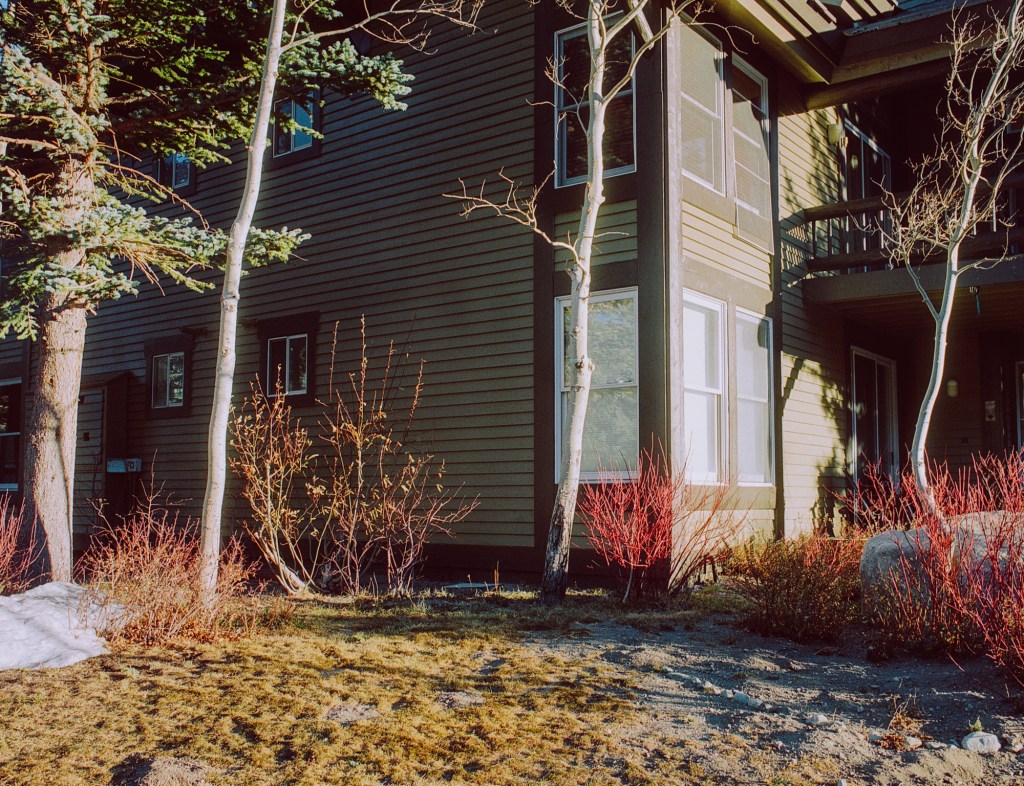
Next is some houses in the sunrise light. I took these with the promist filter 1/4 to have the glowing affect on the trees and windows.
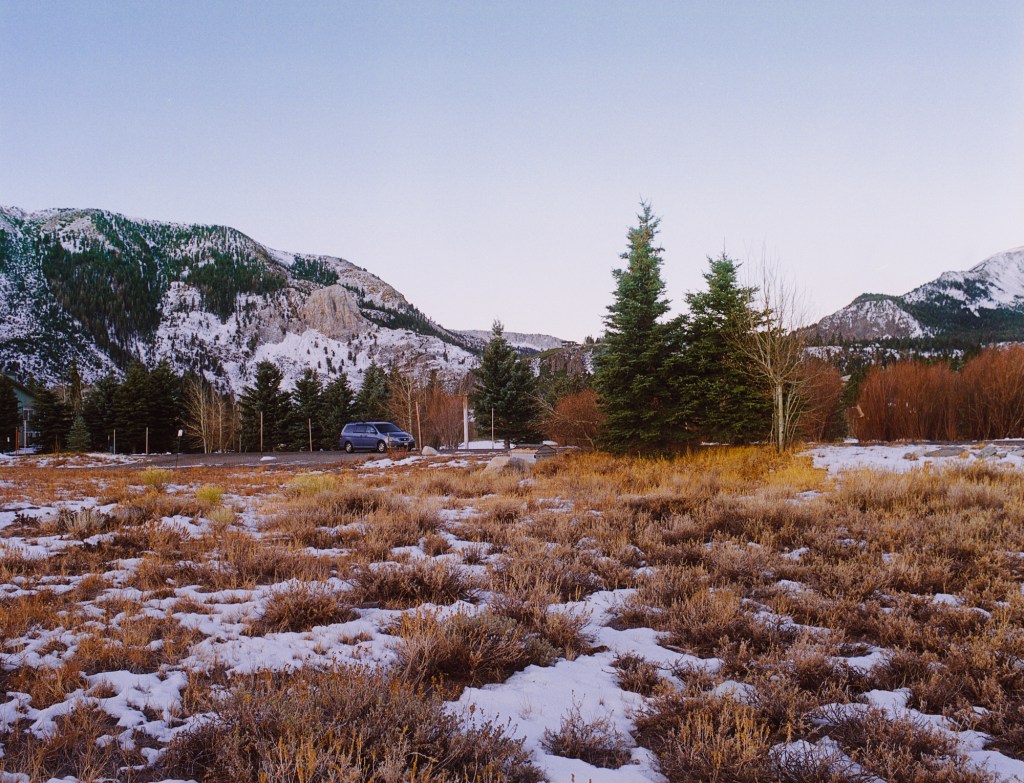
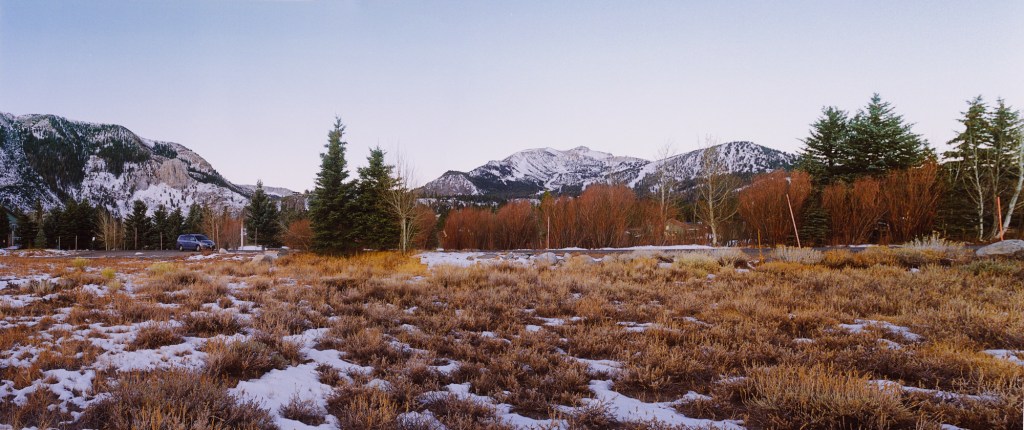
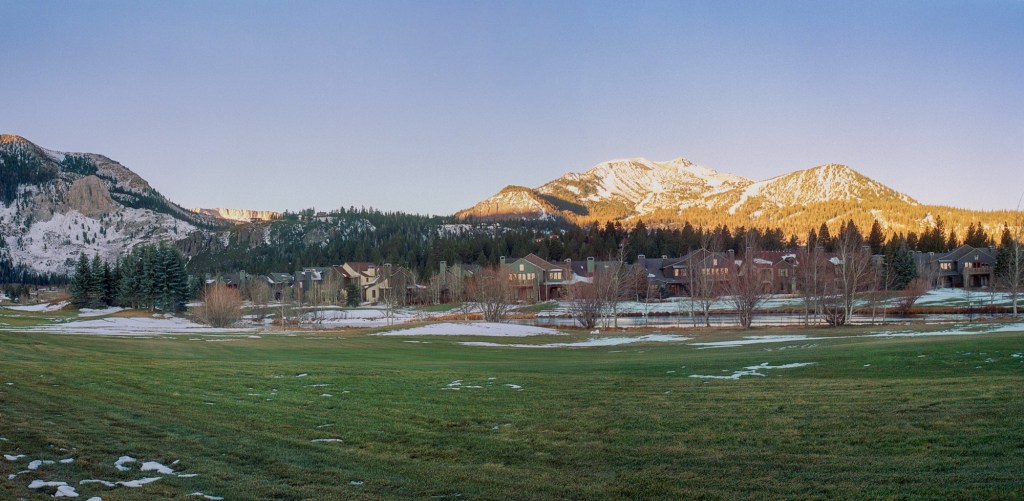
Next, the photos of the sunrise view that I took from the edge of the Kerry’s Meadow looking at the Mammoth Mountain. My specific spot here is just off the road between the Golf Course and the Meadow, I didn’t walk into the Meadow although it could be great if I did. Here I combined 2 photos together to make a panorama of the scene. When I went to the Meadow for the sunrise, I noticed the blue van was silently parked there, they must went there to watch the sunrise just like me. Even though I didn’t know them and we never talked to each other but since we came there for the same reason, I feel a connection to them, like ‘we were a same place at a same time waiting for the same thing’ vibe. Besides, the van is a nice addition to the photo in term of showing the scale of the scene. At this moment, the sun haven’t come out yet, as you can see the scene is flat and dim.
This one here is the view from the edge of the Golf Course looking at the peak of the Mammoth Mountain when the sun rises up.
Another panorama photo. I think I watch a lots of Nick Carver’s videos to make my photos into panorama ratio. But I don’t think my composition is that good, the first reason is I didn’t actually see the composition as panorama when I compose the shots, just the estimate and imagine from myself, so when I merged the photos together, the composition is always off. But it’s nice to make these photos and see the scene as wide as I can.
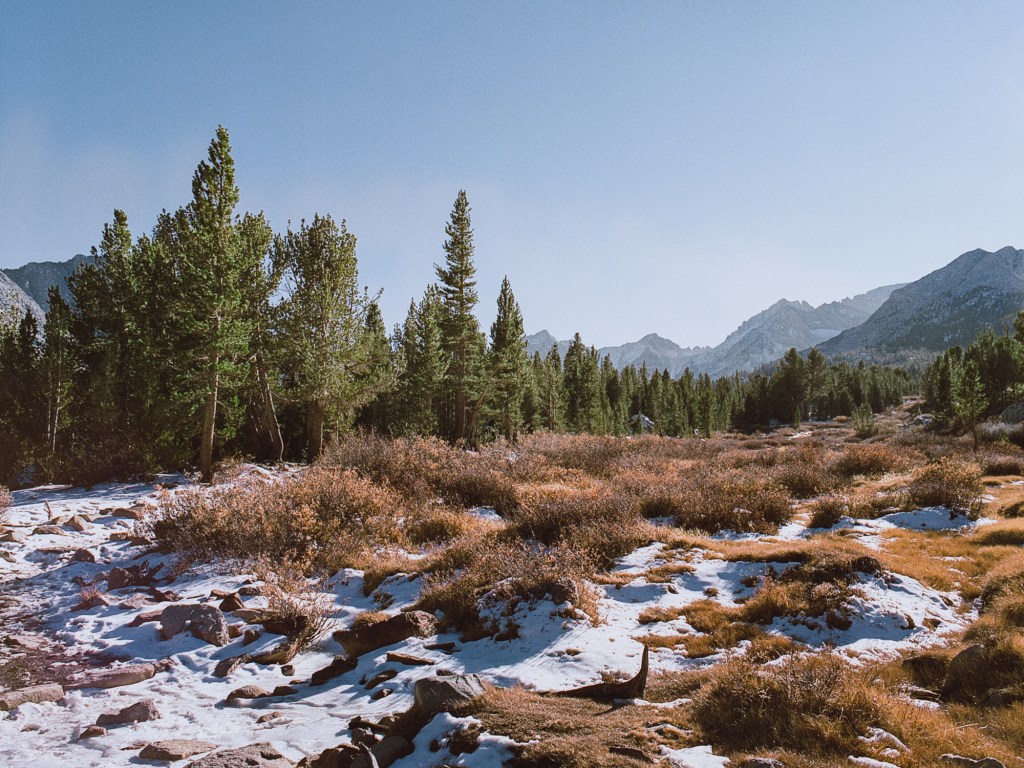
The following photos are some scene on the hike on the first day. Taking photos in the snow scenes was definitely hard because the snow is so bright and if you don’t know how to expose the shadow, your shadow will be pit black, just like my right side photo here. These were taken with Portra 160 expired.
Finally, these are photos of a lake that I forgot the name. I took these in harsh sunlight so the shadow was crushed to black. The film I used here was Fuji Pro 400H. I did heavily edit these photos because the “straight out of the scanner” were so terrible to look at [or just me being terrible at scanning]. The first two are not that great but still give you the nice view of the frozen lake. The last one is my favorite, I like the color palette and the way I can capture my shadow, just something about it makes me keep looking at it.
This is end of part 1. Thank you for making it here. Let’s check out the part 2! Cheers!
This blog is not meant to talk about gear but since I had opportunities to try some 645 SLR cameras I think I may can give you some advices if you are wanting to buy your first medium format camera. Other Youtubers or people on the Internet may give you a bunch of 645 cameras and talk about the pros and cons and leave the decision to you, I think it’s cool because no one asks you to choose like them, you have the freedom to decide for yourself. But since you’re already here, I give you the short answer, Bronica ETRS/Si. Of course, this is my opinion and you literally can use any 645 camera to take beautiful photos as long as you you know what to do with the camera, Bronica just happen to be the easiest one to use. Or, if you find any good deal on a 645 camera, just take it, price can overrule all of the reasons I’ll show you below.
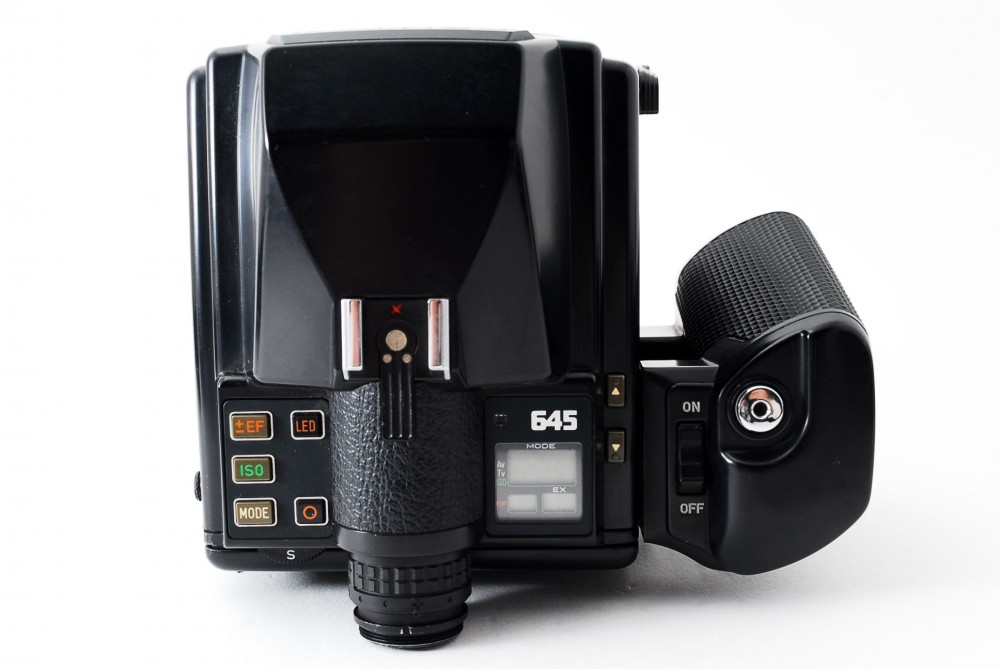
First, let’s talk about Mamiya 645. I haven’t use the m645 or the 1000s yet, so I can’t speak for those, but I used the Mamiya 645 Super, and I believe the Pro/Pro TL are very similar. Honestly, the Mamiya 645 Super/Pro is the one I wanted when I looking for my first ever medium format camera, but I couldn’t afford it because the price tag. I like the design of this series a lot, and while using it later, I really like the form factor of the camera, it feels really nice to hold the camera and take photos with it. Even though the box design may feel weird to hold but I was really surprise how fast I like to hold it, without using the grip. At first, the mechanism to open and remove the back and prism feel a little annoy (because you have to press 1 button down and slide the other button with the same finger at the same time) but I believe you can get used to it very quickly. The other thing I don’t think ergonomic about the camera is the ISO dial, it’s so damn hard to turn the dial. You have to use your finger’s nail to turn it and it’s not easy to move, not mention that the dial is half beneath the prism finder [as photo below] makes it even harder because you have a very little space to move your finger around. Of course you can dial the ISO before you put the film back onto the camera to avoid the prism finder (but it’s still hard) and yes, you just have to dial it once per roll or don’t have to redial if you continue to shoot same ISO film but to me, it’s worth notice. The Metering Mode dial and Exposure Compensation dial are the same, they’re just on the top of the prism so they’re a bit easier than the ISO dial but you get the idea. The shutter speed dial on the other hand, so easy and friendly to use! Other than that, the camera is great. The lens are a bit rigid to turn when you’re focusing but not too much, compare to Pentax or Bronica lens. One thing better than the Bronica is it has a hot shoe on the side. And of course, why I said Bronica is a better choice for your first medium format camera? The price.
Top view of Mamiya 645 Super and Prism Finder
Photos taken with Mamiya 645 Super
Next, the Pentax 645. I will not talk about the N and Nii because I haven’t use them, and since they have auto focus and higher price range for “first medium format camera” we newbie looking for, let’s just talk about the 645 original. Not having interchange backs, fully battery depends, no Mirror Up, and buttons for mode, not dials, these are some downsides for the Pentax. If you can get used to the buttons operation, you are good to go take beautiful photos, but it can be hard at first, and of course, it can be more time consuming when you want to change mode or setting, compare to dials. The Pentax 645N has dials instead of button if you’re curious.
Pentax 645 buttons locate on top of the camera
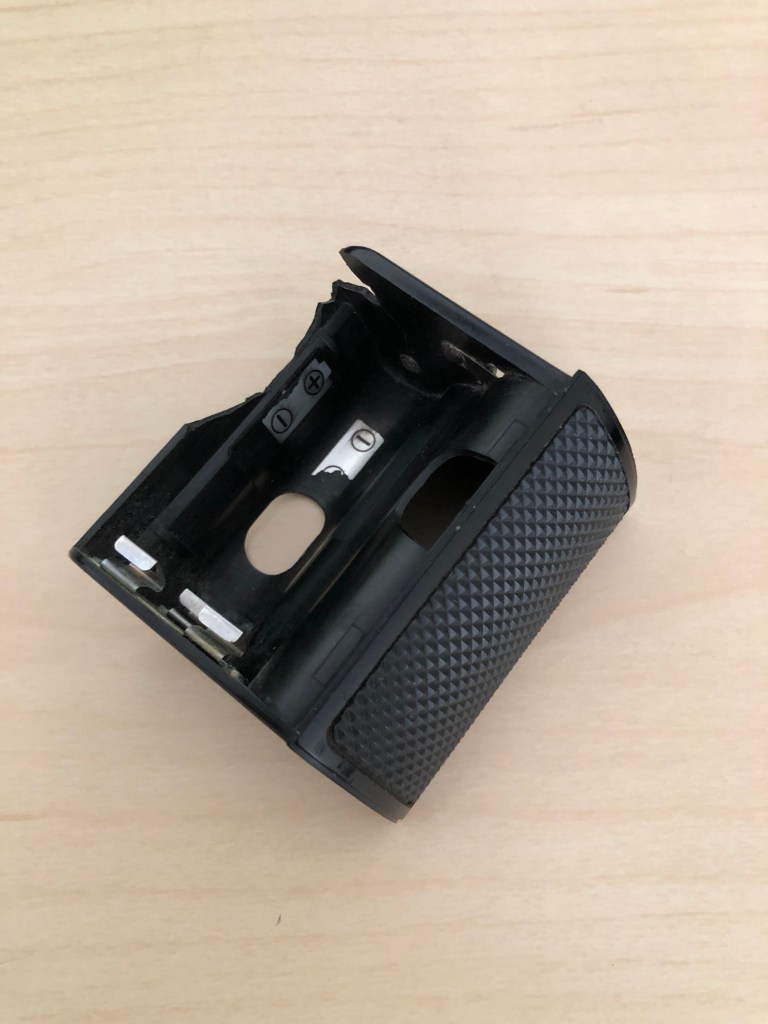
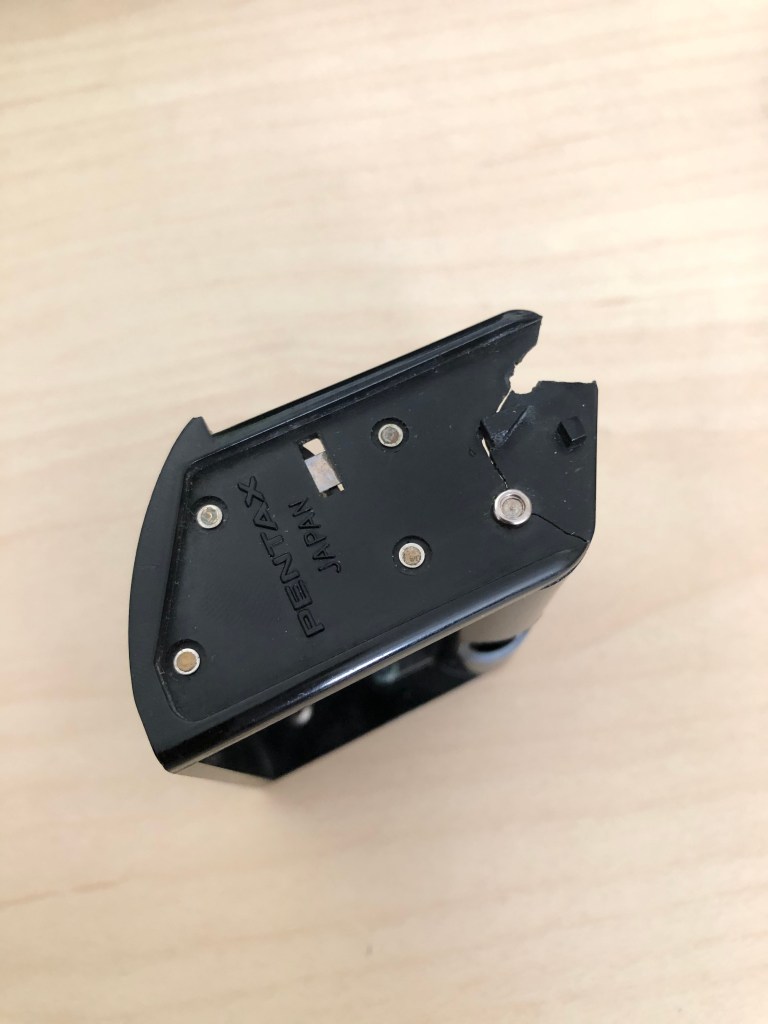
One big drawback of the Pentax 645 is the battery holder, it’s extremely easy to break, especially the plastic holder is couple decade years old. This is a common problem of the Pentax 645, because the way people designed the holder was not very effective I guess, 6 AA batteries are hold in a thin plastic holder (not that thin and fragile but if you have to put the batteries in and out quite often, there’s a good chance you will break it at some point). And of course you have to put the batteries in and out because if you don’t use the camera in weeks or months, you have to take the batteries out or corrosion will happen to your battery compartment. And it’s hard to put the 6 batteries in, especially if you have big fingers. If you buy a Pentax 645, careful with the battery holder please. It’s super hard to find the replacement because there’s no replacement. Pentax discontinued the battery grip long before, and there’s no left. There’s no single one on eBay. The replacement you may find is just from Pentax 645 cameras that stop working and they take their parts for sell but trust me, the holder always breaks before the camera. My battery holder was broken as you can see in the photos here and it’s so freaking hard to find the replacement battery grip or holder, until I bought a remote battery pack for Pentax 645, which is a battery pack that not attachable to the camera like the original grip, you connect the battery pack to the camera through a cord so the camera can use battery but now you have to solve the problem how to attach the battery pack to the camera. Luckily I tried to put the holder from the remote pack into the original grip and it works, even though they’re not identical! Keep this in mind if you are purchasing a Pentax 645. The remote battery pack is available on eBay but there’re not so many and around $100 or more/pack. The Pentax 645 is cheaper than Bronica but you don’t need to deal with the battery holder issue with Mamiya or Bronica because they have battery compartment inside the body, and they also require one single battery only. Please note that even if you can buy a replacement holder for your Pentax, there’s always a change you can break it later because they’re just easy to break. Here the link you can check to see the headache of having a broken battery holder 🙂 https://www.pentaxforums.com/forums/48-pentax-medium-format/400427-645-battery-holder.html
The holder of the battery pack also works on the original grip!
Okay, so now we talk about Bronica ETRS/Si. The ETR is the oldest in the line and doesn’t work with the AE prism finder, the ETRC doesn’t have interchange backs and mirror up feature. The ETRS/Si can use the AE prism finder for meter and interchange backs, they’re best choices in ETR line. If you use Bronica ETRS/Si, you may need the speed grip because the boxing design is harder to handling like the Mamiya. I don’t know why but I feel more comfortable to hold the Mamiya Super without a grip than the Bronica. And 1 more reason to buy a speed grip is you can attach flash on the grip, because the camera itself doesn’t have a hot shoe mount. Another disadvantage of the Bronica is the aperture ring on the lens is small and hard to find (because they placed it more to the front of the lens, not way back like other lens), you may looking around to find it when taking a photo but you will get used to it eventually. Other than that, the Bronica has everything you want, affordable, effective, build quality, interchange backs, interchange finder (but please use the prism finder, the waist level finder is super hard to use if you want to take vertical photos), mirror lock up, multi exposure, leaf shutter in the lens (means you can have flash sync at every speed). It’s easy to use and as far as I know, there’s not much common problems with it.
A photo taken with Bronica ETRSi
Other cameras can be mentioned are Contax 645 but that’s another level and super expensive, Mamiya 645AF/AFD is also great but high price range for first time Medium Format shooters, too. I didn’t talk about lens or photos quality of these brands I mentioned above because honestly I don’t see much a different. Every camera here is more than capable of taking beautiful photos as long as you know how to use it. I hope these experiences I share here can help you on choosing your first medium format camera. A man in a camera shop once told me “If you want to shoot film, you better shoot now because film will go away” so I guess my advice is buy it because the price are continue to raise because film is trendy now and yes, film will go away eventually. Shoot more, have fun!
On a Sunday morning, I got up much earlier than usually to go to a beach for a photo walk. I haven’t taken any photo since I got back from the North California road trip, just because of personal stuffs and I don’t feel like the city around me is photo worthy. Then I watched a YouTube video of a film photographer/YouTuber named Faizal Westcott about he created a photography club via Discord app to connect photographers and others who like photography alike. In this club/group, you can share your work, ask for feedback, discuss photo related topics and networking with others. My favorite channel is photo feedback obviously, since I really want to know what others think about my photos and I love to share value thoughts to others’ work as well. If you feel like Faizal’s Discord server, I encourage you to check it out. Here the link: https://discord.gg/99w7Z5x
After join the server and have several discussions with others inspired photographers and photographer wanna be, I got an urge to go out and shoot and get better. That’s why I woke up at 6am that Sunday morning.
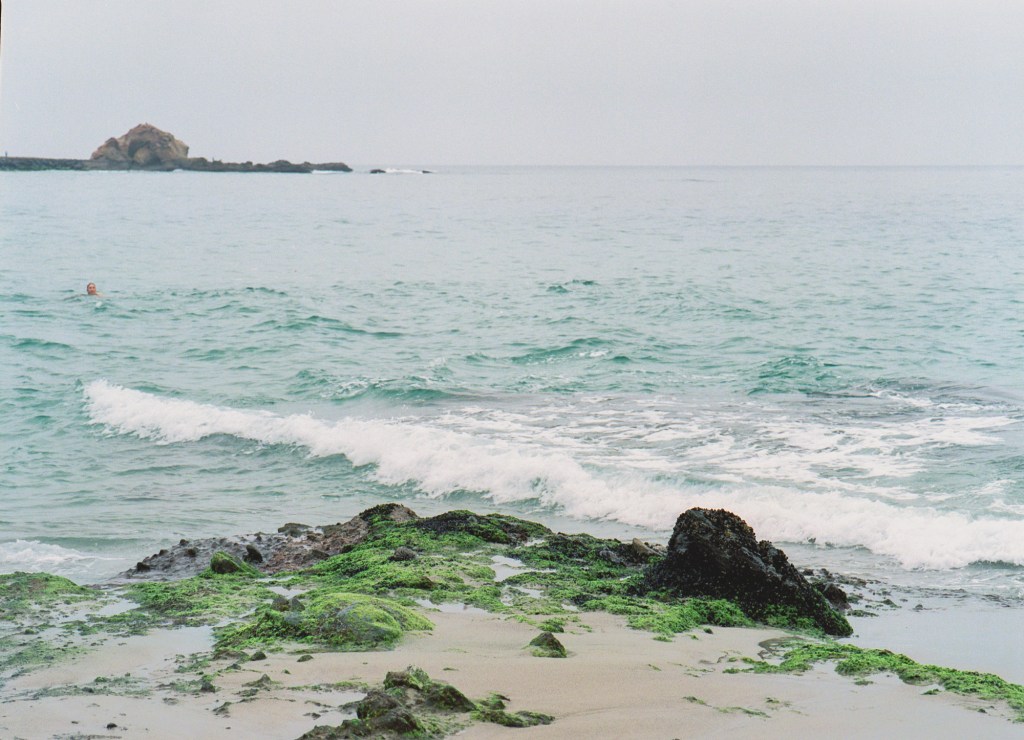
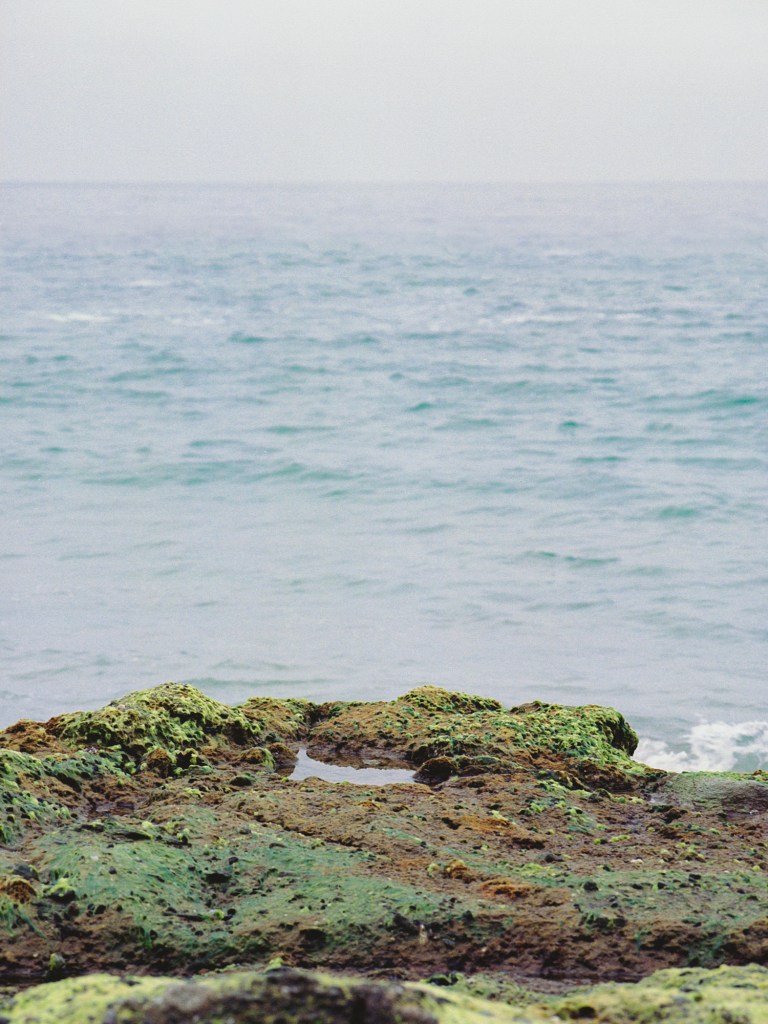
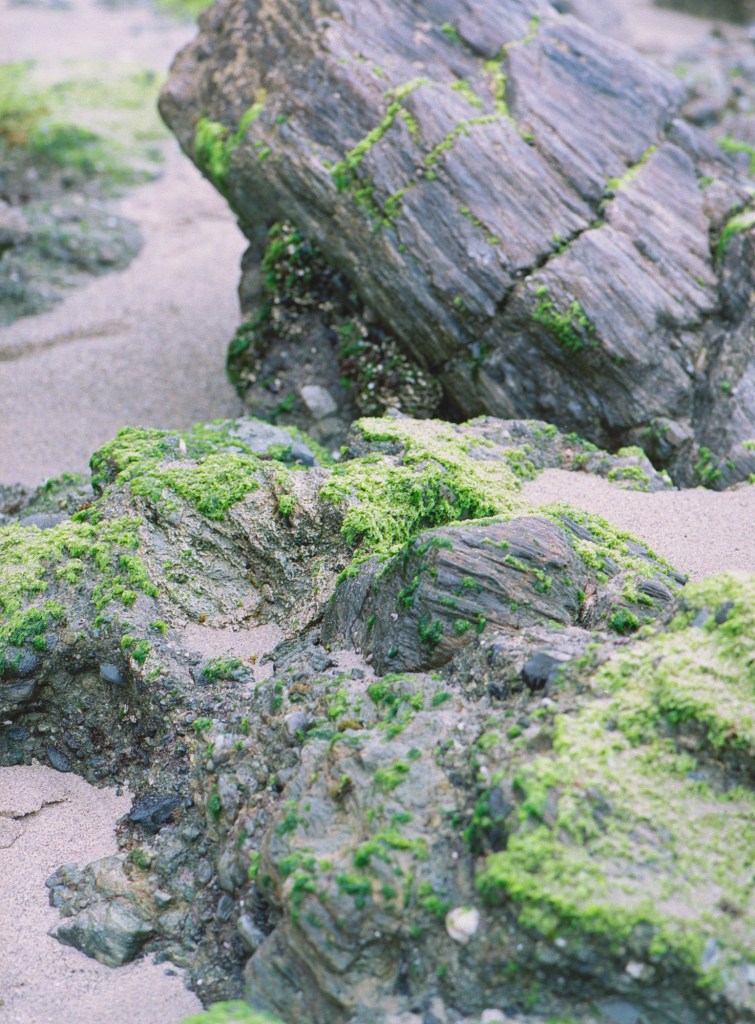
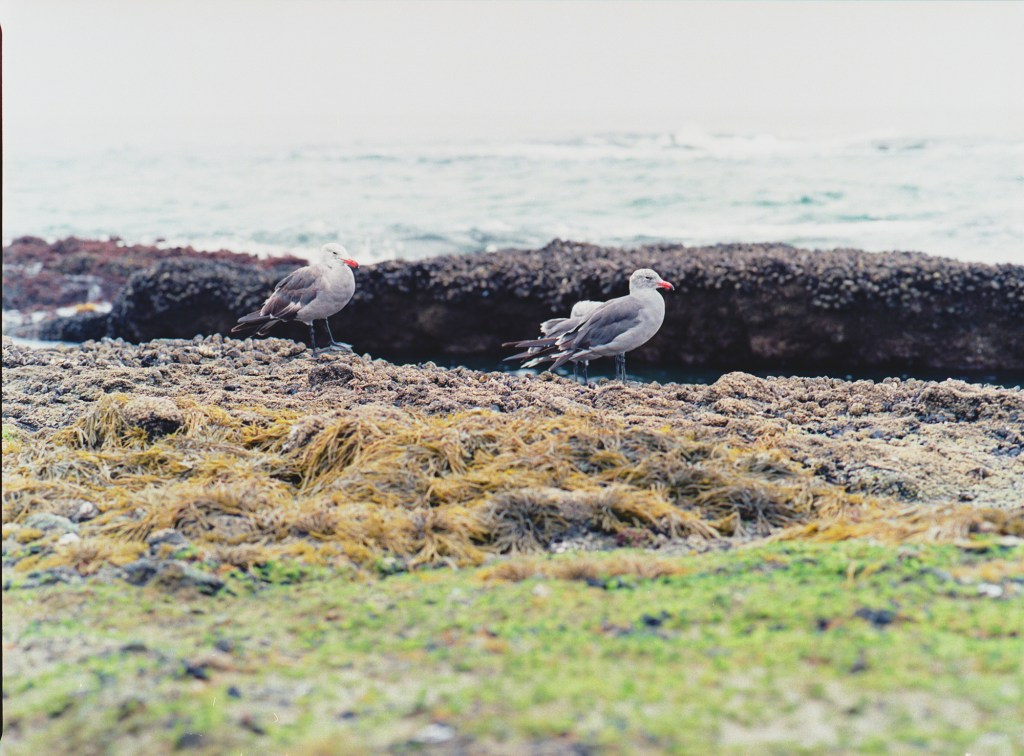
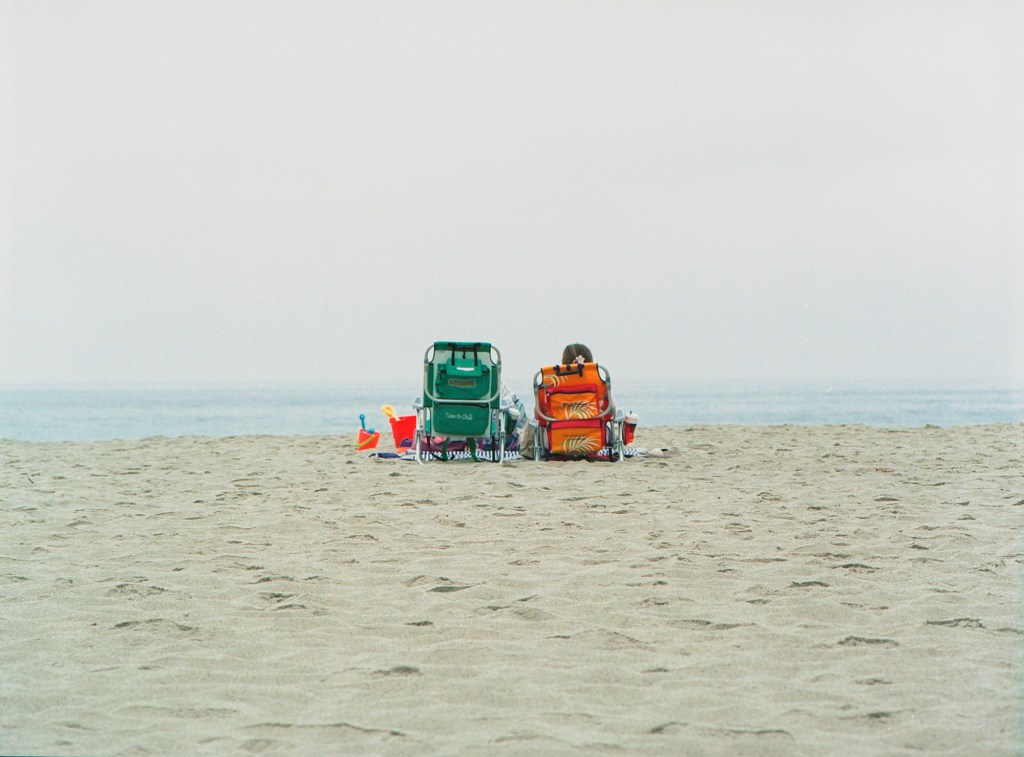
Since I live in Orange County, I already visited a bunch of beaches around here (Long beach, Seal beach, Huntington beach, New Port beach, Corona Del Mar, and every small beach in between) and honestly, I don’t feel very enthusiastic to go those beaches again. So this time I tried a new one, a little further but worth it, Victoria beach in Laguna. To search for a location, I just look at Google map and pin point to a potential location to have Google street view of that area and decide if that worth going. The reason I like this beach is not because of its famous Pirate Tower but the mosses on the rocks right by the beach. You know I love trees and plants and that kind of green stuff. Another thing I like about this location the color of the water, a beautiful shade of emerald. The sand is so clean and white (not literally white but whiter than other muddy brownie sand. The sky was so clear when I driving but as soon as I got half way to the beach, I realized it’s not gonna clear anymore. I guess sky on the beach is always foggy?! Anyway I hope you can feel the cool atmosphere in that early foggy morning through these photos.
love the tones here. Fuji 160 NPS expired
my favorite in the day
And here’re some photos that not the best.
In the first photo, the composition is just doesn’t work. I couldn’t bring out my main focus in the photo. In the second photo, the composition is bad again. Another thing doesn’t work out is lack of meaning in this photo. I tried to capture the beauty of the rocks creating a little valley and water from the waves can flow through it like a river, but the timing is not there yet, I should press the shutter right when the wave hitting the rocks. I was too late so the water run out already. I think I should open the lens up to create a shallower depth of field in order to isolate the rocks and little valley from the back ground.
Next are some casual shots around the rocks. 🙂 I know not everybody like to see rocks and mosses like me.
In the second photo, I like the way the sand feel so smooth and warm and was imbued with water from the wave so the surface was reflective so beautifully. The last photo is some cliché scene that you all get bored of :p
First time using Mamiya 645 Super and prism viewfinder and no split focusing screen, thanks God I didn’t miss focus much!
[Mình muốn chia sẻ bằng tiếng Việt cho các bạn Việt Nam có thể dễ đọc hiểu, nhưng mình chưa tìm được cách tốt nhất để chia sẻ song ngữ trong cùng 1 post nên các bạn tạm thời có thể đọc các post riêng bằng tiếng Việt với nội dung chính xác như post tiếng Anh trong thời gian mình tìm được cách làm việc đỡ mất công hơn nhé!]
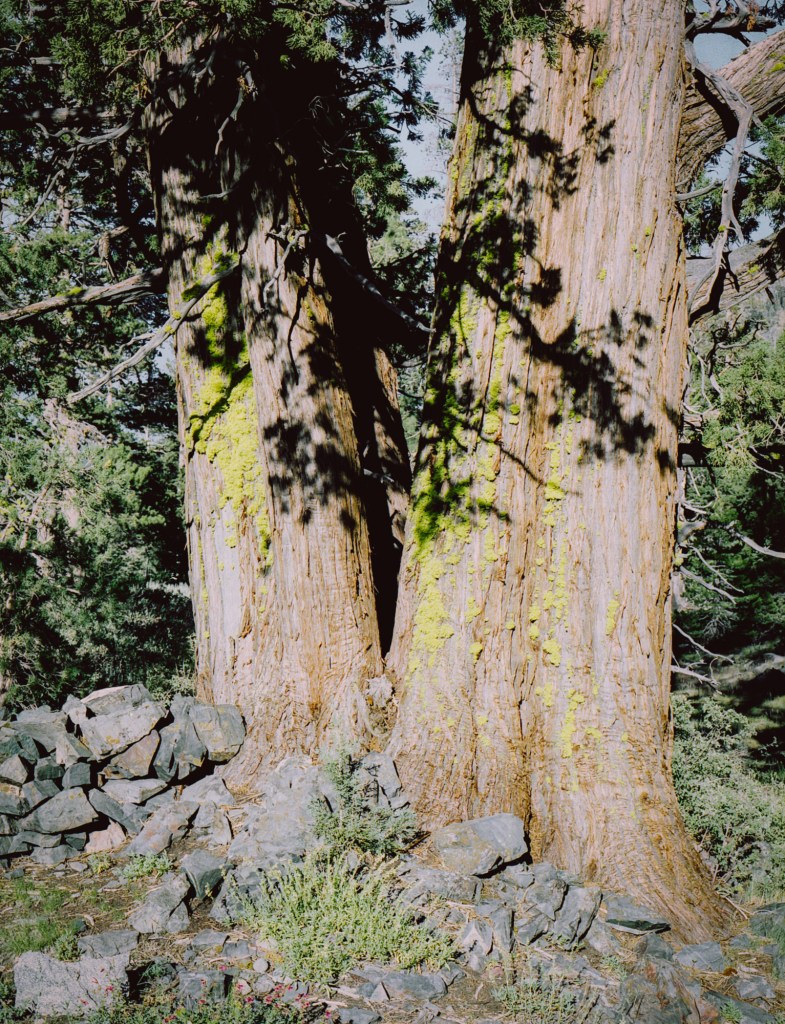
Tháng 6 rồi mình có đi 1 chuyến road trip từ Orange County đến Lake Tahoe, California. Mình ở Lake Tahoe 3 ngày, sau đó ghé qua San Jose 1 ngày rồi về lại OC. Mình coi đây là 1 cơ hội tốt để chụp những khung cảnh mới lạ mà mình ít được thấy ở nam Cali (nam Cali khô cằn và ít cây cối, rừng rậm như bắc Cali). Mình rất thích được bao bọc bởi thiên nhiên, đặc biệt là cây cối và rừng rậm, rừng đối với mình luôn rất đặc biệt, mình có thể lạc giữa rừng nhưng vẫn cảm thấy bình an như được thuộc về. Mình vẫn nhớ cái cảm giác đứng 1 mình giữa rừng núi, xung quanh không 1 bóng dáng hay tiếng nói của con người, chỉ có mặt đất mềm âm ẩm, những bụi cỏ cao thấp xen kẽ, thân cây già gãy đổ xen giữa rừng thân chắc nịch với lớp vỏ nứt toác để lộ những mảng rêu xanh non mơn mởn, cạnh đó là dòng nước trong vắt chảy qua con rạch nhỏ luồn lách giữa rừng, bên trên tiếng chim hót rộn ràng giữa những tán cây lao xao. Nếu bạn là người yêu rừng, hẳn bạn sẽ hiểu cảm giác lâng lâng hạnh phúc khi đó của mình. Bên cạnh đó, được chụp hình trong rừng thì còn gì bằng! Mình chia sẻ bài blog này với niềm hân hoan được chia sẻ về điều mình yêu thích với những bạn chung sở thích, hi vọng các bạn sẽ cảm thấy được truyền cảm hứng đi và khám phá [và chụp hình] sau khi đọc xong.
Về mặt chuẩn bị máy chụp hình và phụ kiện, mình lên kế hoạch sẽ chụp long exposure thác nước để có hình thác nước chảy nhìn mướt như dải lụa (nghe có vẻ hơi cliché nhưng mình chưa bao giờ chụp thể loại này nên cũng đáng thử qua). Để chụp long exposure giữa ban ngày, mình cần ND filter để chặn bớt ánh sáng vào lens. Mình mua 10 atop ND filter cho lens Bronica 75mm của mình, mình đã cân nhắc mua các filter ít stop hơn nhưng vì ngân sách chỉ có thể mua 1 filter nên mình quyết định mua 10 stop vì mình luôn có thể kéo dài thời gian shutter speed ra hơn là chụp không đủ lâu để nước chảy thành 1 dải dài liền mạch. Mình cũng mua 1 polarizer filter để chụp mặt nước hồ trong suốt (polarizer filter rất hữu dụng khi bạn muốn chụp các bề mặt phản chiếu như nước hay kính cửa sổ, ánh sáng sẽ đi xuyên qua bề mặt nước hay kính hơn là phản chiếu ngược lại lens của bạn tạo ra ảnh phản chiếu không mong muốn). Mình cũng mua stepdown ring để dùng ND filter và polarizer cho máy số Nikon của mình (mình mang máy số theo để chụp thử những shot long exposure). Mình đã có sẵn cable release cho máy film (vì mình cũng từng chụp ban đêm với máy Nikon F2). Ngoài ra thì tripod là KHÔNG thể thiếu cho long exposure. Về film thì mình dùng Fuji Pro 400H, Portra 400 và 1 pack Fuji 160 NPS expired (hình ra mình không thích lắm vì màu shifted hơi nhiều) cho Bronica ETRSi và Fuji Pro 400H, Portra 160, Kodak ProImage cho máy 35mm.
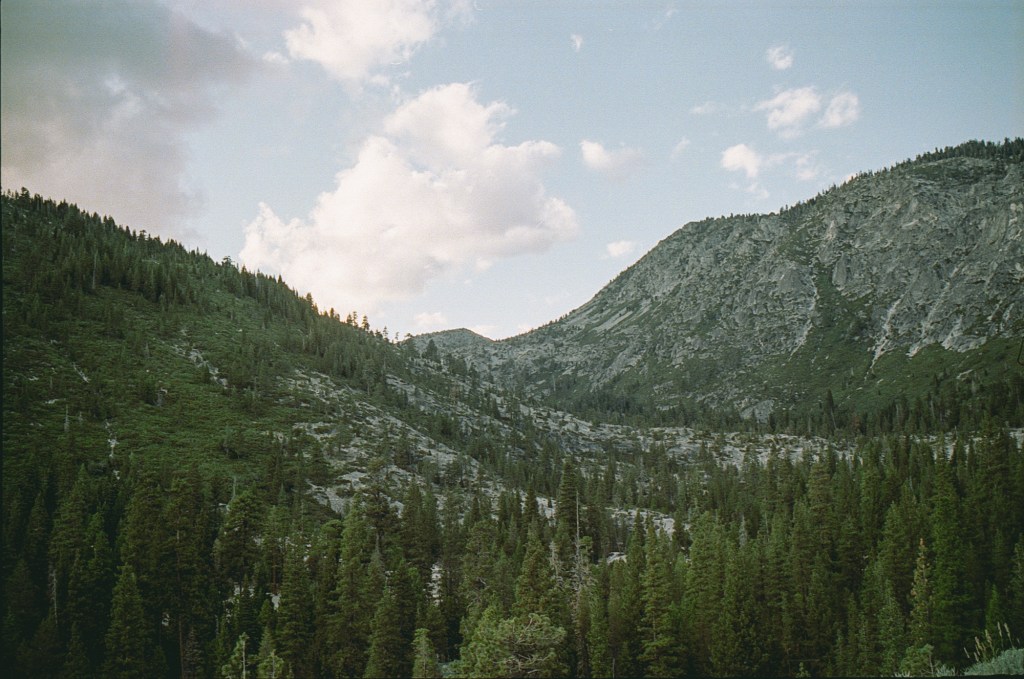
Đây là 2 shots đầu tiên khi mình dừng lại ngắm hoàng hôn lúc gần tới nhà Airbnb mình thuê. Hình ảnh đồi núi trùng điệp phủ dày đặc những hàng thông già mình vẫn thấy trên hình ảnh và movies nay mình đã được nhìn bằng mắt thật, cảm giác như trong mơ vì mình chưa bao giờ nghĩ có cảnh đẹp và siêu thực như thế này trên đời. Tuy 2 bức ảnh dưới không thể hiện được sự hùng vĩ và mênh mông như mình cảm nhận được nhưng cũng đáng chia sẻ.
Nikon F2. Fuji Pro 400H
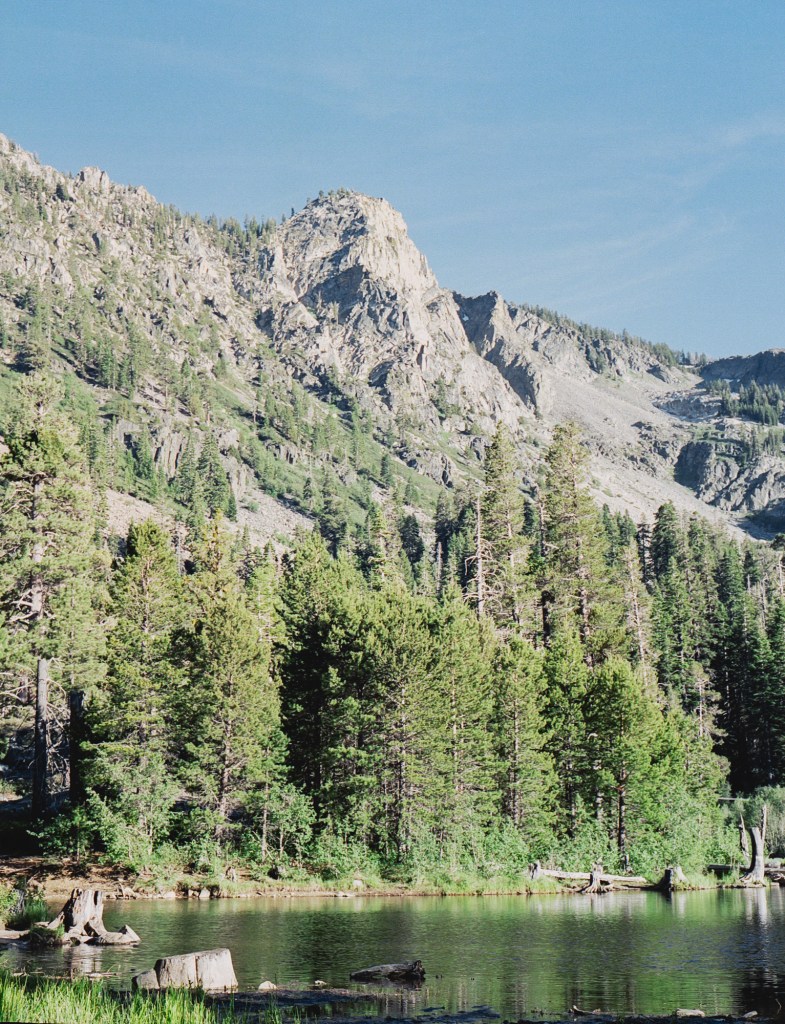
Kế đến là những hình ảnh mình chụp trong ngày thứ 1 và thứ 2 ở Lake Tahoe, khi mình đi hike ở Emerald Bay.
Nikon F2
Nikon F2
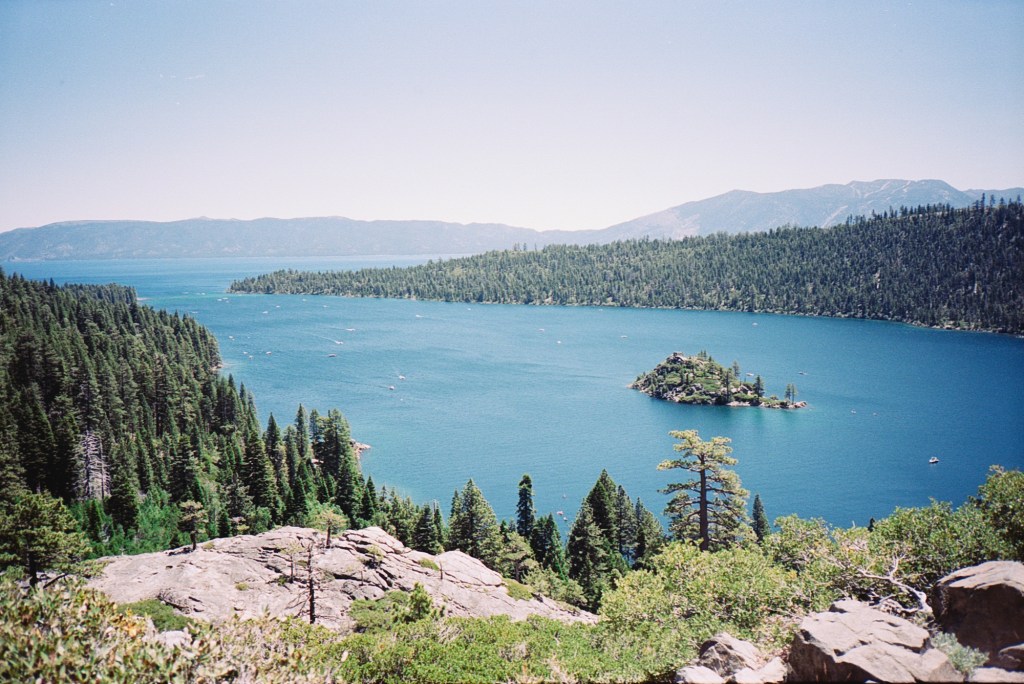
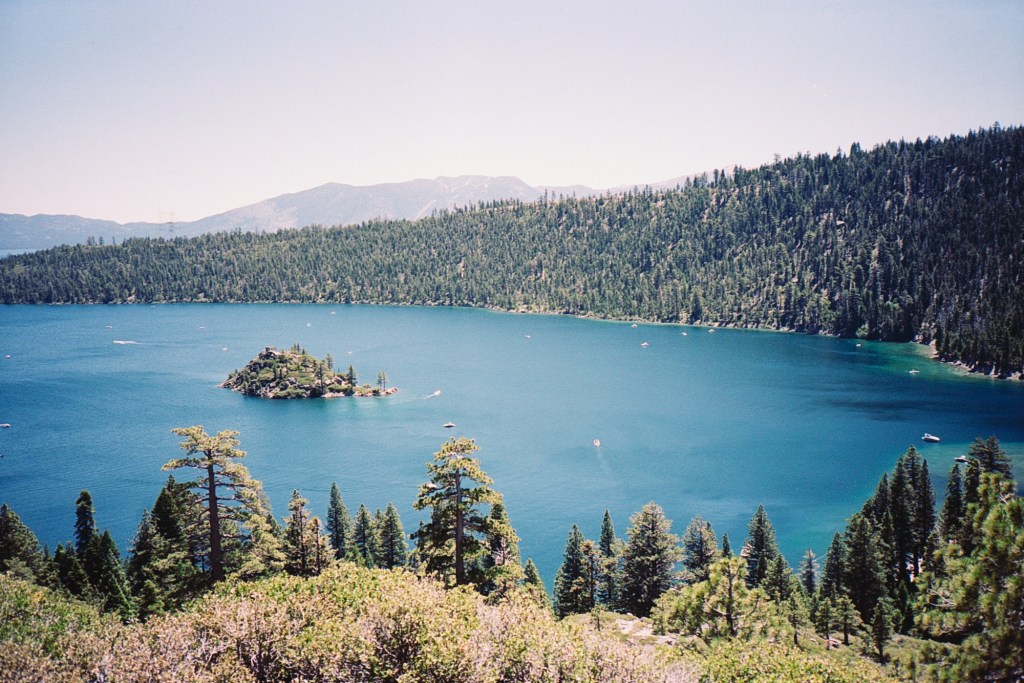
Emerald Bay
Và tiếp theo là vài cảnh mình chụp lúc chiều tà trong khu Airbnb mình ở. Mình dự định mang máy và tripod ra bờ hồ chụp cảnh hoàng hôn nhưng khi đi ngang những cảnh nắng rọi từng mảng lên tường và cửa sổ mình không thể không dừng lại được. Những hình này mình chụp trên tripod ở tốc 1/30-2s.
cảnh chiều xuống dưới những hàng thông
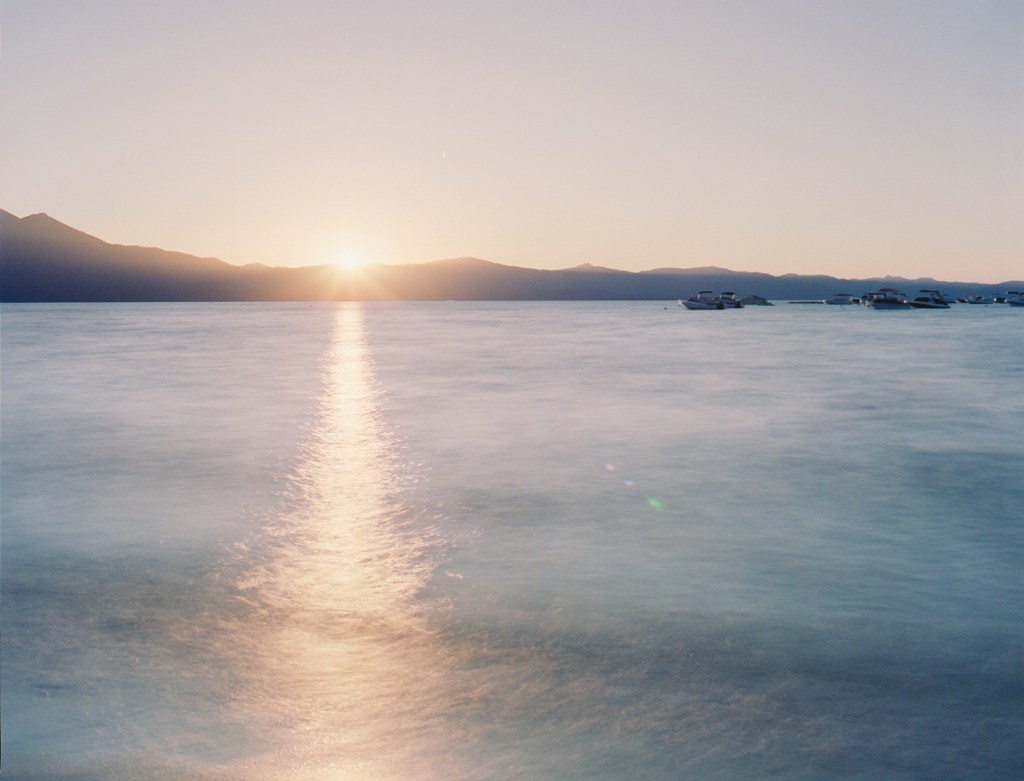
Dĩ nhiên tiếp theo sẽ là cảnh hoàng hôn trên mặt hồ. Mình thử long exposure ở những tốc độ khác nhau nhưng ở bức ảnh dưới, 8s, là mình thích nhất, bởi vì mặt nước ở đây tuy đã phẳng hơn không thấy chuyển động cụ thể của sóng nhưng vẫn còn chút lăn tăn trên bề mặt.
Lake Tahoe lúc hoàng hôn
3 tấm ảnh bên dưới mình chụp sau khi mặt trời lặn. Cả 3 tấm mình đều rất thích. Mình đặc biệt thích những cảnh suburban (ngoại ô, hay những town nhỏ và xa trung tâm nhưng không phải miền quê) vì không khí hoài cổ và có chút u buồn của nó.
Fuji 400H
Portra 400
Portra 400
blue hour
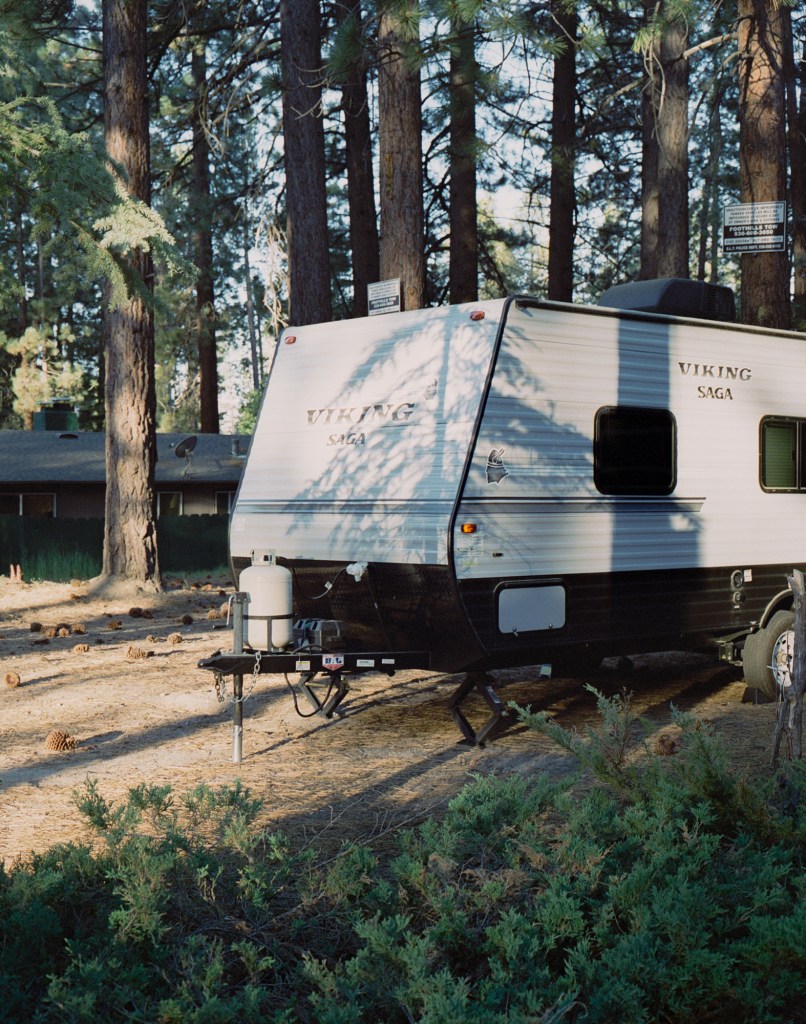
Mình cũng chụp vài cảnh trong khu Airbnb vào buổi sáng, dưới đây là 2 hình mình ưng nhất. Tấm thứ 3 với mình bố cục không được đẹp, mình muốn dùng hàng rào gỗ làm foreground cho hình nhưng mình để máy hơi cao nên hàng rào bị sát mép dưới của hình quá làm không cân xứng, nếu có thể mình sẽ hơi khuỵu gối 1 chút để hàng rào sẽ dâng cao hơn và khoảng cách gần hơn với chủ thể là chiếc van nhỏ màu bạc.
vài cảnh suburban
Ngày hôm sau, mình thức dậy lúc 4:30 sáng để chụp ảnh mặt trời mọc trên mặt hồ. Sau khi rửa và scan hình, mình cảm thấy long exposure mặt nước không phải là điều mình yêu thích, vì mặt nước phẳng như trang giấy cảm thấy không thực với mình, nó thiếu sự chuyển động và tràn đầy năng lượng mà mình yêu thích ở nước.
cảnh mặt trời mọc bên bờ hồ
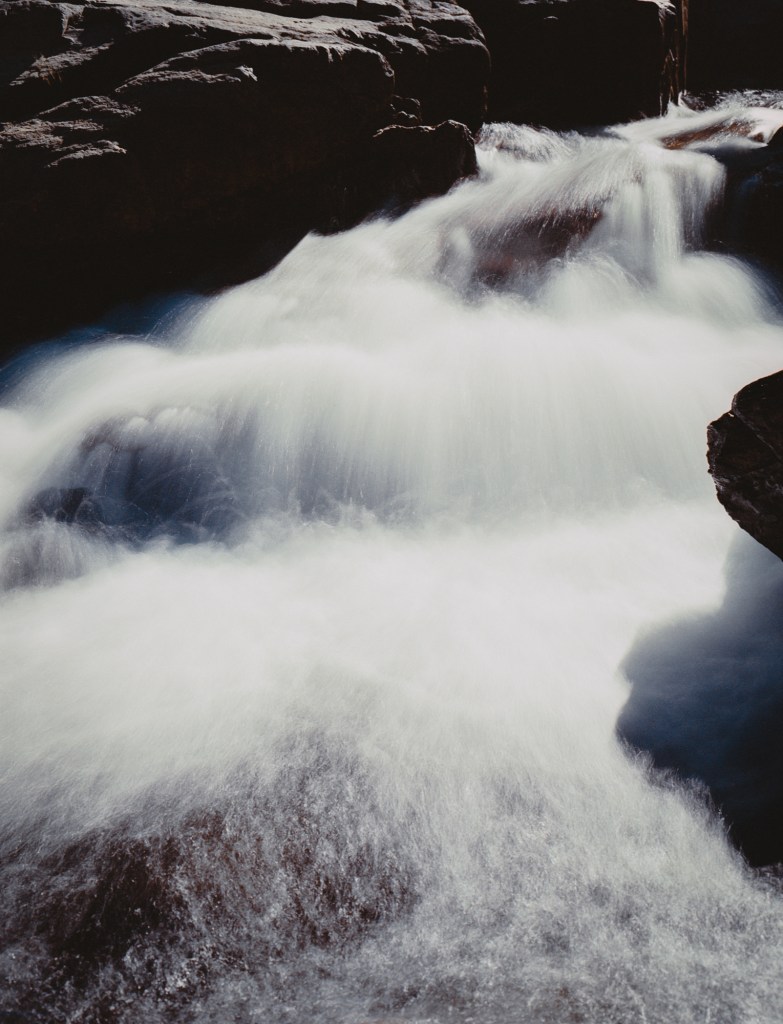
Và đây là điều mình mong mỏi nhất trong suốt chuyến đi, chụp ảnh thác nước như dải lụa. Khi mình leo đến thác, mặt trời đang ở phía sau thác và chiếu thẳng vào ống kính của mình ánh nắng chiều chói chang đặc quánh. Với lần đầu chụp long exposure trong tình trạng backlit (ngược sáng) và phải liên tục tháo và gắn 10 stop ND filter lên lens để ngắm và chụp, thú thật mình không chắc lắm về bố cục và cả setting máy. Mình đã không hi vọng nhiều vào kết quả nhưng khi scan và edit hình xong, mình cảm thấy khá hài lòng.
lần đầu chụp thác nước ngược sáng
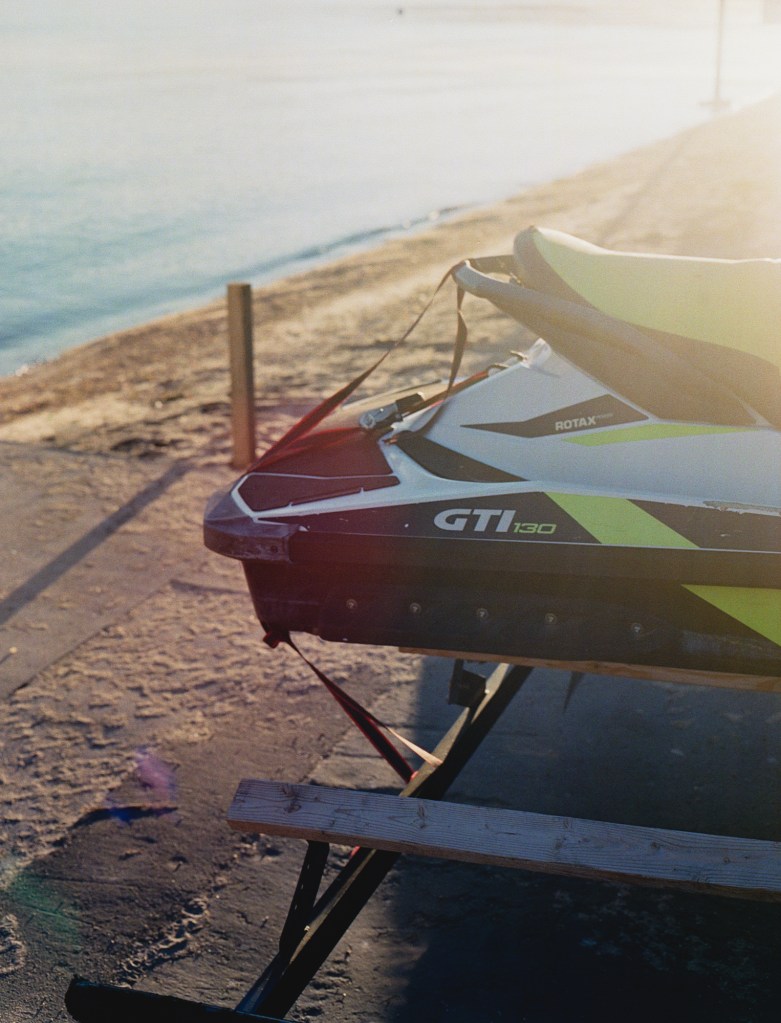
Cuối cùng là những hình mình chụp trong những lúc leo núi và những hình chụp bằng máy Nikon F2 và Yashica T4.
Nikon F2
Nikon F2
Nikon F2
Nikon F2
Nikon F2
Yashica T4
Yashica T4
cảnh chụp ngẫu nhên
Cảm ơn các bạn đã theo dõi đến đây. Hi vọng các bạn thấy những chia sẻ của mình bổ ích. Nếu các bạn có thắc mắc hay muốn góp ý về hình ảnh cũng như nội dung của mình xin đừng ngại comment nhé, mình luôn thích film talks! Cheers!
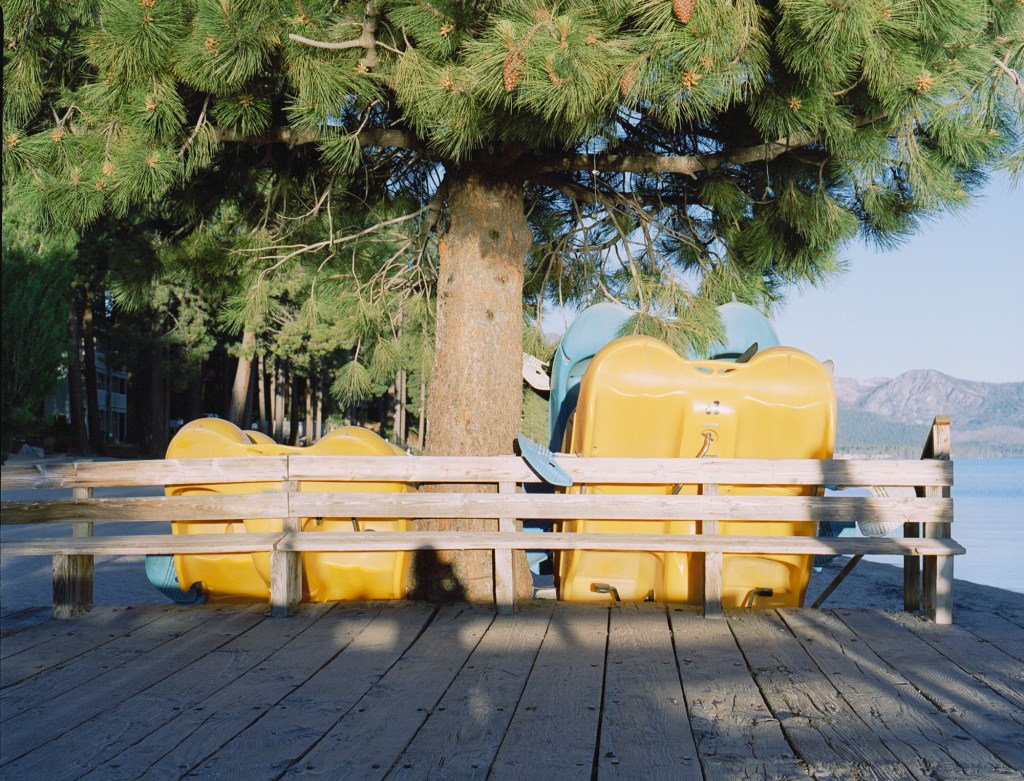
Lake Tahoe on Bronica 645 ETRSi medium format film camera
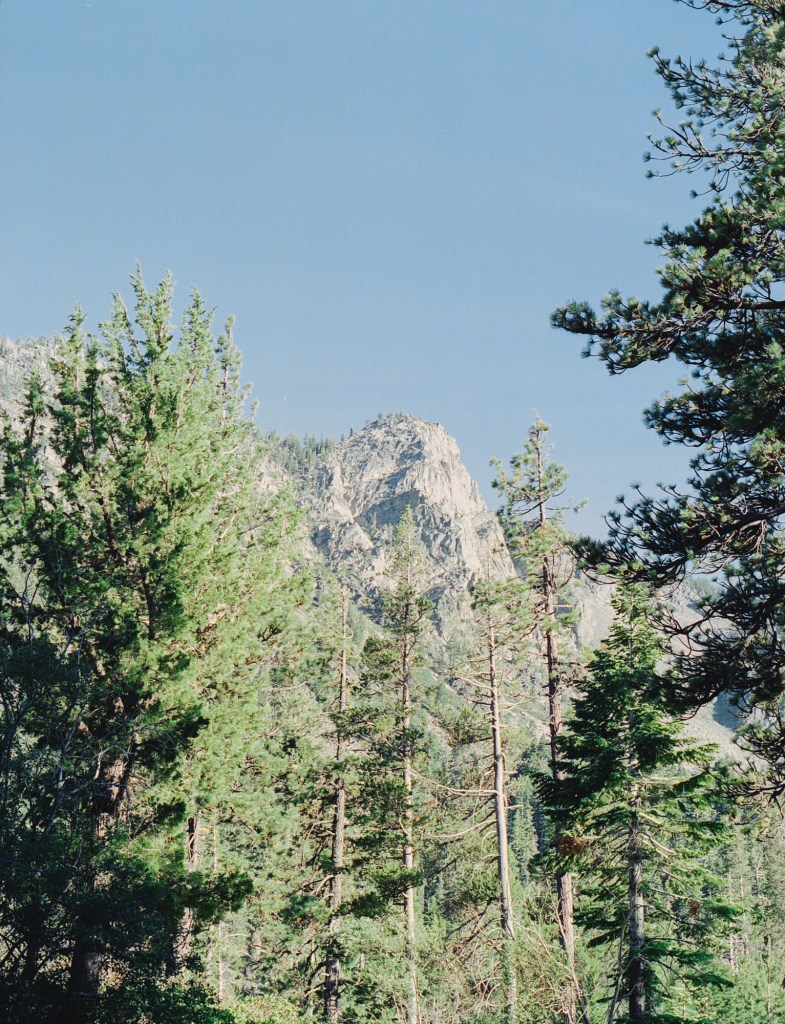
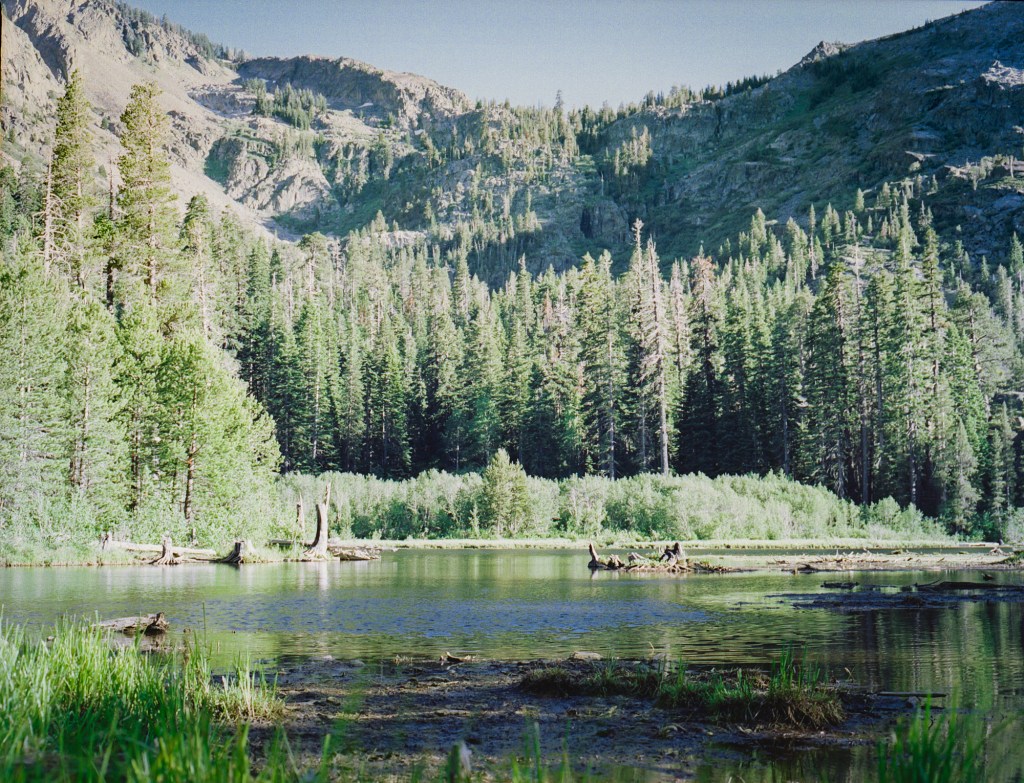
I had a road trip from LA to north California last month, stayed in Lake Tahoe for 3 days and San Jose for 1 day. I took this trip as a photography opportunity more than just a vacation time. I always love nature, especially forest, there’s something in the forest and trees that I feel like I belong to. I still remember the feeling of being alone in middle of the woods with just grass, woods, leaves, water flowing in the creek and birds on the branches, I felt a sweet lonely happiness there. And photograph forest on film was a thing I wanted for so long. If you like forest as me, I hope this post and photos from here will inspire you and warm you.
Back to the technical side, I knew I must prepare the equipment for the trip, because I wanted to make some long exposure of the waterfalls and the lake Tahoe in sunrise or sunset (I know this sound cliche but I haven’t do this before so worth trying). I bought a 10 stop ND filter for my Bronica ETRSi 75mm lens. I thought about other ND filters with less stops than the 10 stop but since I just can buy one, I decided to buy the 10 stop because it’s better to have longer exposure than don’t have enough time to make the water look silky. I also bought a polarizer filter for taking photos of the water, of course. I already have a cable release. I brought a bunch of batteries for my Bronica, Nikon F2, and my digital camera (I used digital camera for long exposure test shot). And a steady tripod is crucial! I also want to have a wide angle lens on my Bronica but when I decided to buy it, there’s nowhere can ship it to me before the trip, so I tried to make the best out of the 75mm lens. For film, I used Fuji 400H, Portra 400 and Fuji 160 NPS expired (which is not so good) for 120, and Fuji 400H and Kodak ProImage for 35mm.
sunset behind the mountain. Nikon F2massive cloud lit by setting sun. Nikon F2
Here’re some photos on the first hike day.
Nikon F2
Nikon F2
first hike scenes
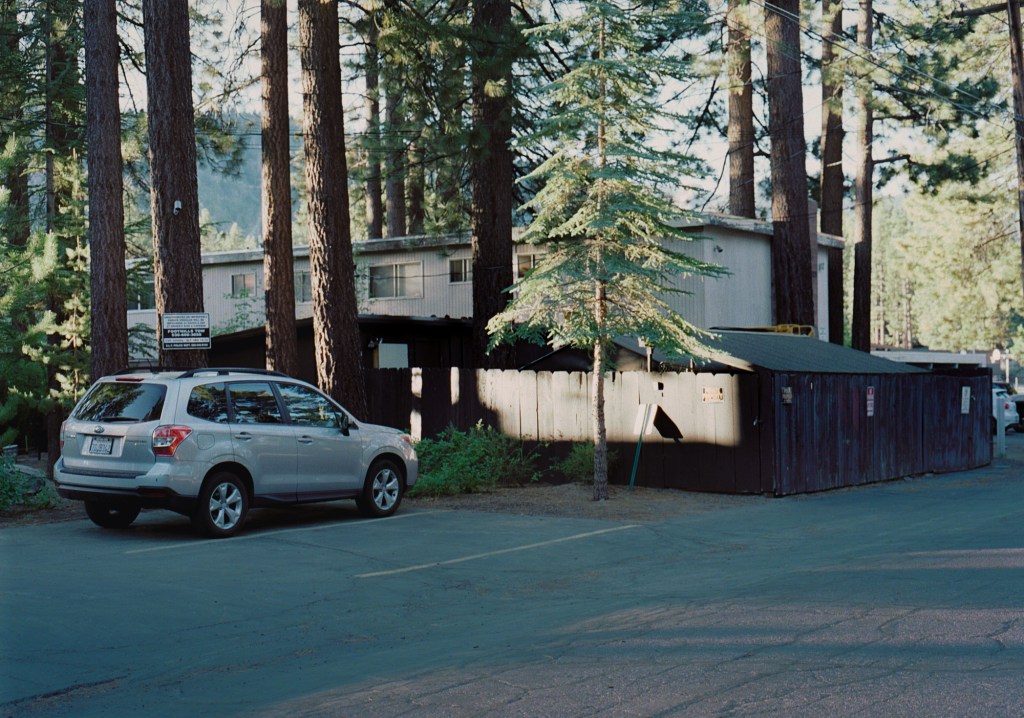
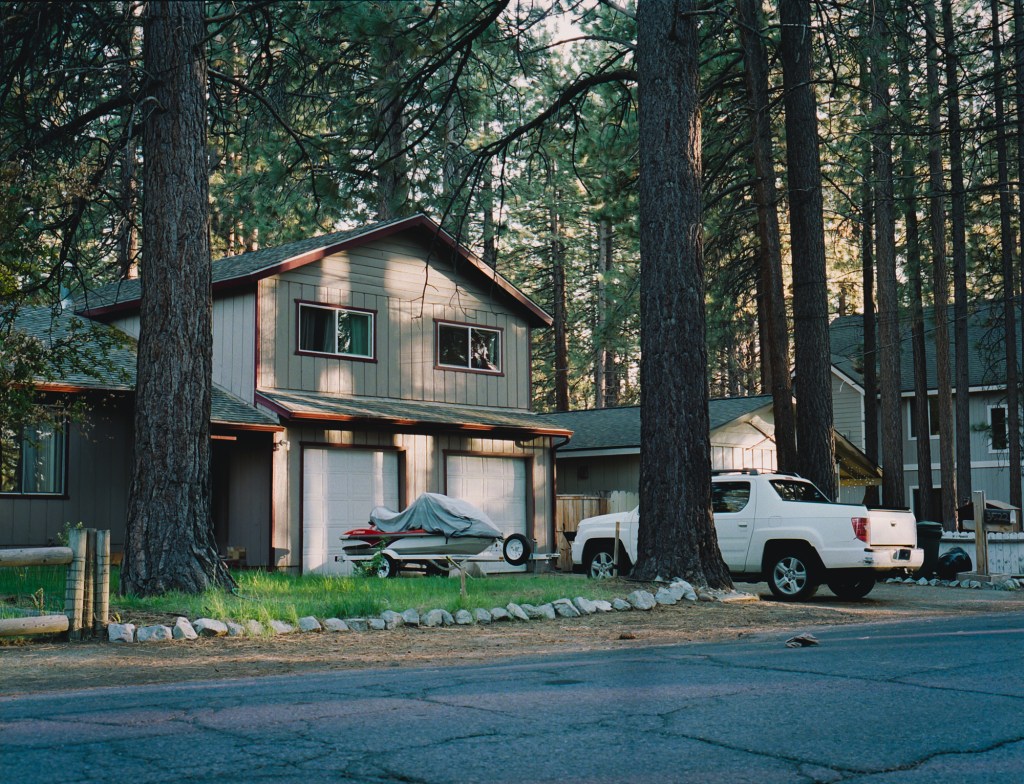
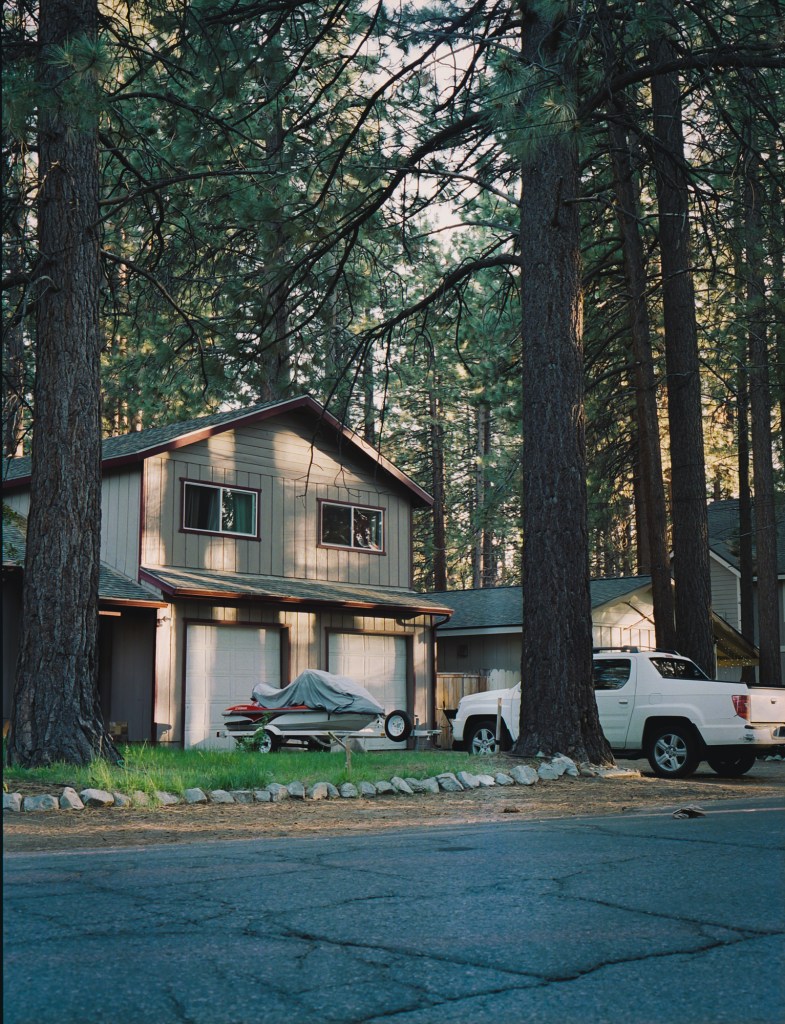
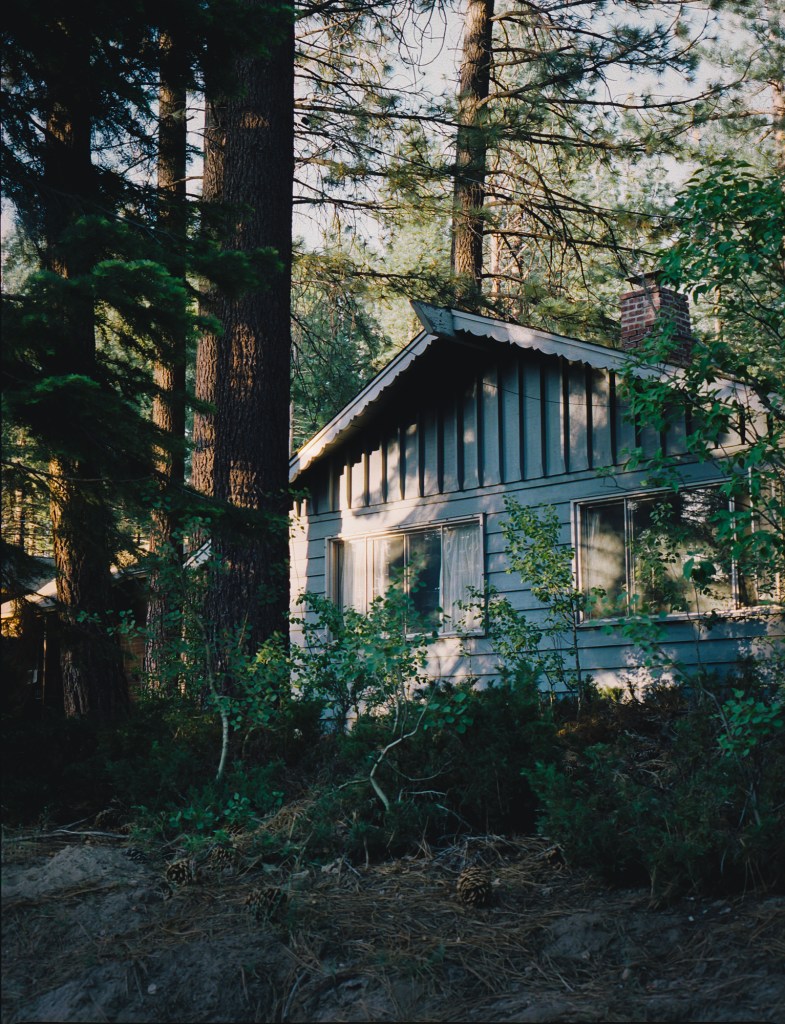
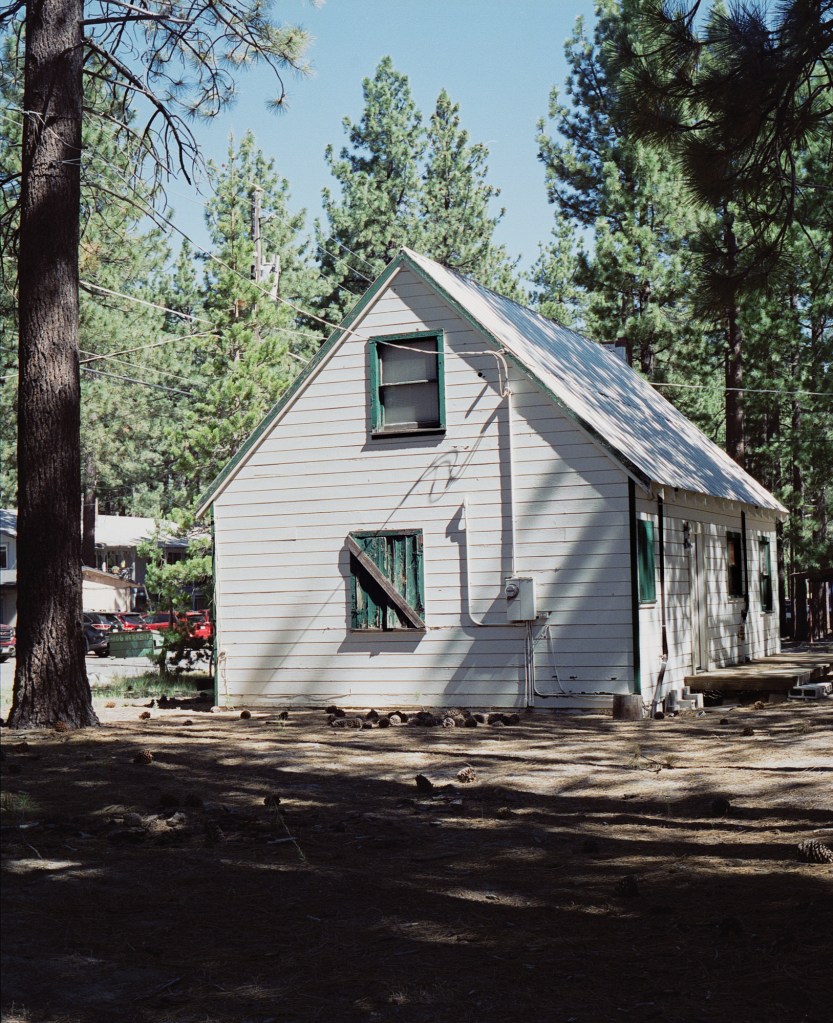
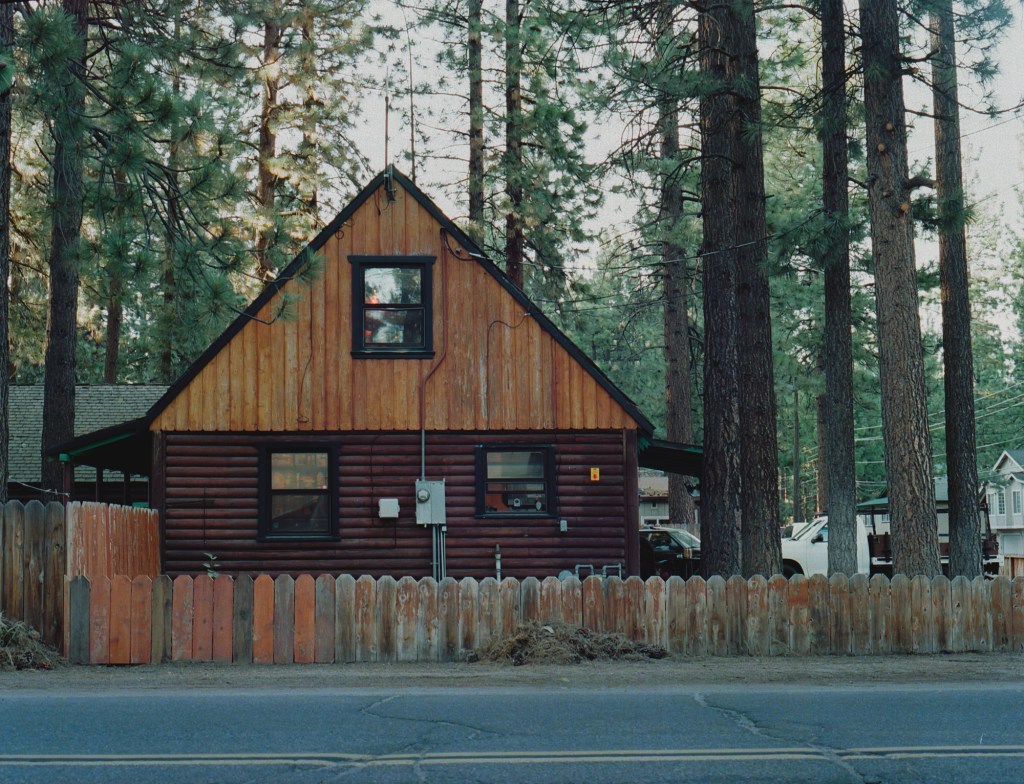
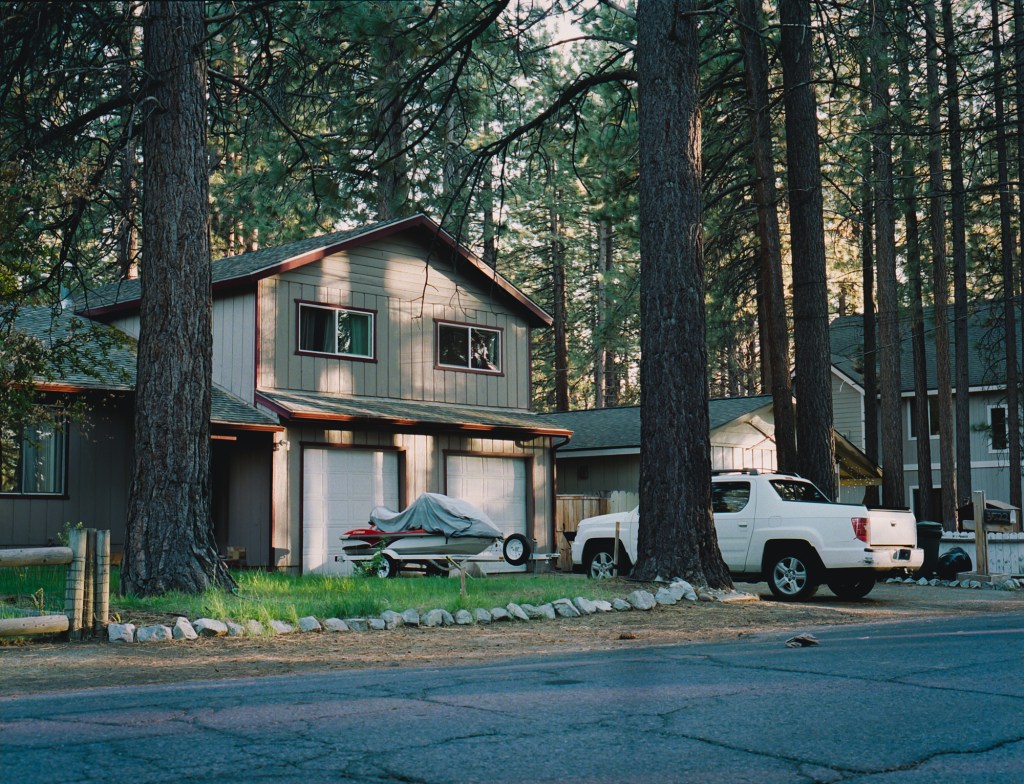
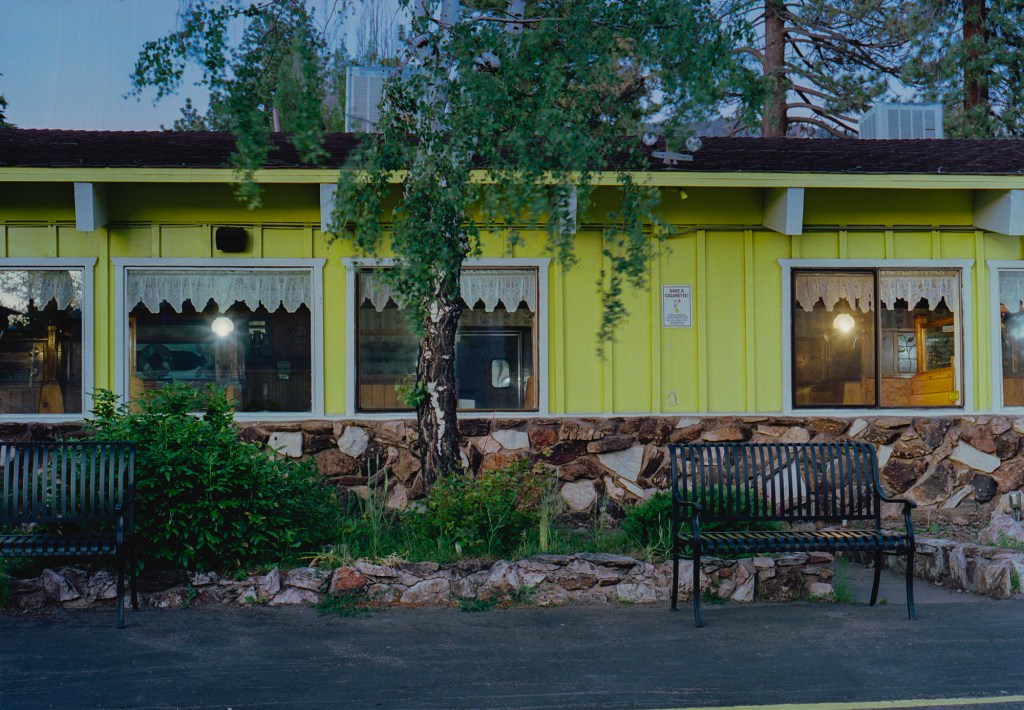
Next is some scenes near my Airbnb, beautiful sunset light on these houses, I was walking to the lake to take my long exposure on the water at sunset but couldn’t help myself not to stop by these scenes. These were shot on tripod at 1/30-2s.
everything I ever wanted in a photo
my favorite from the series
neighborhood in golden hour
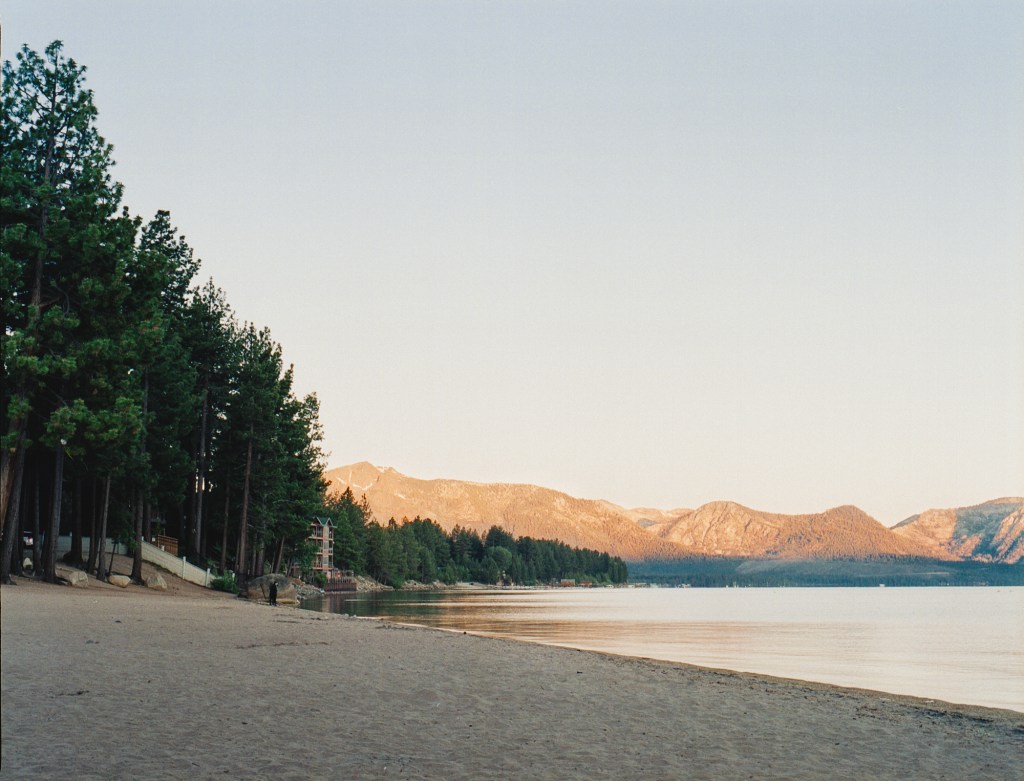
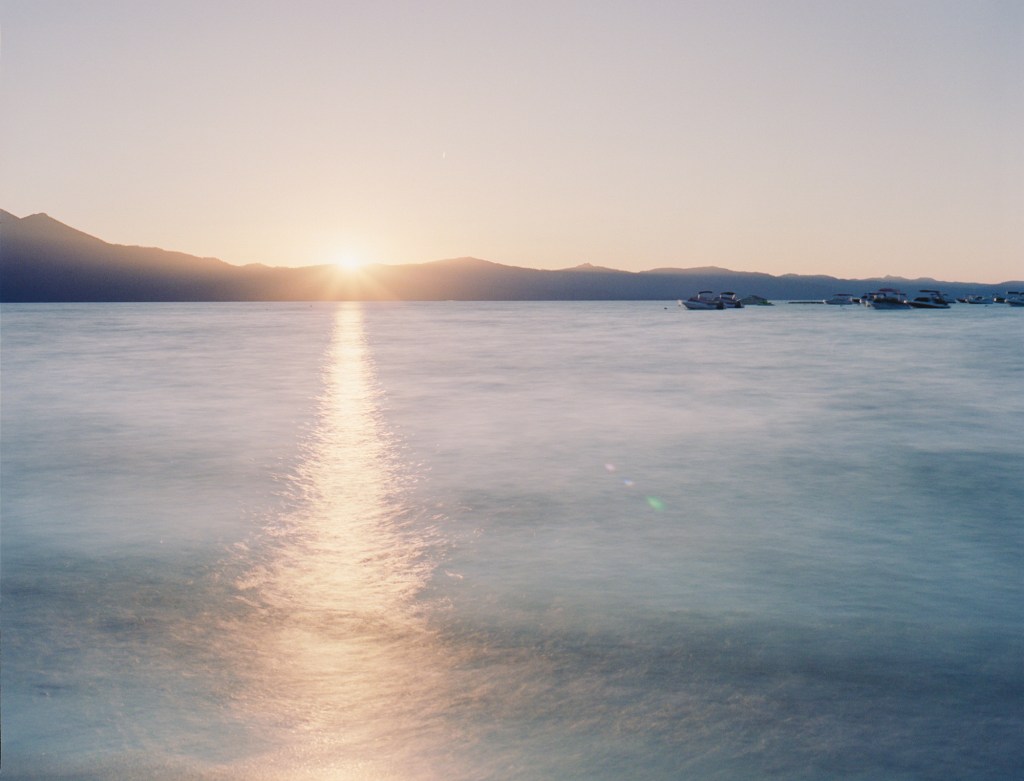
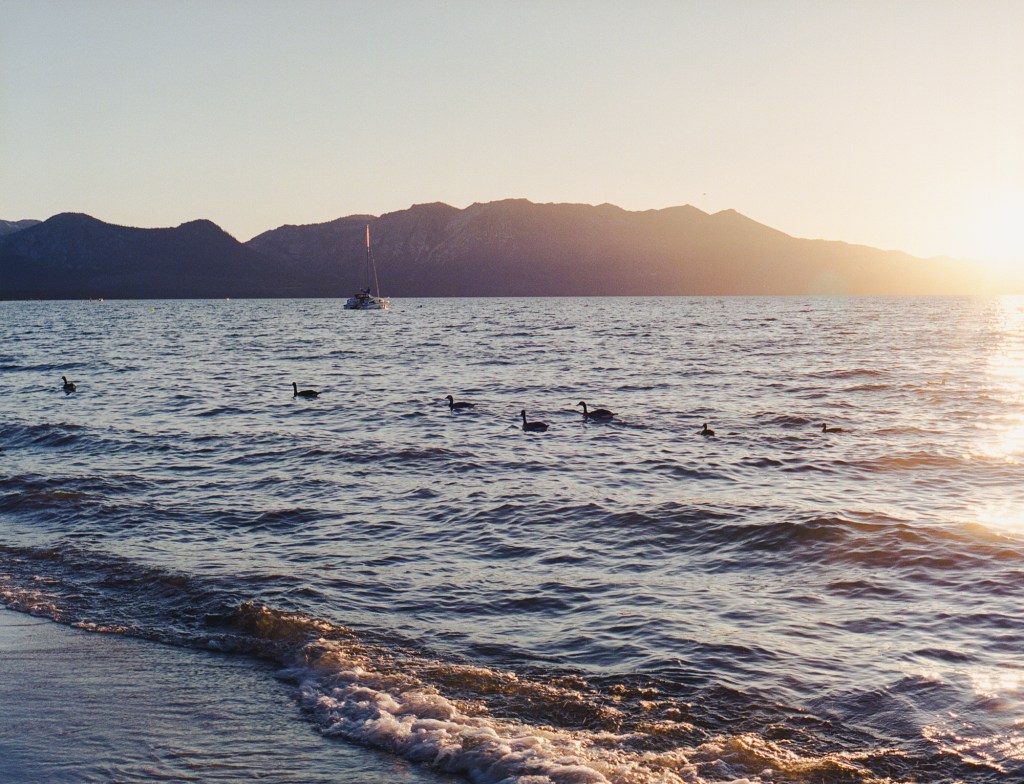
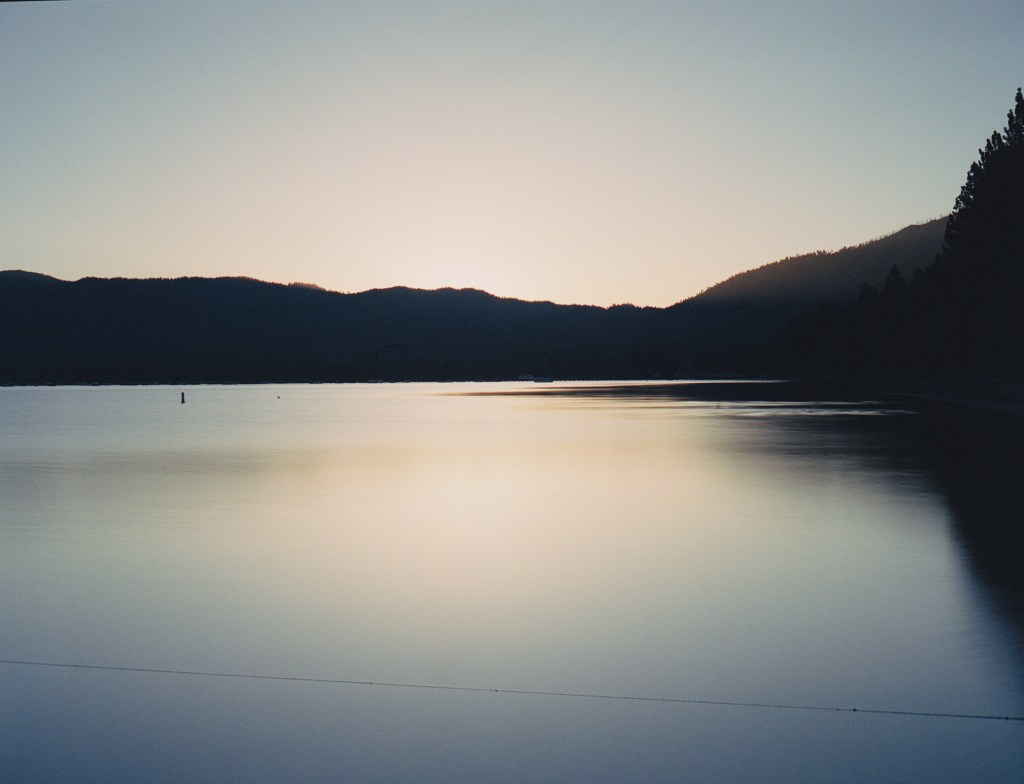
Of course next thing is sunset shots on the lake. Nothing so fancy here but I like the long exposure that give the water a nice texture to it, it’s not totally flat but still blurry and has dimension for light to fall on.
exposured for 8s
lake tahoe in sunset
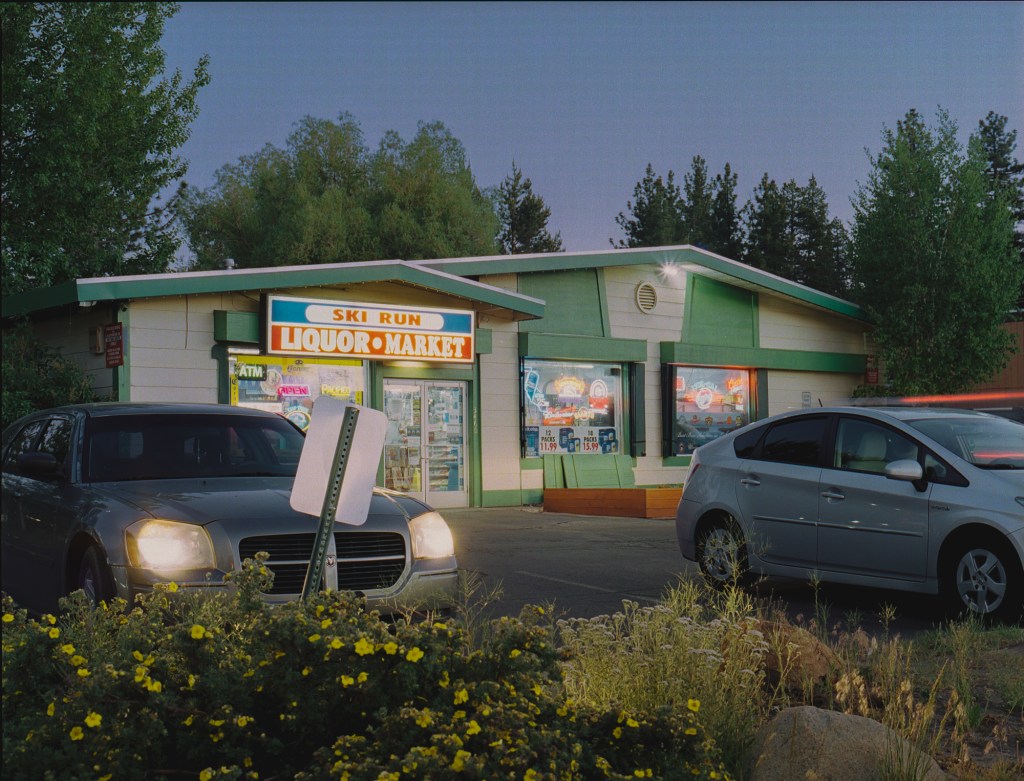
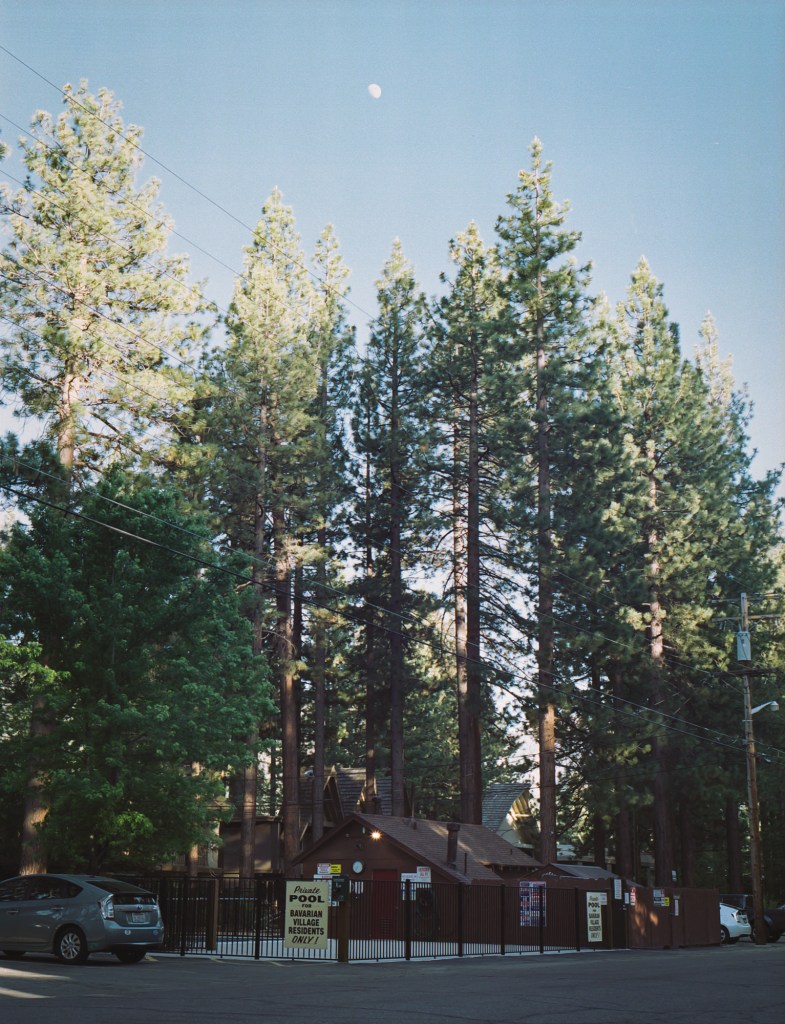
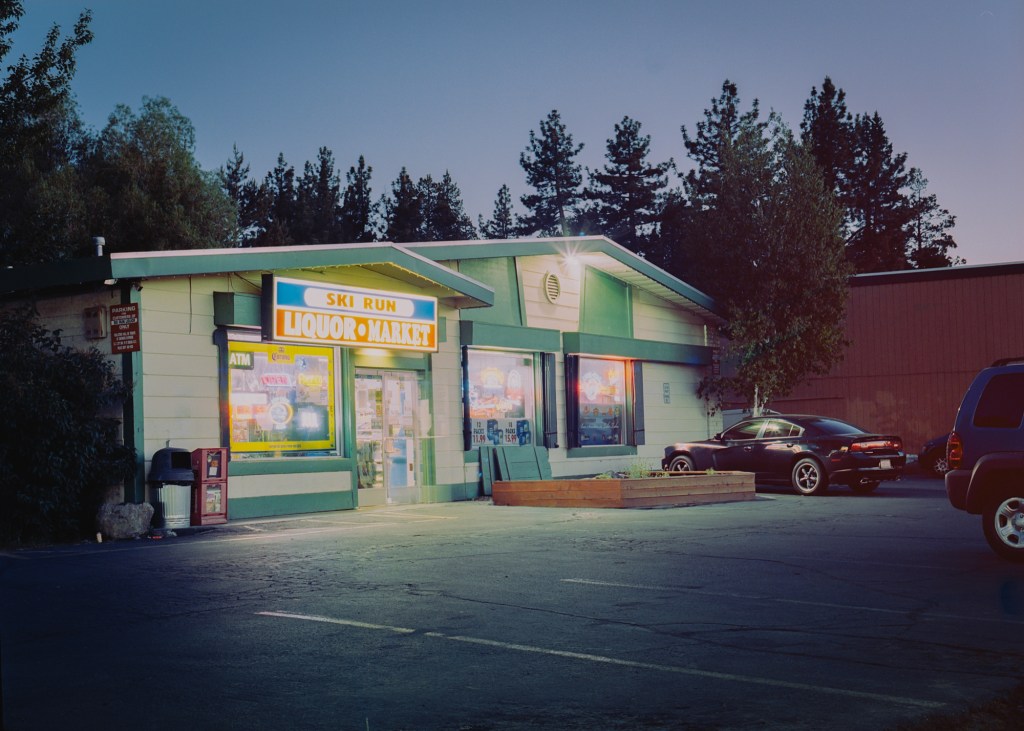
And 3 night photos that I like a lot. I had to wait in front of the liquor store for 15′ to get the shot when no car or people get in between my camera and the store, but I think the one with 2 cars parked in front is quite nice. I like the suburban vibe here pretty much.
shot on fuji 400h
shot on portra 400
portra 400
night photos
More photos from the neighborhood in the morning.
These two feel like a nice pair
Next day, I woke up at 4:30am to walk to the lake with my Bronica, digital camera and tripod for the shot I came here for, long exposure at sunrise. These photos turn out not bad but I honestly not a big fan of long exposure water, it’s just look so flat and lack of dynamic to me.
i wonder if the 10 stop ND filter make the photo less saturated. exposured for 15s
sunrise scenes
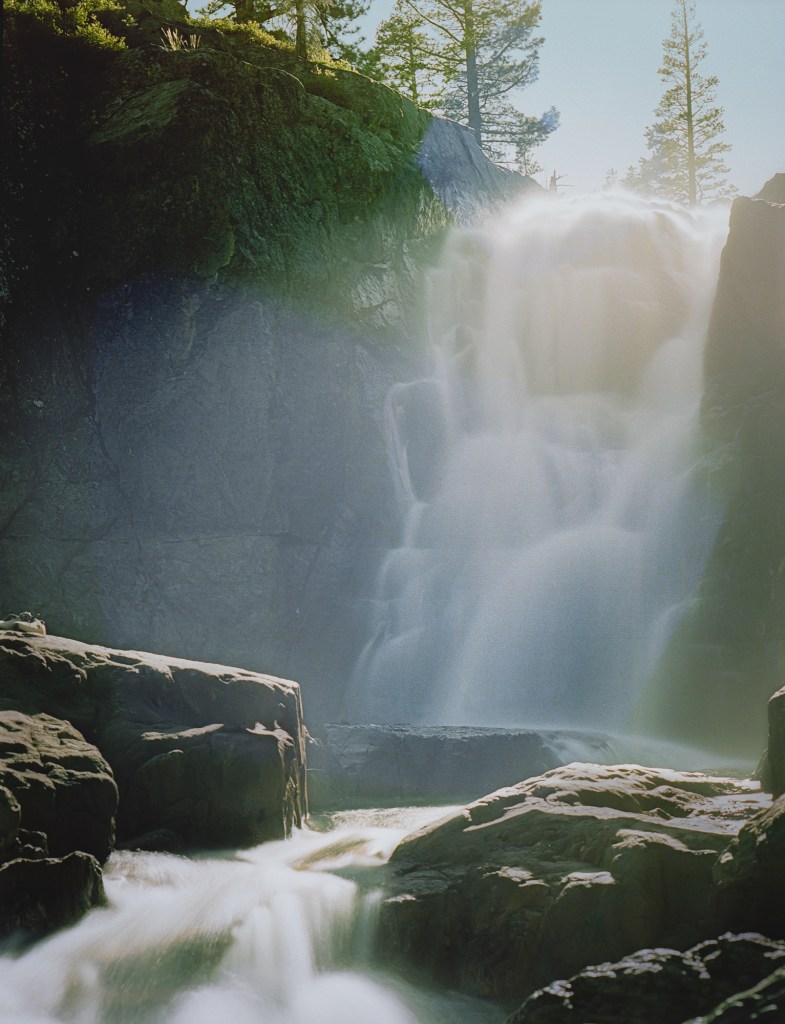
Last is series of photos took on the last hike in lake Tahoe. On this day, I hike to a waterfall with a plan for a nice silky waterfall photo but when I got there, the sun is so high right behind the waterfall. The sun shine direct to my lens made it really hard to look into the viewfinder to compose. First time working with 10 stop ND filter in backlit situation and million droplet falling to the camera made me did a very rush job and honestly I didn’t have high hope for these photos at all. But these came out quite nice.
silky waterfall 1st attempt
Here’s the rest.
Nikon F2
Nikon F2
Nikon F2
Nikon F2
Nikon F2
Yashica T4
Yashica T4
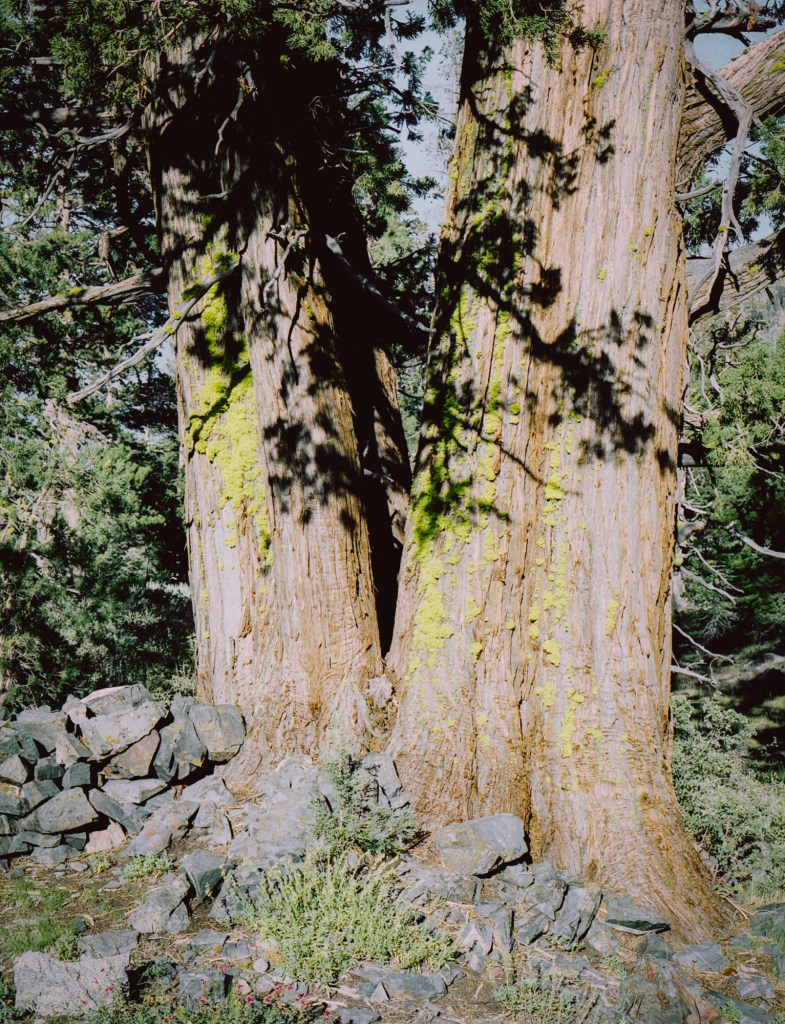
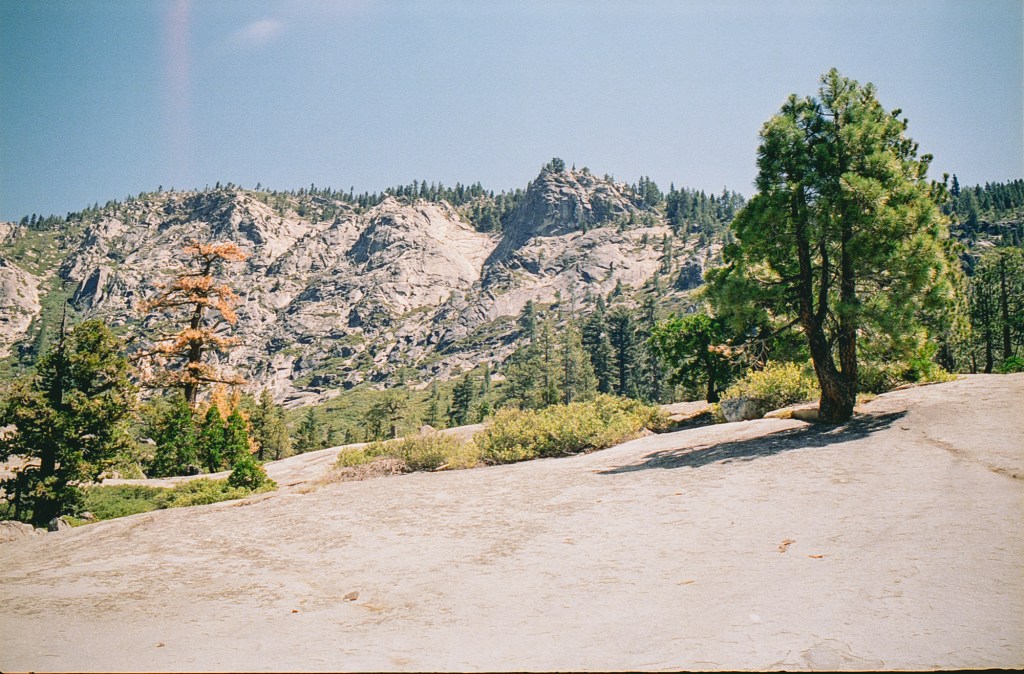
hike views
Thank you for making it here. I hope that you enjoy the photos and some thought about them. Cheers!

























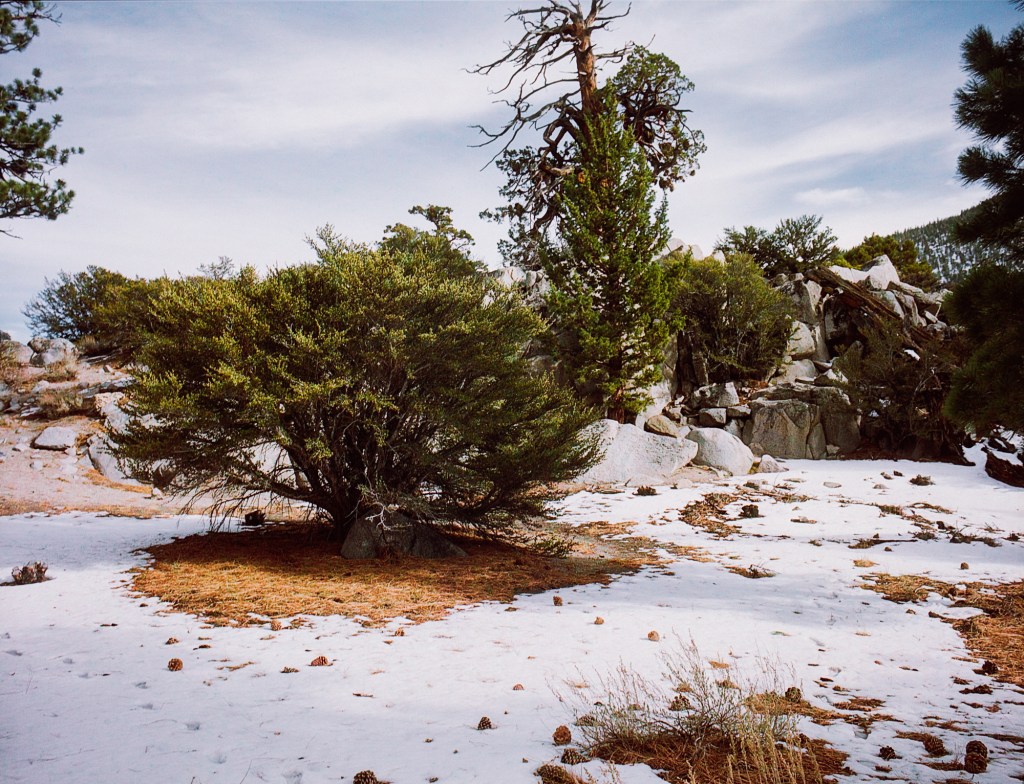
![mammoth lakes road trip [part 2]](https://filmsequence.com/wp-content/uploads/2021/01/mammoth-lake-28-1.jpg?w=1200)









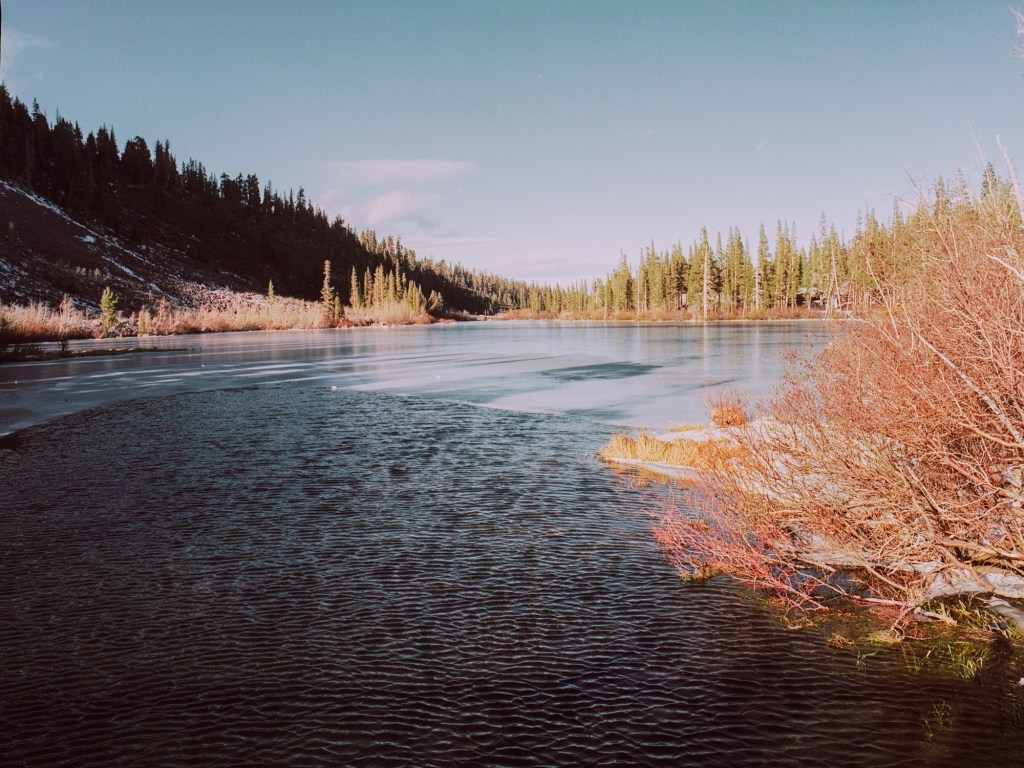
![mammoth lakes road trip [part 1]](https://filmsequence.com/wp-content/uploads/2021/01/mammoth-lake-20.jpg?w=1200)
















































 film sequence